
I’ll explain the administration’s plan to shrink the Department of Education, outline the recent interagency agreements, quote official statements exactly as released, describe the constitutional argument for local control of schools, and suggest the political momentum this move could create for broader federal downsizing.
When President Trump returned to office he promised to shrink the federal government, and the Department of Education has been a prime target. The argument from this side is simple: the Constitution does not authorize a federal education department, and American schools have historically been run locally. Supporters say the federal role has grown into an unnecessary layer between families and their local schools.
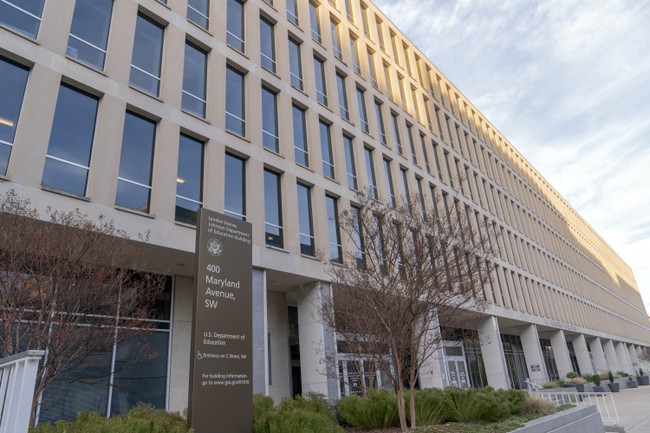
On Tuesday the administration announced a new set of moves meant to shift many of the Education Department’s functions into other agencies. Officials framed these transfers as a step toward dismantling an oversized federal education bureaucracy and returning control to states and local leaders. The moves include formal interagency agreements assigning management responsibilities to agencies like Labor, HHS, State, and Interior.
The Trump administration announced Tuesday that the Department of Education signed a series of interagency agreements to shift power from a handful of its offices and programs to other federal agencies as it works to dismantle the federal department for good.
“The Trump Administration is taking bold action to break up the federal education bureaucracy and return education to the states,” Secretary of Education Linda McMahon said in a Tuesday press release. “Cutting through layers of red tape in Washington is one essential piece of our final mission. As we partner with these agencies to improve federal programs, we will continue to gather best practices in each state through our 50-state tour, empower local leaders in K-12 education, restore excellence to higher education, and work with Congress to codify these reforms.”
Those exact words from Secretary McMahon make the goal clear: reduce federal red tape and hand more authority back to states and local leaders. This is not merely administrative tinkering according to the administration; it’s framed as part of a larger campaign to end the federal government’s role in areas not authorized by the Constitution. For conservatives who believe in limited government, that message lands hard and fast.
Some of what the Education Department is doing now is procedural, shifting program oversight and services through interagency agreements. Officials note that the department has used IAAs more than 200 times in the past to engage partner agencies for services. The Biden administration, they say, also used similar agreements in past policy work, which the department cites as precedent for this tactic.
The Department of Education announced six interagency agreements (IAAs) Tuesday with the Department of Labor, the Department of Health and Human Services, the State Department and the Department of the Interior to co-manage or take a growing role in managing certain offices and programs, according to a background call with the media.
“We at the Department of Ed have engaged with other partner agencies over 200 times through IAAS to procure various services of other partner agencies over the years,” a senior Education Department official said Tuesday during a call with the media. “Even the Biden administration did it to help implement the First Step Act, entering into an IAA with the Department of Justice. And so this is a tool that’s frequently used.”
Conservative commentators are already calling this a promising start but insist the effort must not stop with process changes. The broader aim, they say, should be to dismantle entire departments that lack constitutional standing and to reassign or eliminate redundant federal roles. That means pushing Congress to defund and legally reorganize agencies rather than merely shifting responsibilities around.
Advocates point to historical practice and a desire to restore school governance to parents and local boards as their rationale for a full phase-out of a federal education bureaucracy. They argue that local control fosters accountability and closer alignment between schools and the families they serve. From this perspective federal involvement has often meant one-size-fits-all mandates that ignore community needs.
What happens next will depend on Congress, state officials, and public opinion. If the administration keeps up the pressure, lawmakers sympathetic to smaller government could be motivated to take legislative steps. Conservatives see this moment as an opportunity: not just to rework one department but to reassert constitutional limits across the whole federal apparatus.
The political tone in these discussions is unapologetically bold: some urge not a careful trimming but a decisive downgrading of federal power in areas like Environment, Commerce, Energy, and Labor. That ambition reflects a long-standing conservative argument that the federal government should operate only within the specific boundaries the Constitution allows, leaving most governance to states and local communities.



Add comment