
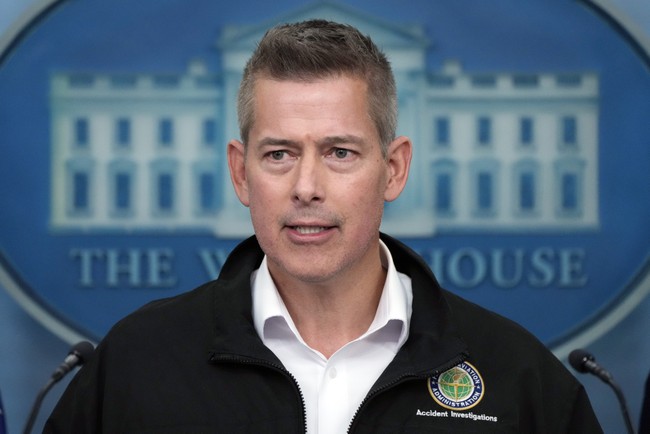
Sean Duffy is publicly challenging a court decision that paused his push to stop people here illegally from holding commercial driver’s licenses, arguing the policy is about protecting Americans from preventable risks on our roads.
The issue is straightforward: federal officials say thousands of commercial driver’s licenses were issued to non-domiciled individuals, and Transportation Secretary Sean Duffy moved to reverse that practice to bolster safety. Duffy has estimated vast numbers of questionable CDLs, including claims that over 17,000 were issued in California and many more nationwide. He frames this as a commonsense public-safety step that checks credentials and ensures drivers meet language and testing standards.
The U.S. Court of Appeals for the District of Columbia recently put a hold on the department’s emergency rule, citing procedural problems and questioning whether the agency adequately explained how the rule promotes safety. The judges pointed to data suggesting immigrants hold a share of CDLs but account for a smaller share of fatal crashes, and they asked for more detailed justification before letting the rule stand. That pause has drawn a sharp reaction from Duffy and allies who view it as putting legal technicalities ahead of Americans’ security on highways.
Transportation Secretary Sean Duffy blasted a court ruling Monday denying the Trump administration’s request to keep illegal immigrants from getting commercial driver’s licenses (CDL).
“We’re not going to take this lying down,” Duffy said on “The Ingraham Angle.”
“We are going to do all we can to protect the American people.”
The court said the agency did not follow the proper rulemaking steps and wanted a clearer explanation of how the emergency action would increase safety, leaving Duffy to argue the risks are obvious. He and his team say the issue is not only theoretical; they point to language barriers and basic traffic-safety concerns that arise when drivers cannot read signs or understand emergency instructions. For people who drive massive, potentially deadly vehicles, Duffy insists the bar should be higher.
Federal data referenced by the judges show a complex picture, and the court asked for more data to justify emergency action rather than a standard, longer rulemaking process. Duffy counters that waiting through months of rulemaking ignores immediate hazards and examples where people lacked adequate training or documentation. He has framed the pause as an abdication of responsibility by the courts to act swiftly when public safety is at stake.
Behind the headlines are numbers that the transportation department and Duffy spotlight to make the case for urgency. Officials have said hundreds of thousands of non-domiciled commercial credentials exist, and a significant share may have been issued without complying with what the department now considers basic eligibility. Duffy told audiences the scale is striking: “There were 200,000 non-domiciled CDLs issued to foreigners. We think 194,000 of them were issued illegally and would not comply with our new rule.”
He connects those figures to policy choices at the top of the administration and points a finger at decisions that opened work authorization and other pathways that made it easier for people here illegally to obtain state-issued credentials. On the political stage he has repeatedly tied the surge in questionable CDLs to broader immigration and border policies. In his view, policy makers who enabled that reality bear responsibility for the downstream safety consequences.
Gave them work permits. Work authorization, and these folks went out and they got commercial driver’s licenses…
Duffy has pressed the point that the court’s demand for more data ignores everyday evidence: accidents, near-misses, and drivers who may not grasp road signs or safety communications. He warned that emergencies require quicker action than a drawn-out administrative process, and he said the department invoked emergency authority for that reason. His rhetoric is blunt: protecting American lives means adapting rules and enforcement to current realities.
“People are dying,” he said.
“And we thought it was appropriate to protect Americans and we should have an emergency rule, not to go through the month-long process. We did that. The court has rolled us back and said, ‘Well, we’re not quite sure this is an emergency. We want to see more data.’ And I’m like… ‘Watch any show on television, and you’ll see the risk to the American people.'”
Drivers on the road are the ones who feel the consequences when policy and enforcement are out of step with practical risks, and Duffy uses real-world examples to make his case. He describes routine drives alongside large rigs as moments when the stakes of proper licensing become personal and immediate. For him, the debate is concrete: verifying eligibility and ensuring language competency for commercial drivers are basic safety measures, not political theater.
The legal fight is likely to continue, with Duffy and supporters promising to pursue every available avenue to restore the emergency rule or otherwise tighten standards for CDL issuance. Courts asked for more procedural clarity and data; Duffy asks for speed and protection for citizens. The tension between legal process and perceived urgency frames the clash currently playing out over who should be allowed to move enormous amounts of freight on American highways.


Add comment