
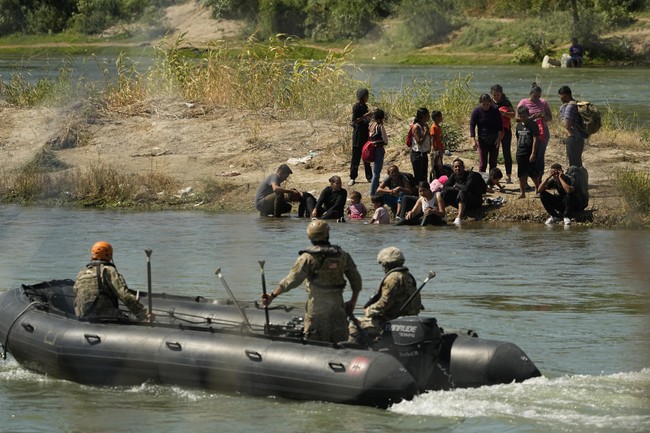
The Trump administration is doubling down on border security, shifting control of large stretches of public land along the California-Mexico line to military oversight and calling it a necessary step to stop illegal crossings, human smuggling networks, and cartel activity. This article reviews the policy shift, the reasons cited by officials, how it contrasts with the previous administration’s approach, and the political context driving the move. It includes the original quoted statements from officials and preserves the embedded media referenced in the source material.
The southern border has been central to Donald Trump’s political identity since he announced his first campaign pledges with the famous line, “I will build a great, great wall on our southern border. And I will have Mexico pay for that wall.” That promise shaped a political debate that tied immigration and national security to Trump’s profile and helped him win a second term. The administration is now translating that rhetoric into wider use of federal authority and military cooperation on public lands.
Supporters argue the action is a direct response to what they call failures of the prior administration and the need to protect U.S. sovereignty. Officials contend that transferring jurisdiction to the Navy and placing long stretches of the border under military supervision will close security gaps. They say this approach targets the logistics of human smuggling organizations and the cross-border infrastructure cartels exploit.
Critics warn the move risks militarizing domestic spaces and blurring lines between military and civilian law enforcement responsibilities. The plan uses the national emergency on the border declared by President Trump on his first day in office as legal authority to expand military roles in border zones. Opponents say those same emergency powers have serious implications for civil liberties and the principle of civilian-controlled policing.
The Interior Department framed the transfers as honoring “the historic role public lands have played in safeguarding national sovereignty,” a phrase used by agency leadership to justify the action. Interior Secretary Doug Burgum described the changes as strengthening national defense and protecting public lands from unlawful use. That language is meant to link land management, border security, and national defense in a single policy rationale.
Administration officials point to declines in Border Patrol arrests as proof the tougher stance is working and argue that tighter control and increased deportation efforts deter unlawful crossings. Advocates say the apparent drop in asylum-seeker apprehensions is evidence the policy package is slowing illegal entry and disrupting smuggling corridors. Detractors, however, note that enforcement statistics can be influenced by many variables and urge continued oversight.
The administration emphasizes coordinated operations with military bases near the border to enable faster response and interdiction. Those operational changes are intended to let troops assist in detaining people who enter the country illegally without the same constraints that traditionally limit military involvement in civilian law enforcement. Supporters maintain this will help interdict illicit drugs and dismantle smuggling networks that operate across remote public lands.
There are practical considerations officials highlight, including the use of terrain knowledge, surveillance assets, and base logistics to cover long stretches of rugged boundary land. Public lands along the border have long been high-traffic areas for unlawful crossings, and the administration says shifting jurisdiction addresses weak points more efficiently than civilian agencies alone. That argument focuses on speed, resources, and the geography of enforcement.
At the same time, questions remain about oversight, the duration of these special zones, and the interplay between federal agencies and state or local authorities. Legal scholars and civil liberties advocates say any expansion of military roles demands clear oversight mechanisms and transparent reporting. Congress and courts could become arenas for challenge if objections escalate into litigation or legislative investigation.
The policy also plays to a political base that prioritizes strict immigration controls and aggressive enforcement. For voters who view border security as an existential issue, the move signals tangible follow-through on campaign promises. In political terms, it reinforces a message that hardline measures will remain central to the administration’s agenda.
Whatever the outcome in courts or on the ground, the strategy marks a decisive shift away from the previous administration’s posture and toward more direct federal control of border zones. Officials argue it’s necessary to protect citizens from drugs, cartel violence, and uncontrolled migration. Opponents frame it as unnecessary militarization that risks civil liberties and federal overreach.
The Department of Interior said it would transfer jurisdiction along most of California’s border with Mexico to the Navy to reinforce “the historic role public lands have played in safeguarding national sovereignty.”
The Interior Department described the newest national defense area in California as a high-traffic zone for unlawful crossings by immigrants. But Border Patrol arrests along the southern U.S. border this year have dropped to the slowest pace since the 1960s amid President Trump’s push for mass deportations.
Advocates say the new zones are designed to be operational quickly and to disrupt networks moving people and contraband across remote stretches. They argue the Navy and other military assets bring surveillance, mobility, and logistical reach that civilian agencies lack in those areas. Officials stress the step is practical, not symbolic, aimed at reducing the operational freedom of smugglers.
The move places long stretches of the border under the supervision of nearby military bases, empowering U.S. troops to detain people who enter the country illegally and sidestep a law prohibiting military involvement in civilian law enforcement.
It is done under the authority of the national emergency on the border declared by President Donald Trump on his first day in office.


Add comment