
This piece examines how President Trump’s touted 20-point peace plan with Hamas actually unfolded, contrasts the signed six-point agreement that was implemented, and draws lessons for the new memorandum of understanding with Iran based on those outcomes.
On September 29, 2025, President Donald Trump publicly pushed Israeli leadership to accept a 20-point peace framework that he said would end hostilities with Hamas. The public narrative promised an immediate halt to IDF operations and set a deadline for Hamas to accept the terms by October 5, 2025. When Hamas declined, the dramatic threat that they would be “hunted down and killed” did not materialize, and fighting continued despite the president’s declaration.
A separate agreement was signed on October 9 in Sharm el-Sheikh and took effect on October 10, but it was not the 20-point plan that had been hyped. What was actually signed was a concise six-point, phase-one deal whose full terms were never published by the White House. A picture of that signed document, complete with signatures and the six points, was published by and the text appears at .
1. President Trump announces the end of the war in the Gaza strip, and that the parties have agreed to implement the necessary steps to that end.
https://x.com/kann_news/status/1976388144456249356
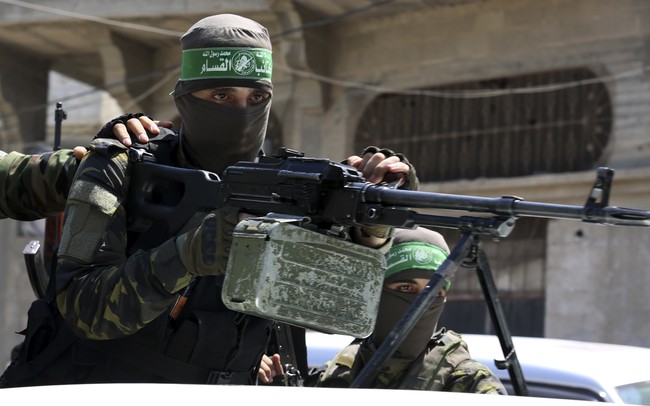
That first point was more proclamation than guarantee. Even after the agreement, Hamas continued armed actions against IDF forces, killing and wounding soldiers in Rafah and elsewhere. The IDF faced repeated attacks and has been conducting targeted operations; the conflict did not cease simply because a headline said it had.
2. The war will immediately end upon the approval of the Israeli government. All military operations, including aerial and artillery bombardment and targeting operations will be suspended. During the 72 hour period, aerial surveillance will be suspended over the areas which IDF forces have withdrawn from.
The phrasing of that second point made Israeli approval sufficient to claim the war’s end while leaving Hamas free from any explicit approval duty. A ceasefire that depends only on one side’s government approval is not a durable truce when the other side remains incentivized to fight. That gap in accountability was built into the agreement and exploited by Hamas.
3. Immediate commencement of full entry of humanitarian aid and relief as determined in the Proposal, and at a minimum in consistence with the 19 January 2025 agreement regarding humanitarian aid. Humanitarian aid and relief implementation steps are attached herewith.
Humanitarian access was restored in large measure, but that created strategic complications. Aid convoys delivered material like cement and steel, which in theory would rebuild civilian infrastructure but were also used by Hamas to repair and expand tunnel networks. That dual-use problem meant aid flows inadvertently strengthened Hamas’s capacity to wage war underground.
4. IDF will withdraw to lines agreed upon as per map X attached herewith, and this will be completed after President Trump’s announcement and within 24 hours of Israeli government approval. The IDF will not return to areas that have been withdrawn from, as long as Hamas fully implements the agreement.
The IDF did pull back to the so-called yellow line soon after October 9 under the political pressure to show de-escalation. Because Hamas did not fully live up to the commitments, Israeli forces later pushed forward again, advancing toward the orange line in March 2026. Tactical reversals like that make clear how fragile any negotiated pullback can be if the other party keeps fighting.
5. Within 72 hours of the withdrawal of Israeli forces, all Israeli hostages, living and deceased, held in Gaza will be released (list attached).
a. As soon as IDF completes the withdrawal, Hamas will commence investigating the status of the hostages and collect information pertaining to them. Hamas will provide feedback and on its own findings through the information-sharing mechanism under 5.e below. Israel will provide information on Palestinian prisoners and detainees from the Gaza strip held in Israel.
b. Within 72 hours, Hamas will release all living hostages including those held by the Palestinian factions in Gaza.
c. Within 72 hours, Hamas will release the remains of the deceased hostages in its possession and those in the possession of the Palestinian factions in Gaza.
d. Hamas will share, within the 72 hours, all the information it obtained relating to any remaining deceased hostages through the information-sharing mechanism in paragraph (e) below. Israel will provide information on the remains of the deceased Gazans held by Israel.
e. Establishment of an information-sharing mechanism between the two sides through the mediators and the ICRC, to exchange information and intelligence on any remaining deceased hostages that were not retrieved within the 72 hours or remains of Gazans held by Israel. The mechanism shall ensure that the remains of all the hostages are fully and safely exhumed and released. Hamas shall exert maximum effort to ensure the fulfillment of these commitments as soon as possible.
f. As Hamas will release all the hostages, Israeli will release in parallel the corresponding number of Palestinian prisoners as per the attached lists.
g. The exchange of hostages and prisoners will be done according to the mechanism agreed upon through the mediators and through the ICRC without any public ceremonies or media coverage.
The agreement’s hostage provisions were partially honored on schedule: on October 12, 2025, a final group of 20 living hostages was returned within the 72-hour window. But the swap terms were wildly asymmetric in practice; Israel freed roughly 250 convicted terrorists in exchange for those 20 hostages. The remains of deceased hostages were not turned over as promised, and recovering the last victim’s body took 109 days.
6. A task force will be formed of representatives from the United States, Qatar, Egypt, Turkey and other countries to be agreed upon by the parties, to follow-up on the implementation with the two sides and coordinate with them.
The international task force, created in January, added a photo op more than traction. After five months, it had made no measurable progress in getting Hamas to adopt any of the broader elements of the president’s 20-point plan. The board functioned as a diplomatic prop rather than a mechanism that enforced compliance on the ground.
Militarily, Hamas has used the breathing room to regroup and increase its manpower dramatically, with estimates rising from roughly 2,000 fighters to near 20,000 over nine months. Israel’s military planners have sketched multiple options, from a rapid large-scale offensive to gradual incremental gains designed to avoid global headlines. The latter approach has been the one implemented so far.
Given how the Gaza sequence played out, the Republican takeaway should be caution about naive expectations for major security bargains with adversaries like Iran. Political theater and photo ops do not substitute for enforceable terms, clear verification, or real deterrence on the ground.



Add comment