
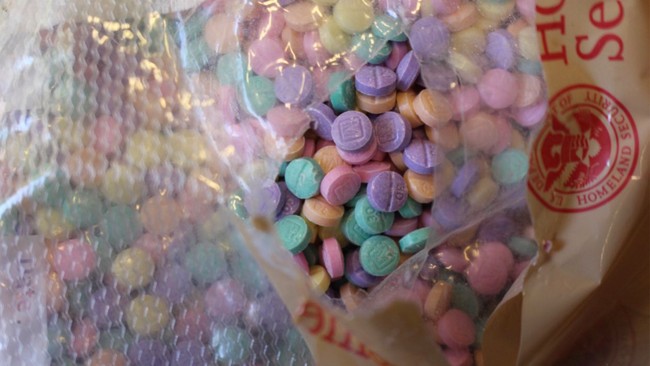
This piece examines allegations that the Drug Enforcement Administration allowed massive quantities of fentanyl pills into New Mexico between 2023 and 2025, compares the tactic to the Fast and Furious scandal, preserves key quotes from whistleblowers and reporting, and highlights the political and public-safety stakes this raises for law enforcement oversight and congressional accountability.
We already know how dangerous policy experiments gone wrong can be. The Fast and Furious episode showed what happens when federal agencies prioritize covert investigations over immediate public safety, and the new allegations about fentanyl suggest a disturbing echo of that approach. If true, letting lethal pills circulate while building cases is not just a tactic mistake, it is a moral and legal failure.
According to reporting and a whistleblower account, DEA agents tracked shipments of counterfeit pills but did not seize them while prosecutors built larger cases. The allegation is blunt: “We poisoned our community to make cases,” whistleblower DEA Special Agent David Howell told the Associated Press. That quote sits unvarnished and should be the starting point for any serious inquiry into what decisions were made and why.
The practical reality of fentanyl distinguishes this situation from other law-enforcement strategies that accept lower levels of risk. The DEA’s own public warnings underline how tiny doses can be fatal; a couple of milligrams of fentanyl can kill an average adult. When the drugs being monitored are measured in pencil-tip doses that can kill, the calculus that tolerates their circulation becomes far more than an investigative trade-off.
Those who defend the tactic say it is aimed at dismantling larger trafficking networks rather than chasing small dealers. That is a familiar argument, and in principle it can make sense: build a bigger case, bring down a kingpin, reduce long-term harm. But the alleged scale here—hundreds of thousands of pills in a single state over two years—raises the question of whether building a bigger case justified the immediate toll on communities.
The DEA has rejected the claim that it knowingly permitted fentanyl to reach neighborhoods, saying public descriptions of such a policy are false and mischaracterize the facts. Even so, denials do not erase the need for transparent answers when whistleblowers and reporters present specific allegations tied to identifiable operations and timelines. Oversight is not partisan; it is necessary to restore confidence and to protect citizens from preventable harm.
https://x.com/tristanleavitt/status/2069004828655665455
Investigative reporting also shows how whistleblowers can be found through careful sleuthing, which raises its own concerns about anonymity and retaliation. Reporters who tracked down the agent did so by noting partial redactions and following small clues to identify the source. That process produced the firsthand account attributed to David Howell, and it underscores the reality that whistleblowers will come forward when they believe public safety is at risk.
From a policy perspective, the episode highlights a deeper problem: when federal law enforcement adopts strategies that treat communities as collateral for investigations, it undermines trust in those agencies. That loss of trust is especially harmful in regions already suffering from drug violence and addiction. A justice system that tolerates avoidable danger to make cases risks alienating the very public it must protect.
Political leaders should demand answers and ensure oversight is rigorous and timely. Congressional committees need to press for documents, timelines, and clear explanations of the decision-making process that led to any allowances of illicit pills. If the pattern mirrors Fast and Furious, the public deserves full transparency and accountability, not hedged claims or delayed disclosures.
Beyond hearings and reports, practical changes are needed to prevent a repeat: clearer rules about when to interdict dangerous shipments, stronger safeguards for whistleblowers, and a public reporting mechanism for operations that carry substantial community risk. Law enforcement must balance the goal of disrupting large networks with an ironclad duty to prevent immediate harms that could cost lives.
The stakes here are simple and urgent. When an agency tasked with protecting citizens faces allegations that its tactics exposed people to lethal drugs, the response must be swift, thorough, and transparent. Failure to investigate fully would be a second wrong on top of an initial one that, if proven, already cost lives and eroded public trust.

SMART W0RK I was kind of worried about the entire thing. I’ve never worked from home, But Yeah, (D11)) I did just join and all is good. so I will post back how it goes!____ clicked on the name in my profile