
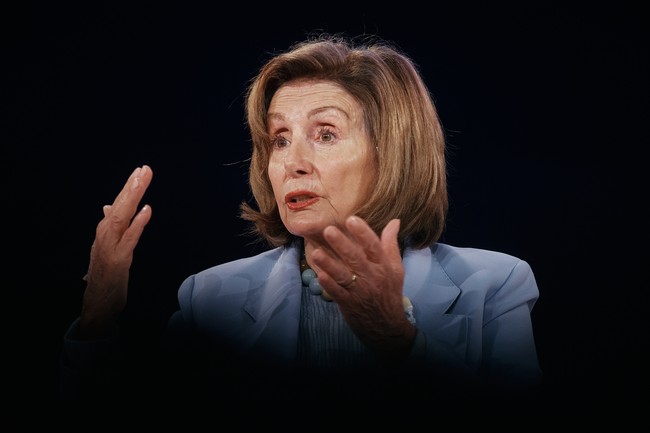
President Trump used his State of the Union to press Congress to pass the Stop Insider Trading Act and seized the moment to call out Speaker Emerita Nancy Pelosi over allegations that members of Congress profit from non-public information — a provocative mix of policy push and political theater that drew applause from Democrats and laughter from Republicans.
During the address, Trump urged lawmakers to “ensure that members of Congress cannot corruptly profit from using insider information,” pausing as many in the chamber rose to their feet. He pointed to the measure as a simple fairness issue: public servants should not be in a position to trade on knowledge unavailable to ordinary Americans. The applause from figures like Sen. Elizabeth Warren showed the line can win rare bipartisan attention, at least rhetorically.
Then Trump pivoted straight to a personal jab at Nancy Pelosi, invoking the well-worn label “stock queen” to highlight concerns about wealth accumulation among some lawmakers. He quipped, “They stood up for that. I can’t believe it. I can’t believe it,” before adding, “Did Nancy Pelosi stand up — if she’s here? Doubt it.” The crowd reaction was notable, with members of the Republican side laughing and the vice president audibly responding.
The moment landed like a spotlight not just on one person but on the broader issue of elected officials trading stocks and crypto while making policy. Members of Congress currently may buy and sell investments so long as they file the required reports, yet the contrast between a $174,000 base salary and some lawmakers’ reported multimillion-dollar net worth raises eyebrows. Salaries for leadership roles are higher, but those figures still pale beside reported fortunes topping tens or hundreds of millions.
Pelosi and her husband have been cited in reporting as having a combined net worth that places them among the wealthier figures associated with Congress, and critics argue that the optics alone damage trust. Tulsi Gabbard, previously a Democrat, has publicly framed such trading patterns as evidence the system is rigged, saying, “We have people in positions of power to pass legislation, to enact new policies,” and suggesting those people can profit from foreknowledge. Such blunt assessments feed a narrative Republicans can use: lawmakers should be accountable to voters, not private portfolios.
When CNN confronted Pelosi about the applause for Trump’s proposal and Warren’s reaction, she pushed back, saying, “I say back to him, cause that’s what member said, look at your own self … the inference he wants to draw is there was something wrong with that, which there wasn’t. And if there was, people get prosecuted for it.” Her rebuttal tried to shift the focus to due process and prosecution, but it read to many as evasive rather than clarifying, prompting pundits to dismiss it as “word salad.”
Pelosi insisted she had stood during the applause, stating, “Well, we all did (stand up). I did too.” Yet the interaction left her visibly flustered and gave Trump the opening he wanted to make the ethics debate personal. Republicans see this as useful leverage: call for a law, spotlight entrenched wealth, and force Democrats to either back reform or defend the status quo.
The Stop Insider Trading Act (H.R. 7008), introduced by Rep. Bryan Steil, aims to eliminate the appearance and reality of members profiting from non-public information. It carries backing from House Republicans and could be fast-tracked if the party keeps control of the chamber. Democrats regaining the House would almost certainly stall or derail it, making midterm outcomes central to whether such reforms ever reach the president’s desk.
Critics who defend the current system argue existing disclosure rules and the threat of prosecution are sufficient, but skeptics point out how infrequently high-profile cases reach conviction and how complex financial networks can obscure beneficial ownership. That leaves a transparency and enforcement gap that lawmakers like Trump argue should be closed through clearer law. For conservatives, the pitch is straightforward: close loopholes, restore trust, and make public service less of a pathway to private gain.
Beyond the bill itself, the episode serves as a reminder of how political theater can amplify policy. A single quip in a national address turned a technical ethics proposal into a headline-grabbing confrontation. The choice to single out a prominent Democratic figure fits a Republican strategy of personalizing abstract problems to make them tangible for voters and to force opponents into defensive postures.
At stake is more than one vote or one headline; it’s a question of public confidence in institutions. Proposals to bar members from trading or to require blind trusts would shift power away from private gain and toward the public interest. How Congress responds will reveal whether it prioritizes cleaning up ethics gaps or preserving the privileges that fuel skepticism about lawmakers’ motives.
For now, H.R. 7008 remains pending, and the political fight is set. If Republicans keep control, the bill could move quickly; if they lose the House, its chances dim. The debate that played out on the SOTU stage is likely to continue on the floor, in committee, and in campaign ads as both parties make their case to voters about who can be trusted to police power and protect the public trust.



She’s a damned Traitor (Trader) and Heinous Criminal!
Caused the false J6 Narrative to screw-over Republican MAGA!
In the old days that would be a Constitutionally hanging Crime!
As she now skates off into the sunset with her hundreds of $Millions!
Such a despicable and Evil woman!