
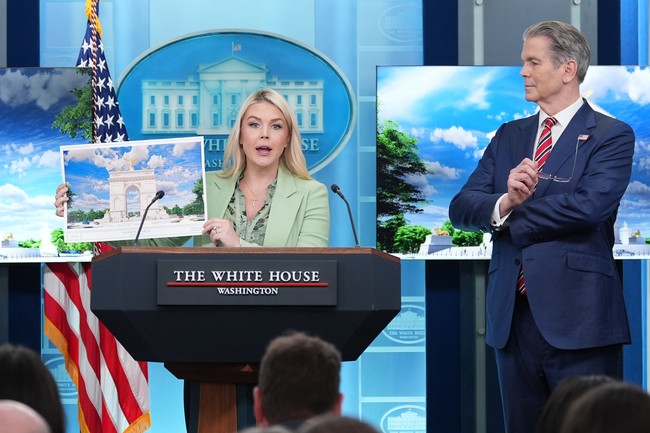
The Trump administration’s proposal for a 250-foot “triumphal arch” on Columbia Island has moved forward after a federal arts panel approved a revised design, keeping monumental elements while removing pedestrian access features and some lower sculptures, and the project now faces further agency reviews and legal challenges.
The White House revealed renderings in mid-April for a large commemorative arch intended to mark America’s 250th birthday, calling it a centerpiece for national pride. Officials said the proposed site is in Memorial Circle on Columbia Island, a man-made island in the Potomac River managed by the National Park Service. Three design options were submitted and President Trump selected the most ambitious proposal, which emphasized scale and classical symbolism. The administration frames the effort as an architectural celebration of American history in the capital.
The revised plan approved by the federal arts commission keeps some of the bold visual choices that made the original design noteworthy. At the president’s request, designers retained plans for prominent golden sculptures atop the arch and selected granite for the surface stone to give the monument a durable, monumental quality. However, a platform beneath the arch and a tunnel to access the site were removed from the concept, narrowing how visitors would approach and experience the structure. Those changes reflect a compromise aimed at addressing practical and aesthetic concerns raised during review.
A quoted update from the commission made clear what shifted in the design and why certain elements were debated: “A federal arts commission approved a modified plan Thursday for President Donald Trump’s proposed arch along the Potomac River. While similar to the original concept, the altered design removes a platform below the arch and tunnel access to the site. At Trump’s request, the plan to build large golden sculptures atop the arch was retained, while the designers selected granite for the surface stone. One member of the Commission of Fine Arts in April questioned the inclusion of a 60-foot golden statue of Lady Liberty flanked by eagles. But the arch’s designer, Nicolas Charbonneau, told the panel, who were all appointed by the president earlier this year, that Trump had considered but rejected the suggestion.”
Additional revisions removed decorative elements lower on the structure, including statues of gold lions that had been depicted in early concepts. Eliminating those pieces reduces visual clutter in the lower elevations of the arch and shifts focus to the crowning sculptural group. Supporters argue the streamlined profile will read better from multiple approaches in the city and preserve sightlines across the Potomac. Critics counter that the monument remains ostentatious and risks overpowering the surrounding memorial landscape.
Legal and regulatory hurdles remain. A lawsuit from a group of Vietnam veterans seeks to block the project, raising questions about process and appropriateness for the chosen public space. At the same time, the Federal Aviation Administration is conducting a required review because the structure exceeds 200 feet, assessing whether the arch would pose an aerial hazard. Those parallel paths show the project will need to clear beyond-design reviews before construction can begin.
The next scheduled milestone is a review by the National Capital Planning Commission, set to occur on June 4th, where planners will examine siting, access, and compatibility with broader federal land-use plans. If that body approves, proponents will still face additional permitting steps and possible appeals in court. Backers emphasize the symbolic importance of marking the nation’s semiquincentennial with a permanently visible, patriotic monument in the capital.
Designers say the arch aims to blend classical monumentality with contemporary engineering, producing a durable landmark for national ceremonies and everyday civic presence. Choosing granite for the surface was part of that intent, a nod to permanence and traditional monument materials used across the Mall and nearby memorials. The remaining large sculptures are intended to communicate national themes and be visible from a distance, supporting the administration’s desire for a bold, unmistakable symbol.
There is already a public conversation about scale, cost, and context, and those debates are likely to intensify as formal reviews progress. Opponents point to the arch’s height and prominence as reasons it could disrupt flight paths and visual cohesion in the memorial zone, while supporters argue that a strong, patriotic monument is overdue for the 250th anniversary. For now, the approved modifications show a willingness from the commission to negotiate the design while preserving signature elements that the administration favors.

That is a gorgeous design; very bold & classy. It makes one proud to be an American who is celebrating it 250 anniversary.