
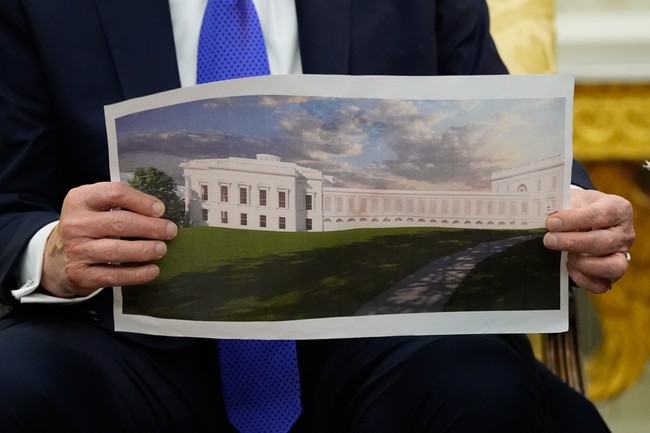
The Trump administration has asked an appeals court for an emergency pause after a judge ordered work stopped on the president’s planned East Wing ballroom, arguing the halt creates urgent national security risks and that the executive has broad authority to renovate the White House. Lawyers for the National Park Service asked the court to extend a temporary 14-day stay while they seek further review, saying construction keeps critical hardened facilities in place and that leaving the grounds as a construction zone would make the White House more vulnerable. The case hinges on whether preservation law limits presidential renovation powers and whether stopping work now would expose the president, his family, and staff to avoidable danger.
Over the past months, the White House put forward plans for a large East Wing addition described as a $400 million ballroom with integrated security features. The project has drawn lawsuits from preservation groups who say federal law was violated, and a federal judge recently sided with those groups, finding they are likely to succeed on the merits. However, the judge delayed implementation of the halt for 14 days specifically to allow the government to seek an emergency appeal, which the administration promptly filed.
National Park Service attorneys told the appeals court that time is critical and that certain security elements already in place must remain protected. They argued that the planned facility includes hardened protections that cannot be left unfinished without increasing risk, and that makeshift alternatives would be more exposed to missile, drone, and other threats. The lawyers framed the appeal as a narrow, urgent request: extend the existing short stay to preserve security while higher courts weigh the broader legal arguments.
WASHINGTON (AP) — The Trump administration is arguing that a judge’s order to halt construction of a $400 million ballroom creates a security risk for President Donald Trump as it asks a federal appeals court to pause the ruling.
In a motion filed Friday, National Park Service lawyers say that the federal judge’s order to suspend construction of the new facility is “threatening grave national-security harms to the White House, the President and his family, and the President’s staff.”
“Time is of the essence!” the lawyers write, citing materials that will be installed to make a “heavily fortified” facility. The ballroom construction also includes bomb shelters, military installations and a medical facility, according to the filing.[..]
Administration counsel also leaned on the constitutional idea that the president has broad control over the executive mansion and its grounds. They told the court that executive branch authority gives the president “complete authority to renovate the White House,” and that the project is part of standard responsibilities for maintaining a secure presidential residence. From the Republican perspective, this is not just a renovation dispute but a question about the separation of powers and the ability of the executive to keep the commander in chief safe.
“Canvas tents, which are necessary without a ballroom, are significantly more vulnerable to missiles, drones, and other threats than a hardened national security facility,” the motion says.
The administration asked the court to renew the 14-day suspension and requested an expedited deadline for deciding the emergency petition, saying they plan to take the appeal up to the Supreme Court if needed. That procedural move aims to buy time while higher courts decide whether preservation statutes override presidential authority in this context. Republicans generally view such appeals as appropriate when national security and the president’s ability to carry out official duties are at stake.
Critics, including preservation groups that filed suit, argue the renovation violated procedural requirements and short-circuited review designed to protect historic fabric. They persuaded a judge that the groups were likely to prevail on their claims, at least enough to justify a halt pending a fuller hearing. That legal finding forces a clash between historic-preservation law and claims of executive prerogative tied to safety and security.
The dispute has also played out in the court of public opinion, where opponents have cast the project as unnecessary or damaging to a historic building, while supporters portray it as a prudent update that includes critical defensive measures. The administration has repeatedly emphasized the security and functional upgrades in the plans, noting medical and protective installations that, they say, are essential for a modern presidency. For conservatives, the choice is clear: protect the president and maintain executive authority to secure the residence.
Procedurally, the appeals court must quickly decide whether to extend the stay, and the administration is pushing for an expedited ruling by the requested date in April so they can preserve the status of the site while seeking final relief. The underlying legal question about statutory limits on presidential renovation powers could land at the Supreme Court if both sides press their positions. Until then, both construction crews and preservation groups are operating under a tight, uncertain timetable with national security used as the central argument for keeping work in place.
The situation remains fluid, with expedited filings and competing legal theories driving the next moves. Republicans will emphasize executive authority and risk mitigation while challengers continue to press preservation statutes and process claims, making this case a test of how courts balance safety against statutory protections for historic places.



Add comment