
This piece examines the uproar from Senate Democrats after Treasury Secretary Scott Bessent revealed that, for the semiquincentennial celebration of America’s founding, the 47th President’s signature will appear on paper currency for the first time while arguing the move honors national symbolism and continuity.
Predictable reactions arrived fast from the left, led by senators known for theatrical outrage. That response was less about policy and more about optics, with progressive lawmakers treating the announcement as a political provocation rather than a commemorative gesture. The debate shows how quickly symbolic presidential recognition gets framed as partisan theater. Meanwhile, supporters see it as a rightful nod to our history during a major milestone.
The announcement itself came from Treasury Secretary Scott Bessent about the 250th anniversary, a milestone being marked by several commemorative efforts. Included in those plans is the unprecedented decision to add the living president’s signature — Donald J. Trump — to paper currency. For conservatives, this is a simple act of national celebration and tradition; for the left, it has become a cudgel to wield in the culture wars.
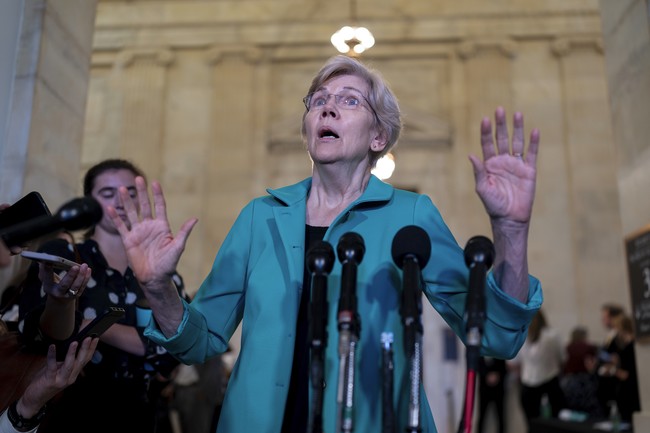
Sens. Elizabeth Warren (Mass.), the top Democrat on the Senate Banking Committee, and Jeff Merkley (D-Ore.) pressed Treasury Secretary Scott Bessent in a letter Thursday to explain how the decision “will in any way benefit the American public.”
“In reality, Americans are facing an affordability crisis, and America’s economy is on shaky ground,” they wrote, pointing to instability linked to the ongoing conflict with Iran, from higher mortgage rates to concerns about global inflation.
The Warren-Merkley letter insisted on an explanation of public benefit and piled on reminders about economic strains. Their timing feels political: they set a deadline for answers on Apr. 15, a date certain to stir headlines and frame the debate in electoral terms. Conservatives note that raising procedural questions is fair, but treating a commemorative signature as a remedy for macroeconomic woes is a stretch.
Democrats also leaned into personal attacks in their critique, bringing up past business matters as a way to discredit the president’s name appearing on currency. “Yet President Trump does have a history of cashing in on his name to paper over abject business failures,” they added, citing a Washington Post report from 2017 that found Trump has made millions of dollars by licensing his last name to entities around the world.
That line of attack is familiar: when policy arguments run thin, personalization fills the void. Republicans push back by saying symbolism matters and recognizing a living president on currency for a historic anniversary is a ceremonial move, not a policy that redistributes resources. The left’s insistence that this somehow worsens affordability or damages the economy rings hollow to many conservatives focused on tangible policy outcomes.
Partisanship colors every angle here, including broader grievances about the economy and domestic policy. Critics on the right point to recent budget proposals and tax measures they argue favor economic growth and lower burdens on families. Democrats, by contrast, frame fiscal decisions and cultural gestures under scrutiny to appeal to their base and to shape messaging ahead of elections.
At its core, the fight is as much about who controls national narratives as it is about currency design. Symbols matter in public life, and decisions about commemorations will always attract political heat. For many conservatives, honoring the semiquincentennial and placing a living president’s signature on currency is a straightforward tribute to our heritage rather than an invitation to partisan meltdown.
Expect more letters, more headlines, and more theater as both sides use this episode to score points. The controversy illustrates how a seemingly small policy choice becomes a proxy fight over identity, tradition, and who gets to define patriotism. The practical effect on day-to-day life is minimal, but the political signal is loud and clear.


Add comment