
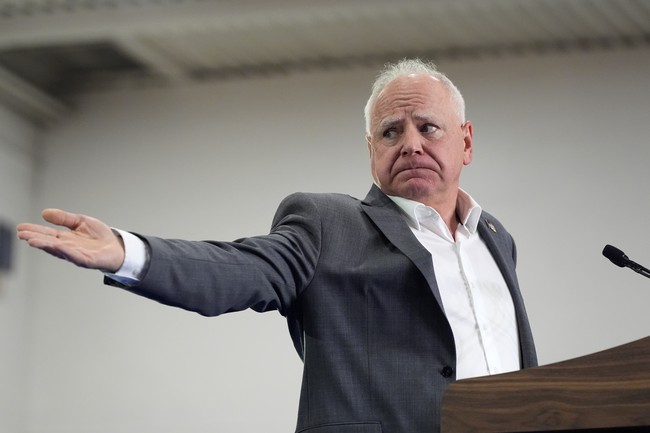
This article examines Minnesota Gov. Tim Walz’s controversial pardon of Tou Lue Vang, a man convicted of first-degree criminal sexual conduct against a child, the subsequent deportation action by federal authorities, and Walz’s remarks defending the pardon that have sparked fierce criticism from conservatives and law-and-order advocates.
The core facts are stark: Tou Lue Vang was convicted of abusing a child who was 10 years old, over a period of about two years, and received a 2006 conviction that led to an order of removal. Vang had originally entered the United States as a refugee and later obtained permanent resident status, which was revoked following his conviction. Deportation did not happen for years because Laos was not accepting deportees, but that changed when Laos resumed taking returns and Vang was scheduled to leave the country.
Instead of letting the removal proceed, Minnesota’s governor issued a pardon for Vang, an action that immediately drew pushback from federal officials and conservative leaders. Secretary of State Marco Rubio took decisive steps to revoke Vang’s status and ensure the deportation occurred, and federal authorities ultimately returned Vang to Laos. That intervention resolved a situation where a person convicted of heinous crimes had been allowed to remain at large for far too long.
Walz then addressed the media and offered comments that many found tone-deaf and offensive given the gravity of the crimes involved. He asked, “Did that [the deportation] make us any safer?” and followed with the quote, “Did that make the children that are left behind any more stable? Did it improve the idea that we can’t all be judged by our worst day?” Those words read as a slap in the face to victims and to anyone who thinks accountability matters in criminal justice.
From a Republican perspective, the pardon looks like a political calculation that puts ideology ahead of public safety and victims’ rights. This was not an isolated lapse or a single poor choice on one night; it was repeated, ongoing abuse of a child, a pattern that most people of any party would rightly find unforgivable. To suggest that such conduct should be dismissed as a single “worst day” is to minimize the trauma inflicted on an innocent child and to undermine the rule of law.
There are reasonable debates to be had about clemency powers in general, but clemency should not be used to erase the consequences of violent crimes or to interfere with immigration enforcement in cases involving dangerous offenders. The combination of a gubernatorial pardon and the federal government having to step in to correct course shows a breakdown in common-sense accountability. Elected officials owe constituents a commitment to protect communities, especially children, and this episode raises serious questions about judgment and priorities.
Critics also point to the optics of someone under consideration for higher office making comments like those Walz delivered. When a politician frames violent, repeated abuse as a lapse that should be weighed against a person’s life, it sends a signal that certain crimes will be treated with leniency, which could erode public trust in the justice system. Political leaders should be expected to demonstrate clear moral judgment when dealing with predators, not relativize or excuse their actions.
https://x.com/DHSgov/status/2077477643541197259
The federal response, led by Secretary Rubio, demonstrates how conservative leaders prioritize enforcement when public safety is at stake. Deporting a convicted sex offender who had a standing order of removal restores a baseline level of protection to communities and honors the principle that violent criminals should not remain in the country simply because diplomatic or logistical hurdles delayed their return. That is a straightforward law-and-order position many voters support.
Beyond the immediate case, this incident feeds into a larger narrative about how Democratic officials approach immigration enforcement and criminal justice. For Republicans, it reinforces a view that lax attitudes toward removal and clemency can have real-world consequences and that voters should scrutinize officials who appear to put political signaling ahead of safety. The debate will likely play out in the courts, in public opinion, and in campaign rhetoric as midterm politics heat up.
Victims and their families deserve respect, and the justice system should reflect the seriousness of child sexual abuse. Political leaders who downplay that seriousness invite criticism from both sides of the aisle, and they risk alienating voters who expect elected officials to defend the most vulnerable. In this episode, the combination of a pardon and defensive remarks by a governor made for a political and moral misstep that conservatives were quick to condemn.



Ask “Tampon Tim” if it was HIS Daughter that this happened to would he PARDON the rapist? I doubt it!
When is this Traitor, Criminal, Dirt Bag getting locked up???