
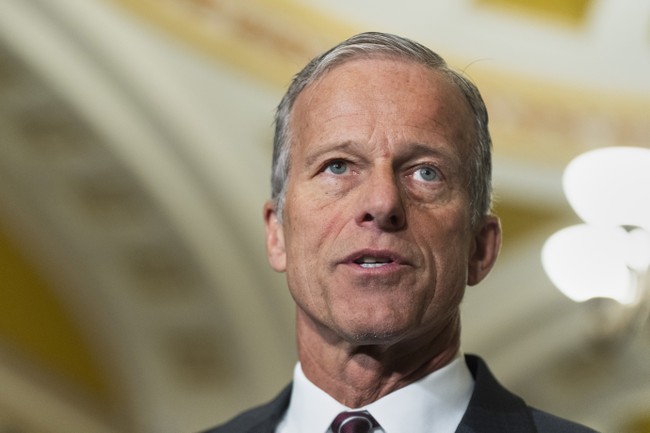
Checklist: explain why a new approach to Putin is needed; recap President Trump’s comments and John Thune’s stance; outline the limits of mediation and the case for pressure; highlight available legislative tools like sanctions and unity across parties; note the core reality about Putin’s goals and what that means for U.S. policy.
Russia’s war on Ukraine has dragged on long enough that repeating the same strategy is pointless, and Senate Republican John Thune has publicly pushed for a clear change. The argument is simple: mediation alone has not stopped Moscow, so Washington should assemble a broader set of tools to increase leverage. That point cuts across party lines in the Senate and speaks to a conservative view that strength matters in foreign policy. If the United States expects different results, it must do something different.
President Donald Trump’s frustration with the situation has been laid out plainly in his own words, and those lines deserve attention because they reflect a sentiment many share. “Putin has really surprised a lot of people. He talks nice, and then he bombs everybody in the evening. So there’s a little bit of a problem there. I don’t like it.” That blunt assessment is mirrored in another recorded line: “I am very disappointed with President Putin. I thought he was somebody that meant what he said. He’ll talk so beautifully, and then bomb people at night. We don’t like that.”
Putin has really surprised a lot of people. He talks nice, and then he bombs everybody in the evening. So there’s a little bit of a problem there. I don’t like it.
Those lines, spoken months ago, still ring true because the pattern of talk followed by violence has not stopped. People who study power know you cannot treat an adversary like a partner when his record shows conquest and coercion. For conservatives who favor peace through strength, the practical question is what tools to add to the toolbox so diplomacy is not the only lever available. Thune’s remarks on Fox News were aimed precisely at that point: give the president options that actually shift Moscow’s calculations.
I am very disappointed with President Putin. I thought he was somebody that meant what he said. He’ll talk so beautifully, and then bomb people at night. We don’t like that.
Senator Thune didn’t hedge when asked whether the U.S. should shift from mediation to pressure. He said he shares the view that giving the president more leverage is a responsible move. “But I think anything that we can put in the president’s toolbox that gives him additional leverage in dealing with the Russians is a good thing.” That language is about practicality, not rhetoric: strengthening leverage can mean sanctions, export controls, military assistance calibrated to deny battlefield gains, or other measures that raise the cost for Moscow.
Thune also pointed to concrete legislation that sits ready in the Senate, backed by a broad bipartisan group. He referenced a Russia sanctions bill with roughly 85 co-sponsors and said the chamber stands ready to act if the president’s team determines the measures would be useful tools. That kind of readiness signals unity and the political will to respond, which in itself can be a deterrent. For conservatives, the message is clear: prepare measures now so leaders have options later.
I do share that view. I’m very sympathetic to the president, his team, to Secretary Rubio, Secretary Hegseth, and others who are on the frontlines of a lot of these discussions and negotiations. But I think anything that we can put in the president’s toolbox that gives him additional leverage in dealing with the Russians is a good thing.
Thune drove the point home about projecting strength to leaders who respect only strength, saying directly that “when you’re dealing with leaders like Vladimir Putin, who understands nothing but strength, you have to project strength.” That view matches a long Republican tradition: deterrence, clear consequences, and strategic patience. It also recognizes the uglier truth about Putin’s instincts: territory and resources matter to him, and bargaining that ignores that core motive is unlikely to succeed.
There’s no certainty any single policy shift will end the bloodshed, but widening the range of options forces an adversary to pay more attention to cost. A strategy that blends diplomatic channels with credible pressure — enacted with clear congressional backing — can change incentives at the margins. If the goal is to make Moscow see greater downside in conquest, then the U.S. must be willing to use more than words.
You can watch the video below.
“And as soon as the president and his team feel like that’s a useful tool for them, we’re anxious to move on it. But I just think you want to have as many tools as you can at your disposal.” Those are practical words from a Senate leader about readiness and resolve, and they deserve to shape the debate moving forward. What say you?


Add comment