
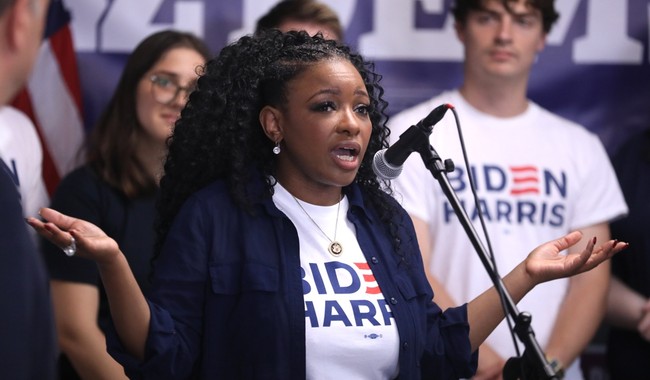
The House drama over donations tied to the name Jeffrey Epstein has turned into a public relations train wreck for Democrats, with a Texas congresswoman mixing up donors and a Long Island neurosurgeon offering a sharp, ironic retort that exposes the sloppy haste behind the accusation.
Democrat Rep. Jasmine Crockett used the House floor to suggest a connection between Republicans and donations from someone named Jeffrey Epstein, but the facts show she conflated different individuals who happen to share the same name. She cited records without verifying dates or identities, and that lack of care is what landed her in hot water. When political claims ignore basic details, the error tends to reflect worse on the accuser than the accused.
Crockett later defended herself by saying her team didn’t have time to double-check the information, which hardly excuses a public allegation in a legislative chamber. The donations referenced by one Jeffrey Epstein were made in April and August 2020, after the financier with the same name had already died. That timeline alone should have been a red flag before bringing it up on national television.
One of the men who was wrongly dragged into the controversy is Dr. Jeffrey Epstein, a Long Island neurosurgeon who actually donated to Lee Zeldin. He spoke to the press and suggested a cheeky response to being mislabeled, pointing up how ridiculous the whole episode looks when names are weaponized without confirmation. This is the sort of mistake that would be avoided with simple fact-checking, yet it keeps happening.
Dr. Epstein said, “I think that I should contribute money to Jasmine Crockett and then let everybody know that she also took money from Jeffrey Epstein.” That line lands because it mirrors the exact tactic Crockett used: blur names until an accusation sticks. Doing for others what you accuse them of doing demonstrates how careless political theater can erase real distinctions.
Beyond the punchline, the neurosurgeon’s point is a practical one: if politicians make claims about donations, they should be precise and accountable. Crockett’s approach dragged ordinary people into a scandal they had no part in, which is unfair and reckless. Accuracy matters, and the consequences of muddy claims ripple through reputations and public trust.
When the dust settles, the episode puts more light on Democratic messaging choices than on any alleged Republican connection to the financier. House Minority Leader Hakeem Jeffries and others tried various defenses, but the core mistake was the initial leap from shared name to shared identity. In politics, carelessness about facts is a self-inflicted wound that opponents will highlight without mercy.
Republicans have a vested interest in calling out this kind of sloppy accusation because it corrupts public debate and makes legitimate oversight look partisan. Holding the line on accuracy strengthens the case for transparent, responsible discourse in Washington. When errors are corrected and accountability follows, it helps restore confidence that policy concerns, not headline grabs, should drive congressional debate.
The whole affair also serves as a reminder for reporters and staffers: check dates, verify identities, and avoid the temptation to treat ambiguous records as conclusive evidence. A few minutes of verification would have prevented wasting floor time and political capital. For now, the neurosurgeon’s wry suggestion stands as a pointed lesson about how not to make a case in public life.
What remains clear is that politics as performance, without attention to basic facts, erodes credibility on all sides. Lawmakers who want to persuade should focus on rigorous sourcing rather than sensational claims. The misstep here is a simple, avoidable one—one that, thanks to a quick-witted response from an innocent donor, will be remembered as a cautionary tale.



Add comment