
The Senate’s decision to block a yearlong funding bill for the Department of Homeland Security set off another round of partisan theater in Washington, with Democrats rejecting a White House-backed proposal, senators heading home for a weeklong recess, and the clock ticking toward a funding lapse that could disrupt several agencies. This article walks through the vote, the key players, the stakes for frontline agencies, and the political theater that followed.
Last-minute developments in immigration enforcement were already in motion when the Senate vote landed. White House Border Czar Tom Homan had just announced that Operation Metro Surge in the Twin Cities would be winding down and that federal immigration enforcement there would soon revert to normal levels, a development that supporters say showed results on the ground.
The motion in the Senate required 60 votes to advance and failed 52-47, with Senator John Fetterman the lone Democrat to cross party lines to support moving the House-approved DHS funding bill forward. That near-partyline split underscores how little appetite some Senate Democrats have for compromise on homeland security funding, even as agency budgets face an imminent deadline at midnight on Friday.
Senate Majority Leader John Thune described the Democratic stance bluntly: “What it appears to me, at least at this point, is happening is the Democrats, like they did last fall, they really don’t want the solution. They don’t want the answer. They want the political issue.” Thune chose to vote no on the procedural motion in order to preserve the ability to bring the bill back to the floor quickly, a tactical move that hardly calms the worry about a shutdown.
From the Democratic side, objections centered on ICE and the need for tighter oversight and reforms. Senator Patty Murray said the White House plan “did not address our major concerns” and that Democrats planned to offer a counterproposal, signaling a stalemate over ICE policy that supersedes the immediate funding timeline for many in her caucus.
“Democrats have been very clear. We will not support an extension of the status quo, a status quo that permits masked secret police to barge into people’s homes without warrants, no guardrails, zero oversight from independent authorities.”
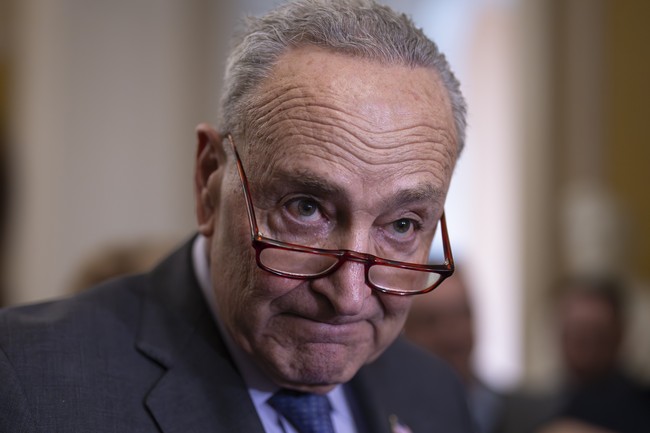
Senate Minority Leader Chuck Schumer echoed that sentiment publicly and also used social media to argue ICE needs to be reined in, even as administration officials were highlighting enforcement gains elsewhere. That rhetorical escalation came at a moment when practical consequences loom for agencies that do rely directly on annual appropriations.
It’s worth clarifying which agencies would face disruption if funding lapses. ICE and Customs and Border Protection would largely continue operations through a lapse, since border and immigration enforcement are essential functions. The immediate pain, however, would fall on the Transportation Security Administration, the Federal Emergency Management Agency, and the Coast Guard, where operations, staffing, and readiness could be affected if Congress fails to act by the Saturday deadline.
The decision by Senate Democrats to block the motion and then allow a recess without securing a clear path forward signals a politically driven approach rather than a pragmatic one in the view of many conservatives. When lawmakers choose theater over timely problem solving, it is frontline workers and ordinary Americans who face uncertainty at critical services like disaster response, maritime safety, and airport security.
Republican senators argue that passing the DHS funding bill would have kept crucial programs funded while negotiations over policy reforms continue on the side. That is the standard Washington compromise: fund now, debate later. Choosing to reject that sequence raises not just policy questions but also governance concerns about priorities and timing.
The broader context is the electorate’s frustration with recurring budget brinkmanship. Voters expect functional government and results, especially when immigration and border security are front-page issues. The optics of senators flying home as deadlines approach does not play well with citizens who want steady public safety and predictable government services.
What happens next depends on whether leadership can force another vote, strike a narrowly tailored agreement that satisfies enough senators on both sides, or if partisan positions harden and funding lapses into a partial shutdown. Each path carries political costs and operational consequences, and the coming days will make clear whether Washington chooses governance or another round of red-team versus blue-team spectacle.


Add comment