
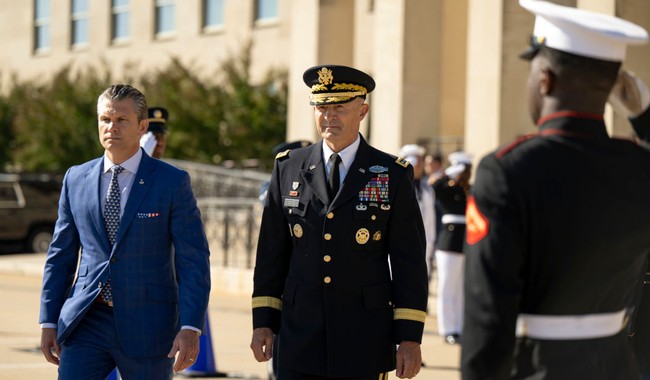
Pete Hegseth, serving as Secretary of War, has ordered Army Chief of Staff General Randy George to step down and retire immediately, removing the Army’s top uniformed officer amid active conflict with Iran; the move shifts leadership midstream but operations remain under U.S. Central Command. This action follows a string of high-level personnel changes across the services and reflects a broader push by Hegseth to reshape military leadership and priorities.
Hegseth’s directive means General Randy George will leave his post effective immediately, a sudden end to a tenure that began with a four-year appointment confirmed in September 2023. George’s prior role as military assistant to Defense Secretary Lloyd Austin from 2021 to 2022 is a notable part of his resume, and his abrupt exit raises questions about timing and the message being sent to career leaders. Removing the Army chief while hostilities are ongoing is dramatic, even if CENTCOM retains operational command of forces in theater.
This personnel shuffle is one piece of a larger pattern: the vice chief of staff of the Army was replaced earlier, and Hegseth has also installed new leaders in the Navy and Air Force senior ranks. Those changes have come alongside high-profile firings and reassignments at the top of the Joint Chiefs structure, signaling an aggressive approach to changing how the Pentagon is run. Observers have noted that Hegseth views parts of the force as resistant to his reform agenda, and he is proceeding quickly to install allies who will push his priorities.
Some of the criticism centers on whether the Army moved fast enough to provide theater air defense and other assets to the region, where casualties from drone and ballistic missile attacks have occurred. Aside from a tragic mid-air collision between two tankers, U.S. losses in the Iran conflict have largely resulted from these asymmetric strikes, prompting scrutiny of preparedness and allocation decisions. That scrutiny is a political and strategic pressure point for anyone overseeing the Army at this moment.
The most likely successor is Army Vice Chief of Staff Lieutenant General Christopher LaNeve, who stepped into his current role after Hegseth removed General James Mingus. LaNeve previously served as Hegseth’s military assistant, so his elevation would mirror General George’s own path through Pentagon staff roles into senior command. Such a direct line of succession underscores the extent to which Hegseth is consolidating influence across Army leadership.
There is little evidence of explicit, longstanding animus between General George and the White House or Hegseth, though personnel decisions at this level rarely occur without political calculation. Some sources have pushed back against more sensational explanations for the move, noting that isolated anecdotes and rumors do not appear to be the cause. Still, the optics of removing a service chief in wartime invite immediate media narratives and partisan commentary, which Hegseth’s team seems prepared to face.
Strategically, the immediate impact on operations should be limited because theater command remains under CENTCOM, but leadership vacuums at the Pentagon matter for longer-term planning, resource decisions, and morale. Replacing senior officers alters the institutional culture and can accelerate reforms, but it also risks undermining experienced bureaucratic continuity at a time when steady stewardship is critical. The coming days will reveal how quickly an acting chief is named and whether the transition stays orderly amid ongoing contingency operations.
Politically, this move fits into a broader Republican argument that the military needed new direction and firmer civilian control aligned with the administration’s national security goals. Supporters will argue that decisive action corrects institutional drift and prioritizes readiness, while critics will warn about politicizing uniformed leadership during operations. Either way, the personnel change is a clear signal that the current civilian leadership intends to reshape the senior ranks to match its strategy and expectations.



Add comment