
This piece describes a major policy change that lets trained service members request permission to carry privately owned firearms on military installations, explains Secretary of War Pete Hegseth’s rationale in his own words, and argues for broader steps to restore a warrior ethos and responsibilities to those who wear the uniform.
No More Sitting Ducks: SecWar Hegseth Empowers Our Warriors to Defend Themselves on Base
For years our troops have been disarmed while on duty inside their own bases, turning experienced warfighters into easy targets when violence struck. That policy left them unable to defend themselves during several mass-shooting events, even though many were trained and qualified with weapons. The disconnect between battlefield trust and garrison restrictions has been glaring and dangerous.
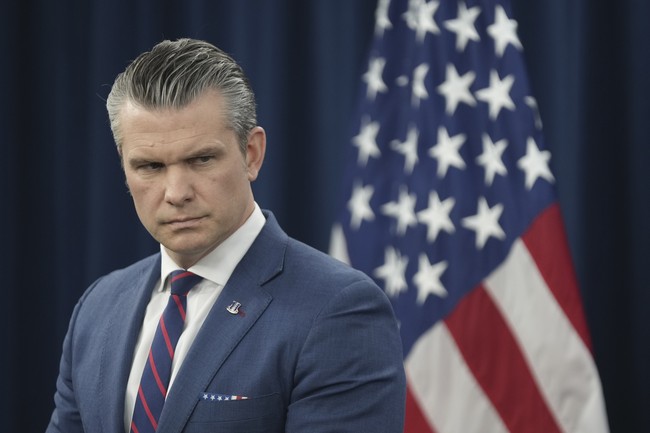
On Thursday, Secretary of War Pete Hegseth
SecWar Hegseth says – it’s worth repeating in full:
Our great republic was founded on a simple yet bold idea. Our rights as citizens are not granted to us by government but instead by God.
Two hundred fifty years ago, the Revolutionary War was fought to secure our God-given rights. The Second Amendment to our Constitution enshrines the right of all citizens to carry weapons to protect themselves, their families, and their fellow countrymen.
The War Department’s uniformed service members are trained at the highest and unwavering standards. These warfighters, entrusted with the safety of our nation, are no less entitled to exercise their God-given right to keep and bear arms than any other American. Our warfighters defend the right of others to carry — they should be able to carry themselves. Recent events like what happened at Fort Stewart, Holloman Air Force Base, or Pensacola Naval Air Station have made clear that some threats are closer to home than we would like. In these instances, minutes are a lifetime. And our service members have the courage and training to make those precious short minutes count.
Before today, it was virtually impossible — most people probably don’t know this — it is virtually impossible for War Department personnel to get permission to carry and store their own personal weapons aligned with the state laws where we operate our installations. I mean, effectively, our bases across the country were gun-free zones. Unless you’re training or unless you are a military policeman, you couldn’t carry. You couldn’t bring your own firearm for your personal protection onto post.
Well, that’s no longer. The memo I’m signing today directs installation commanders to allow requests for personal protection to carry a privately owned firearm with the presumption that it is necessary for personal protection. If a request is denied, then we will explain in detail the basis for that denial. Again, the presumption is service members will be able to have their Second Amendment right on post.
Not all enemies are foreign, nor are they all outside our borders. Some are domestic. Confirming your God-given right to self-protection is what I’m signing into action today.
This move corrects a policy that made little sense: people we trust with lethal force on the battlefield had their hands tied when danger was steps away. Allowing a presumption of permission shifts the default toward personal protection for uniformed personnel. That change recognizes both the professional competence of service members and the practical reality that threats can emerge anytime, anywhere.
Policy changes are only meaningful if implemented correctly by commanders who understand mission priorities and risk management. The memo requires commanders to consider requests and to explain denials, which builds accountability into the system. Service members get a process and an expectation that their rights and safety will be taken seriously on post.
Still, permission alone may not fully reestablish the warrior ethos or guarantee readiness in garrison conditions. I’ve long argued that issuing sidearms and requiring certain ranks to carry would standardize protection and clarify expectations. Mandating issued firearms for officers and senior NCOs would remove ambiguity and ensure trained leaders are ready to respond.
There’s also a personnel and fitness question that policy must address: those who cannot safely carry due to unreliability, permanent illness, or mental health issues should be removed from duty, because combat and garrison both require reliable hands. That’s a hard line, but the logic is straightforward: trust the force with arms if they are fit; if not, relieve them of responsibilities that require lethal force.
The argument for restoring a tougher military culture is not about politics; it’s about trusting trained professionals to protect themselves and their comrades. We expect service members to face danger overseas; we should trust them to safeguard the installation where they live and work. This policy moves us closer to that trust-based approach.
Editor’s Note: Thanks to President Trump and Defense Secretary Pete Hegseth’s leadership, the warrior ethos is coming back to America’s military.
There will be critics and there will be questions about how this is managed on installations with dense populations and sensitive missions. Those debates matter and should be aired, but the basic premise is simple: trained warfighters deserve the ability to defend themselves when minutes count. Restoring that right on post is overdue and a sensible step toward protecting our forces.



Add comment