
This piece examines the political exchange that followed President Donald Trump’s national address on Operation Epic Fury against Iran, focusing on Kamala Harris’s preview remarks and the White House response, while preserving direct quotations and embed tokens.
President Donald Trump addressed the nation to update Americans on Operation Epic Fury, describing the campaign’s next steps and intentions. He made clear, “I can say tonight that we are on track to complete all of America’s military objectives shortly. Very shortly, we are going to hit them extremely hard over the next two to three weeks,” and he warned, “We’re going to bring them back to the Stone Ages where they belong. In the meantime, discussions are ongoing.” Those words set the tone for a firm, results-driven posture toward a clear threat.
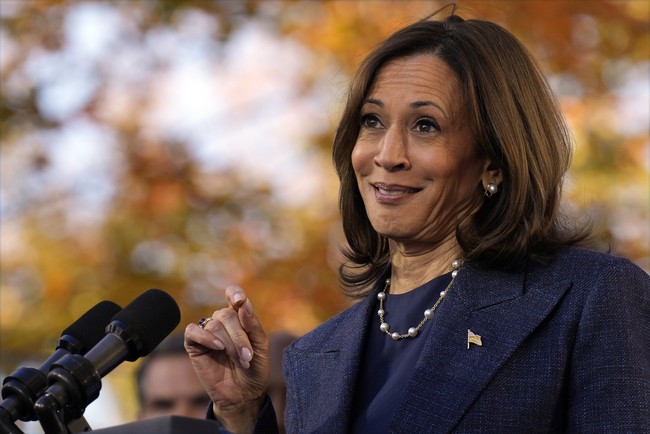
Before the speech aired, Vice President Kamala Harris released a short video preview criticizing the president and asserting she would not listen to the remarks. In that clip she claimed, “He brought America into a war that people don’t want, he has put American troops in harm’s way, costs are rising by the day, and meanwhile, he has done nothing to address the needs of the people of America.” Her decision to pre-judge a speech she said she would not hear drew immediate pushback from Republican circles.
The White House response was swift and pointed. Spokesperson Anna Kelly fired back with an unusually blunt retort that quoted Harris’s own past words in a mocking, dismissive tone: “Kamala Harris oversaw the disastrous withdrawal from Afghanistan and ushered in an invasion of migrant criminals into our homeland. She should listen to the overwhelming majority of Americans who want her to crawl under a coconut tree and go away.” That line landed hard with critics who still view the Kabul withdrawal as a defining failure.
Republican commentators emphasized the contrast between a president presenting a plan of action and a former vice president launching preemptive attacks without engaging the content of the speech. The criticism went beyond tone to focus on policy memory, noting that the prior administration’s foreign policy decisions had consequences. For many conservatives, the current effort to neutralize a hostile regime looks like a necessary cleanup of earlier lapses in deterrence and enforcement.
The debate also reopened wounds tied to the chaotic exit from Afghanistan, where the loss of 13 service members remains a visceral touchstone. Those fatalities are frequently cited as part of a broader critique of the prior administration’s strategy and competence. Critics argue that operational missteps and lax enforcement overseas left dangerous voids that required the current administration to act decisively to restore deterrence.
On domestic issues, the exchange revived familiar partisan arguments about economic stewardship and border security. Republicans highlighted rising costs and border challenges as evidence that the previous leadership failed to secure core responsibilities of government. They framed the current military action as consistent with protecting American lives and interests while contrasting it with perceived weakness from the prior administration.
Supporters of the president pointed to the strategic clarity in his address and the promise of concrete military objectives as proof of a different style of governance: take direct action, announce measurable goals, and keep the public informed. That approach resonated with voters who prioritize strength and results over rhetoric. It also set up a campaign narrative around competence in national security heading into the next election cycle.
Meanwhile, Harris’s critics suggested her video hinted at political calculations aimed at a 2028 run, calling it more style than substance. They argued that attacking a speech one refuses to hear is political theater, not leadership. Even so, some polls continue to show her prominence among Democratic hopefuls, which keeps her remarks politically relevant despite the blowback.
The back-and-forth illustrated how national security episodes instantly become political theater, with each side using the same facts to craft different stories about competence and priorities. For Republicans, the exchange underscored the distinction between a president who acts and opponents who engage in preemptive criticism. That contrast will likely be replayed in future debates about where the country stands and who is best positioned to protect it.
As the military campaign proceeds and public statements continue to circulate, the political fallout will shape how voters perceive leadership on both foreign policy and homeland safety. The episode is a reminder that in wartime or crisis, communication and credibility matter as much as strategy. Those dynamics will keep this story at the center of political discussion in the weeks ahead.


Add comment