
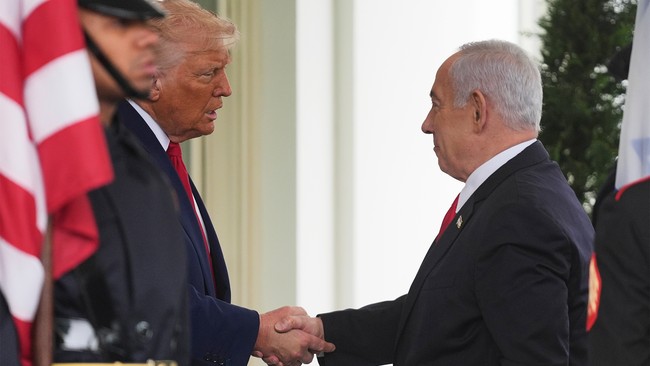
I’ll explain why Israel and the U.S. moved against Iran now, relay Netanyahu’s account of the risks if Tehran kept advancing its nuclear and missile programs, reproduce his personal reflections on war and loss, and show how he framed the partnership with President Trump — including his exact quoted remarks and the embedded media references.
The joint US-Israeli operation dubbed Epic Fury is being described by leaders as a decisive response to what they call an imminent threat from Iran. Prime Minister Benjamin Netanyahu told Sean Hannity the strikes had to happen immediately, arguing delay would make future intervention impossible. His message was blunt: act now or lose the ability to stop Tehran from becoming far more dangerous.
Netanyahu warned that Iran’s nuclear and ballistic missile efforts were moving underground and into hardened facilities that would quickly become immune to conventional strikes. He said those moves would let Tehran finish weapons work within months, creating leverage to threaten or blackmail many countries. That calculus, he argued, made timing critical for any effective counterstrike.
Embedded below is the interview clip and a related social post for context.
Critics — including many Democrats, according to coverage at the time — argued there was no imminent threat and cautioned against escalation. Netanyahu dismissed that stance as dangerously mistaken, saying the regime is “unreformable” and “totally fanatical” about destructive goals. He framed the strikes as preventative, not provocative, intended to deny Iran the capacity to target the United States and allies.
The reason that we had to act now is because they were. After we hit their nuclear sites and their ballistic missile program, you’d think they learned a lesson, but they didn’t because they’re unreformable. They’re totally fanatical about this—about the goal of destroying America. So they started building new sites, new places, underground bunkers that would make their ballistic missile program and their atomic bomb program immune within months. If no action was taken now, no action could be taken in the future. And then they could target America. They could blackmail America. They could threaten us and threaten everyone in between. So action had to be taken. And you needed a resolute president like Donald J. Trump to take that action.
When asked about conspiracy claims that paint Netanyahu as acting at Trump’s direction, the prime minister laughed off the idea and called it absurd. He insisted that the U.S. president acts on what he believes is best for America and future generations. Netanyahu made clear he views the relationship as a partnership, not one-sided control.
Netanyahu described his own wartime experiences to explain why he supports decisive action against regimes that target civilians and allies. He recounted being wounded, fighting terrorists, and personally losing comrades in battle, a history he said gives him a visceral understanding of war’s cost. Those memories, he said, are why he is determined to prevent threats from reaching a level that would permit unchallenged aggression.
[Trump] does what he thinks is right for America. He does also what he thinks is right for future generations. And frankly, we’re partners in that effort, because I’ve devoted my life to securing the life of the one and only Jewish state, and believe me, it’s been a struggle.
Netanyahu went further, describing the human toll war has taken on him personally and why that doesn’t make him crave conflict. He recalled losing a brother and holding a dying comrade as a young soldier, experiences that informed his sober view of military choices. Those recollections were offered as context for endorsing targeted action to dismantle tools of mass destruction and terror.
I’ve known the pangs of war. I lost a brother in war… in battle, I myself fought terrorists and was wounded in liberating hostages from a hijacked plane. I held a fellow soldier in my arms when I was 18, and he died in my arms.
I know the cost of war. But I know sometimes that war is necessary to protect us from the people who would destroy us. And that’s what free societies have to understand.
“This is not an endless war,” Netanyahu added, arguing the operation is meant to create the conditions for lasting security, not perpetual conflict. He framed the strikes as opening a path toward a more stable region by removing immediate existential threats. For supporters of a strong stance, his remarks underline a worldview that accepts short, targeted use of force to prevent larger catastrophes later.
The debate over necessity and timing will continue across media and political circles, and this interview is likely to be cited by proponents of the operation. For now, Netanyahu’s point is clear: letting Iran finish hardened nuclear sites would close off future options and leave far worse choices on the table later.
For readers following the exchanges and footage from the interview, the related clip and social embed are included below for reference.

Add comment