
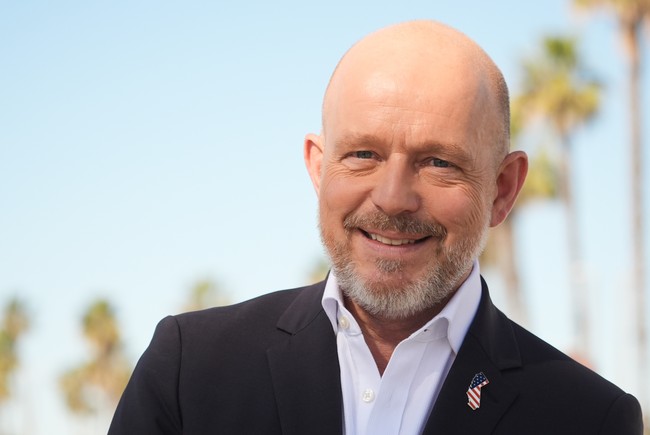
Steve Hilton lays out a blunt case: California voters are paying more, getting less, and political insiders keep the gravy train running. This piece walks through his interview claims, the tax and spending examples he cited, the CHIRLA and diaper program controversies he raised, and how he ties it all back to sixteen years of Democratic rule in Sacramento.
Hilton told a national audience that Californians face “the highest taxes in the country for the worst results,” and he did not mince words about the consequences. He framed the state’s problems as systemic and driven by a political class that prioritizes donors and nonprofits over everyday families. That argument anchors his campaign pitch and shapes how he proposes to change things if voters act.
“The health care costs are going up. It takes longer and longer to wait for care wherever you go, because of the overwhelming number of people who are coming, who shouldn’t be here, getting that care. And the taxes are going up. We pay the highest taxes in the country for the worst results.”
On the show, Hilton connected high costs directly to policy choices in Sacramento rather than unavoidable market forces. He pointed to rising gas, utility, housing, and rent expenses as evidence that the state is out of control on basic affordability. His message is targeted at working families who carry the burden of a high-cost state without seeing commensurate benefits.
“Highest gas prices in the country, electric bills that have doubled in the last 10 years, the highest housing costs and rents, everything off the charts, expensive.”
He also criticized California for not adopting a federal policy that exempts tips from taxation, arguing it makes life harder for service workers. Hilton proposed a plan to make the first $100,000 tax-free and to cap the rate at a flat 7.5% above that threshold, coupled with real spending cuts. That mix of tax relief and fiscal restraint fits squarely in a conservative policy playbook aimed at shrinking government interference and returning money to taxpayers.
Hilton returned repeatedly to the theme of taxpayer-funded political machines siphoning public dollars through nonprofits. He alleges that public money is cycled through organizations with political aims while everyday citizens pick up the tab. Calling out those connections is part of his broader effort to link policy failures to corruption and influence rather than mere incompetence.
He brought up CHIRLA, saying taxpayer funds supported canvassers who worked on behalf of a Democratic candidate, and he cited the organization’s reported intake of $72 million in public funding over three years. Hilton and his team referred the matter to authorities, and he used this example to argue that blurred lines exist between taxpayer-funded activities and political campaigning. That allegation is meant to show how public money can be redirected into political advantage without clear accountability.
Hilton also highlighted the Golden State Start diaper program, pointing out that the state paid roughly $0.50 per diaper while retailers sell similar products for $0.12 to $0.15. He questioned why nonprofits connected to the governor’s network were involved in distribution and why middlemen appear to be collecting a significant share of the funds. The example is meant to illustrate inefficiency and cronyism in how state programs are administered.
On the economic front, he argued that Silicon Valley’s headlines mask a migration of real manufacturing and investment to other states. “All the investment, the semiconductors, the data, all the manufacturing, the real job creation from that, that’s going to Texas and Arizona,” he said. Hilton framed that shift as a consequence of taxation and regulatory choices, suggesting a competitive disadvantage created by California policy.
He warned that policies like the billionaire tax and other revenue grabs are accelerating wealth and business departures, citing analysts who estimate hundreds of billions in capital leaving the state. Hilton’s point is political and practical: tax increases push out investment, and the state then finds itself with lower revenue growth and fewer jobs. He claims Governor Newsom sees the effect but is unwilling to change course.
“We’ve got to relieve the pain and the pressure, especially on working people and small businesses in California.”
Hilton wrapped his pitch in electoral strategy terms, saying voter ID and recent turnout trends give him confidence about a potential political shift in November. “I think we’re going to see a big political revolution happen this year,” he told the host. That optimistic line is aimed at mobilizing voters who feel the strain of costs, immigration pressures, and what he calls taxpayer-funded corruption.
Whether those claims will translate into votes is uncertain, but the narrative of high taxes, misallocated public dollars, and a political class insulated from consequences is now a central part of his campaign. He ties kitchen-table issues to broader governance failures and makes those connections the core of his argument to California voters.

Add comment