
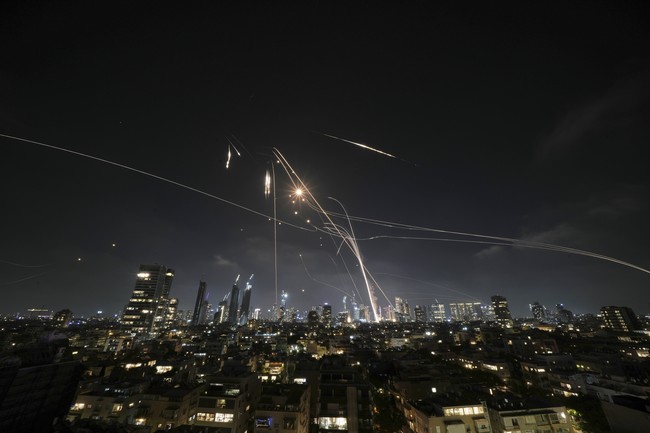
The headline is stark: Hezbollah launched roughly 100 rockets at Israel, testing missile defenses and forcing Israeli leaders to consider a wider response as tensions with Iran and its proxies escalate. This piece walks through what happened, what Israel has said, how the Iron Dome performed, and the broader strategic implications for the region from a Republican perspective that prioritizes strong deterrence and decisive action.
Early reports indicate Hezbollah fired about 100 rockets into northern Israel, a large and coordinated barrage that strained the country’s air defenses. Officials say the Iron Dome intercepted many incoming projectiles, but the volume reportedly exceeded the system’s capacity in this instance. With such a concentrated salvo, even a robust defense shows limits, and that reality matters for both planners and policymakers.
Israeli officials have responded quickly, preparing countermeasures and signaling that they will not tolerate attacks on civilians. “The IDF will not tolerate any harm to Israeli civilians and will forcibly respond against any threat posed to the State of Israel,” an Israel Defense Forces spokesperson said. At the same time, the IDF has reportedly targeted launchers and infrastructure tied to Hezbollah in Lebanon with air strikes to degrade future firing capability.
Hezbollah terrorists in Lebanon on Wednesday launched 100 rockets at Israel — overwhelming Israel’s lauded Iron Dome system so much that only half were shot down, an Israel Defense Force source exclusively told The Post.
In response, the IDF is preparing a ground invasion into Lebanon, the source said Wednesday. The attacks from Iran’s proxy militant group and counter assault from Israel mark a new front in the ongoing US-Israeli joint military mission that the US has dubbed Operation Epic Fury.
“The IDF will not tolerate any harm to Israeli civilians and will forcibly respond against any threat posed to the State of Israel,” an Israel Defense Forces spokesperson said.
There is conflicting and incomplete information about casualties and damage at the time of the initial reports, but any rockets that breach defenses create both physical harm and political pressure. Israel faces a hard choice: scale a proportionate military response or risk appearing weak in the eyes of adversaries and allies alike. From a Republican viewpoint, showing firmness and ensuring long-term deterrence is critical to preventing further escalation.
Military planners are said to be preparing for options that could include a ground incursion into Lebanon, which would demand significant air support and logistics. Ground operations carry big risks, from higher casualty counts to regional spillover, but commanders argue that degrading Hezbollah’s launch capability and command nodes may be necessary. The IDF’s reported strikes on launch sites are an early attempt to blunt additional barrages while political leaders weigh next steps.
The incoming from Lebanon has put Israel’s missile defense system to the test, with rockets not being taken out. It’s unclear what damage has been caused in Israel or the scale of a possible Israeli ground operation in response.
The Israeli Air Force is striking ready-to-launch projectile launchers and additional infrastructure sites belonging to the Hezbollah terrorist organization across Lebanon, according to a statement from the IDF.
Strategically, the event sends a message to Tehran and its proxies: massed rocket attacks can impose costs and test defenses, and that changes calculations. If adversaries now believe they can overwhelm the Iron Dome by concentrating fires, they may be incentivized to repeat the tactic. The proper counter is not panic but decisive action: replace attrition with suppression and, where needed, offensive measures that restore deterrence.
There is another variable in the south: the Houthis in Yemen. So far they have stayed out of direct strikes against Israel in this episode, but analysts worry proxies could coordinate to stretch defenses across multiple fronts. That would raise the stakes considerably and demand broader coalition responses, intelligence sharing, and kinetic options to stop weapons flows and launch-capability build-up before another massed strike occurs.
Iran’s role looms over every move in the region. Whether Tehran ordered this barrage, supplied the rockets, or simply permitted Hezbollah to act, the result is the same: the conflict’s scope grows and so does the need for firm policy. Republicans tend to argue that only sustained pressure and clear consequences will deter future attacks, not ambiguous responses or drawn-out diplomacy that fails to alter hostile behavior.
Operationally, Israel and its partners will need to reassess missile defense loadouts, interceptor stocks, and distribution of assets to ensure no single salvo can create a strategic surprise. Tactical fixes and strategic resolve must go hand in hand: buy more interceptors, harden populations, and, crucially, take the fight to hostile networks so they cannot mass fires with impunity. That combination preserves lives and strengthens deterrence.


Add comment