
The piece examines Democratic obstruction and mixed messages about the Strategic Petroleum Reserve, highlights Republican criticisms of past releases that drained the SPR, and notes GOP plans to refill and secure domestic energy production to restore national resilience.
Democrats keep pointing fingers about who emptied the Strategic Petroleum Reserve, but history and policy moves tell a different story. Republican critics argue the decisions to release massive quantities of oil were political choices, not emergency responses, and those choices left the nation exposed at a dangerous low. The debate matters because energy is national security and economic stability rolled together.
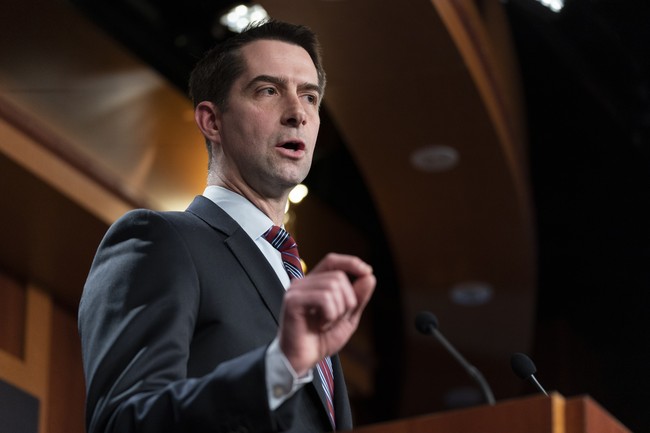
Senator Tom Cotton has pushed the Department of Energy to investigate why so many barrels were released and whether those moves were timed for political advantage. That push reflects a broader Republican concern: when the administration prioritizes optics over long-term supply, reserves dwindle and consumers lose leverage. Restoring a full, properly maintained SPR should be a nonpartisan priority, but Democrats’ record on this has been inconsistent.
In his latest display of abject hypocrisy, he is demanding that President Trump open the Strategic Petroleum Reserve to address the recent spike in fuel prices resulting from Operation Epic Fury. The catch? Senator Schumer blocked the first Trump administration from filling the reserve with oil at $29 a barrel, when now it’s over $100.
The quote above points to a pattern: calls to release oil now often come from people who opposed filling it when prices were low. That kind of selective memory matters because buying low and holding a reserve is the responsible move for any administration serious about energy security. Releasing tens of millions of barrels during political cycles undermines the Reserve’s purpose and leaves future administrations with fewer tools to respond to genuine supply shocks.
Republicans have also noted how domestic policy choices disrupted production, making refilling the SPR harder and more expensive. Restrictions on leasing and permitting, combined with regulatory pressures, reduced domestic output at exactly the wrong time. When supply is constrained, buying oil to replenish the Reserve becomes more costly, and that cost gets passed to American consumers.
Cotton, in a letter first obtained by Fox News Digital to Department of Energy Secretary Chris Wright, charged that the Biden administration released 180 million barrels from the nation’s reserves in 2022 “to suppress gas prices ahead of the midterm elections.”
“That decision drained the reserve to a 40-year low,” Cotton wrote. “The decision to drain the SPR was not a response to a supply emergency; it was a deliberate political act designed to protect Democrats from the consequences of their own failed energy policies.”
Biden tapped the reserve twice — once in 2021 to relieve soaring fuel prices as the nation still grappled with the economic fallout from the COVID-19 pandemic and again the following year to combat increased energy costs at the onset of the war between Russia and Ukraine.
Those lines, quoted directly, are central to the Republican critique: releases were large, repeated, and perhaps timed to blunt political pain rather than fix a supply emergency. The combination of draining the SPR and limiting domestic production left the nation with less buffer and fewer options. That is a predictable consequence when policy choices prioritize green signaling over energy independence.
Beyond the political timing, Republicans point out specific missteps, such as reported sales that benefited foreign buyers and decisions that effectively exported American leverage. When the Reserve is treated like a short-term price-control tool, rather than a strategic asset, it fails the purpose set by lawmakers and national planners. The nation needs a reliable emergency stockpile, not a tactical mechanism for election-season headlines.
On the other side, congressional Democrats frequently call for emergency releases when pump prices tick upward, but many of those same voices opposed filling the Reserve when prices were historically low. That contradiction fuels a credibility problem: if you block prudent accumulation and then urge releases during political pressure, you have shaped the vulnerability you later decry. Republicans use that logic to press for structural fixes that prevent repetition.
Among the proposed GOP fixes are recommitting to refill the Reserve, prioritizing domestic production through sensible leasing and permitting, and insulating SPR decisions from short-term political calculations. The aim is straightforward: restore a buffer that protects American families and the economy, while making sure future administrations cannot empty the vault for electoral advantage. Policy stability here matters more than partisan points.
Republican leaders also emphasize the long view: energy independence and a resilient domestic industry reduce the need to manipulate reserves in the first place. By encouraging production, refining capacity, and secure supply chains, the country gains real protection against foreign shocks and market volatility. That approach treats the SPR as what it should be: a strategic asset, not a political prop.
Ultimately, the conversation is about trust and competence. Voters deserve leaders who will build and maintain true energy resilience rather than stage short-term responses that leave the nation weaker. Restoring the Strategic Petroleum Reserve and aligning policy to encourage domestic supply are practical steps Republicans argue will rebuild that trust and strengthen national security.


Add comment