
The House GOP rolled out a package billed as an alternative to extending enhanced Obamacare subsidies, proposing association health plans, expanded HRAs, stop-loss changes, and strict pharmacy benefit manager reporting while rejecting a direct extension of premium tax credits set to expire December 31.
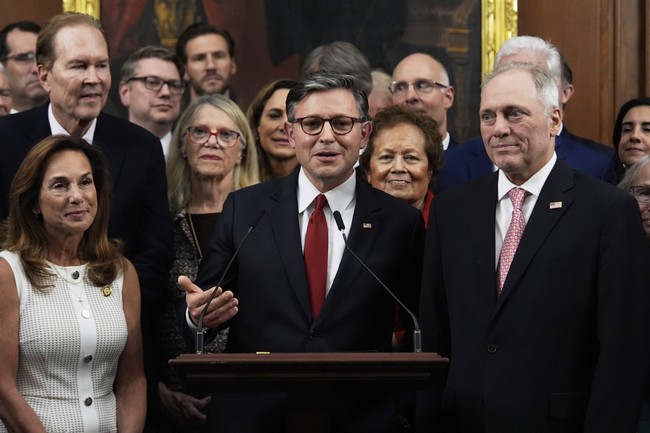
House Republicans introduced the “Lower Health Care Premiums for All Americans Act,” led by Rep. Mariannette Miller-Meeks, as their response to Democratic calls to extend temporary premium tax credits that currently help about 22 million Americans buy insurance. GOP leaders framed the measure as tackling structural cost drivers rather than writing bigger checks to insurers. Speaker Mike Johnson set a floor vote for next week while saying the plan aims to expand choice and transparency across the market.
The bill resurrects association health plans, a Trump-era idea that federal courts had blocked in 2019 and that the Biden administration formally rescinded in 2024. Under the proposal, groups or associations of employers could offer coverage if they meet organizational and governance tests, have existed for more than two years for reasons other than selling insurance, and cover at least 51 employees. Self-employed workers could join if they meet modest work-hour thresholds, and a minimum of 20 self-employed members would be needed to form a group.
Supporters say these association plans allow employers to pool buying power and lower premiums by offering more choices, while the text still forces compliance with key Affordable Care Act nondiscrimination rules. Plans would not be allowed to deny coverage for pre-existing conditions, and base premiums would use modified community rating, with employers able to adjust their contributions according to risk profiles among member firms.
The bill also clarifies stop-loss insurance for self-insured group plans, stating that stop-loss policies are not “health insurance coverage” under federal law, which preempts state regulation in that area. That change is intended to let smaller employers self-insure with lower attachment points, making it cheaper to manage routine claims while protecting against catastrophic losses. GOP backers argue this will expand options for small businesses that struggle with rising group-plan costs.
Another major thread expands individual coverage HRAs so employers can fund workers who buy individual-market plans rather than forcing employers to offer traditional group insurance. Employers could set different HRA amounts by employee class—full-time versus part-time, location, union status, or seasonal work—allowing variation up to three-to-one based on age and dependent coverage. The arrangements must be offered uniformly within each class, and employers generally could not offer both an HRA and a traditional group plan to the same class of workers.
Workers could buy exchange coverage with pre-tax dollars through cafeteria plans while employers report HRA benefits on W-2 forms. Proponents say this makes coverage portable and tailored, giving employees control over plan choice instead of being locked into a single employer-sponsored product. Critics worry about fragmentation, but Republicans emphasize consumer freedom and competition as ways to drive down costs.
Title II focuses on PBM transparency, imposing extensive reporting obligations on pharmacy benefit managers 30 months after enactment. PBMs would have to send detailed reports at least twice a year to group plans, including drug-by-drug compensation comparisons between PBMs and pharmacies, the spread between those amounts, rebates and manufacturer payments, formulary placement rationales for high-cost drugs, and pricing comparisons for PBM-owned versus network pharmacies. For all plans, the bill requires aggregate spending and rebate data, payments to brokers for referrals, and disclosure of requirements to use PBM-affiliated pharmacies.
The legislation requires plans to provide summary documents to participants on request and to show spread pricing on individual claims, with steep penalties for noncompliance—up to $10,000 a day for failure to provide information and up to $100,000 per item for knowingly false data. Republicans argue these rules will expose hidden markups and rebate flows that inflate costs, pushing PBMs to operate more like straightforward service providers instead of opaque middlemen.
Lawmakers also included appropriations to restart cost-sharing reduction payments beginning in 2027, reversing the 2017 decision to stop those payments. Cost-sharing reductions lower deductibles and out-of-pocket limits for enrollees between 100 and 250 percent of the federal poverty level who buy silver plans, and their removal in 2017 led insurers to “silver load” premiums, which had odd effects on federal premium tax credit spending. GOP aides estimate CSR funding could cut premiums roughly 12 percent.
The package does not extend the enhanced ACA premium tax credits set to lapse at the end of the year, a political flashpoint that separates fiscal conservatives from moderates who want temporary relief for millions of enrollees. House Minority Leader Hakeem Jeffries said he expected it “to be a disaster and actually not enhance the health care of the American people.” Speaker Johnson pushed back with a pointed line: “While Democrats demand that taxpayers write bigger checks to insurance companies to hide the cost of their failed law, House Republicans are tackling the real drivers of health care costs to provide affordable care, increase access and choice, and restore integrity to our nation’s health care system for all Americans.”
President Trump added his perspective at a White House event, saying, “I want to see the billions of dollars go to people, not to the insurance companies. And I want to see the people go out and buy themselves great healthcare.” With amendment rules still being set and moderate Republicans likely seeking votes that could provide political cover, the bill’s path will hinge on intra-GOP dynamics and whether Democrats will back amendments that extend subsidies.



l Get paid over $220 💸 per hour working from home. l never thought I’d be able to do it but my buddy makes over $22150 💸 a month doing this and she convinced me to try. The possibility with this is endless,,,.,.
Copy This ____________ EarnApp1.Com