
The article reports on a recent ambush of a joint U.S.-Syrian patrol near Palmyra while conducting counter-ISIS operations, notes injuries among American service members, outlines the historical and strategic context around Palmyra, and questions continued U.S. troop presence in Syria amid shifting force levels and political calculations.
New: American Troops Under Fire on Joint Syrian Mission
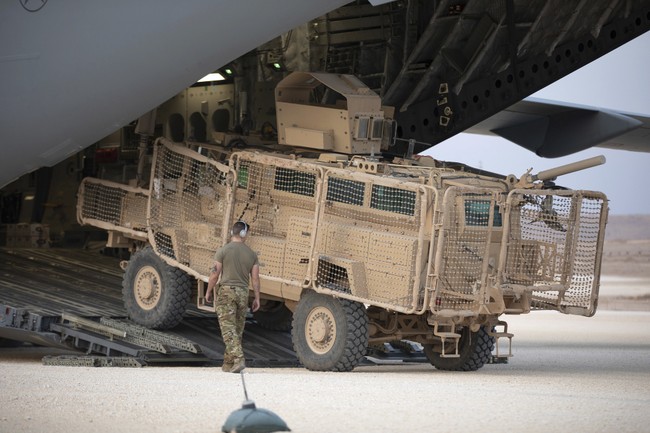
On Saturday a joint U.S.-Syrian patrol on an anti-Islamic State mission was ambushed near Palmyra, and multiple service members were wounded. Initial reports say some injuries are serious, though the full picture is still coming into focus. That patrol was operating in an environment that remains dangerously complex and unstable.
The fighting in and around Palmyra has been brutal for years, and the town is heavy with tragic history. During the civil war and the period of Islamic State control, important historical sites were destroyed, including tombs and temples that had stood for centuries. Those losses are a stark reminder of how violent groups treat culture and history in zones of conflict.
A senior U.S. official confirmed to Fox News there have been multiple injuries after American service members were ambushed in Syria on Saturday.
The official added that some of the injuries were serious.
Two local Syrian officials earlier told Reuters that a convoy of U.S. and Syrian forces fighting the Islamic State terrorist group was targeted while on patrol in the central town of Palmyra.
The presence of U.S. forces and intelligence elements in central Syria is part of a long-running effort to keep ISIS from reestablishing a base of operations. U.S. military engagement there grew out of the campaign to prevent a caliphate and to protect regional partners involved in ground operations. Over time that effort has shifted into a mix of bases, partnerships, and targeted missions.
Public statements on the incident were sparse, with officials noting awareness of reports but offering little immediate detail. Observers and analysts emphasize that the situation on the ground includes not only ISIS remnants but also competing militias, foreign-backed forces, and a fragile local authority. That tangle makes even routine patrols risky and politically sensitive.
The Department of War had told Fox News Digital that “we are aware of reports,” but added that it had “nothing additional to provide at this time.”
“The United States, CIA and military forces are reportedly deeply involved in securing and stabilizing the situation in Syria,” Dan Diker, president of the Jerusalem Center for Security and Foreign Affairs, recently told Fox News Digital.
Palmyra occupies a central position in Syria and has been fought over repeatedly during the civil war. Control of the town shifted several times between regime forces, extremist groups, and local militias, and its heritage sites were deliberately targeted by ISIS. The symbolic and strategic value of Palmyra makes the area a flashpoint whenever armed groups operate nearby.
There are roughly 1,500 U.S. troops reported to remain in Syria as of June, a footprint that has shrunk from earlier years but still represents a forward posture. Pentagon decisions to withdraw or consolidate forces have repeatedly changed that number, and some plans reportedly anticipate further reductions to several hundred by year’s end. Every troop presence involves trade-offs between deterrence, partner support, and the risk to American personnel.
As of June, the U.S. had about 1,500 troops left in Syria following withdrawals and consolidations ordered by the Pentagon, and that number was expected to drop to just several hundred by the end of this year, according to Fox News Chief National Security correspondent Jennifer Griffin.
Griffin reported that the U.S. had eight bases in Syria to keep an eye on ISIS since the U.S. military went in to prevent the terrorist group from setting up a caliphate in 2014, although three of those bases have since been closed down or turned over to the Syrian Democratic Forces.
There is a political and strategic debate at home about what the U.S. should be doing in Syria and at what cost. Some argue for keeping pressure on ISIS and supporting local partners on the ground, while others favor stepping back to avoid continued exposure of American troops in a chaotic theater. Those arguments shape policy and the decisions that determine how many troops remain forward-deployed.
Critics of the current posture note that airpower and intelligence support can often back regional partners without placing as many Americans on the ground. Advocates of a reduced footprint say that adversaries and extremist groups can be contained while minimizing U.S. casualties and political entanglement. The ambush near Palmyra underscores the human cost of ground operations and fuels calls for reassessing the mission profile.
Local dynamics, including the Syrian government’s consolidation and the interests of regional actors, will influence how durable any stabilization effort can be. Foreign militaries, nonstate groups, and local authorities continue to jockey for control and influence, meaning conditions can change quickly. For now, the focus for American policy makers is weighing immediate risks against long-term objectives.
The incident near Palmyra is developing, and details will likely emerge as military and diplomatic channels sort out what happened. Questions about troop levels, the wisdom of on-the-ground missions, and the best way to counter ISIS remnants are moving back to the center of the policy debate.

l Get paid over $220 💸 per hour working from home. l never thought I’d be able to do it but my buddy makes over $22150 💸 a month doing this and she convinced me to try. The possibility with this is endless,,,.,.
Copy This ____________ EarnApp1.Com