
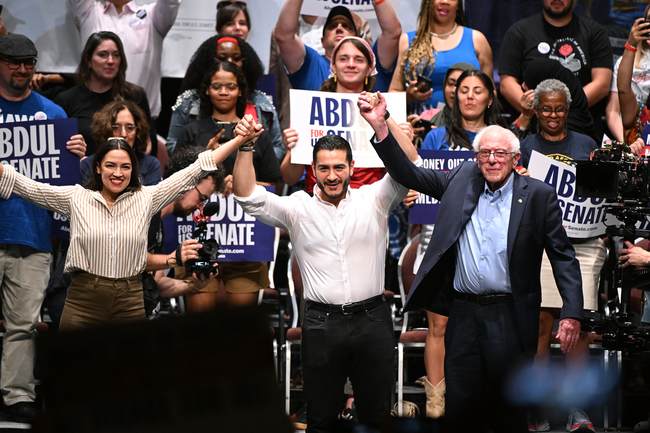
This piece examines Abdul El-Sayed’s post-primary speech and the broader consequences of militant political rhetoric, tracing similar language from national Democrats and its link to rising threats and attacks against public figures and law enforcement.
<pDemocratic leaders preach peace while using combative language that fuels anger and sometimes violence. From high-profile attacks on institutions to red-hot campaign speeches, the rhetoric often crosses from heated to dangerous. When public figures describe opponents in military terms, it invites bad actors to take words literally and escalate.
We’ve seen this pattern play out again and again: prominent Democrats attack courts, officials, and agencies with dehumanizing labels, and the result is an uptick in threats and actual attacks. The public mood worsens when elected officials or celebrity commentators normalize language that evokes physical harm or total defeat. Words like “Gestapo” or “Brownshirts,” when applied to law enforcement or political rivals, stoke resentment and make violence more likely.
“I want to tell you, Gorsuch. I want to tell you, Kavanaugh. You have released the whirlwind, and you will pay the price. You won’t know what hit you if you go forward with these awful decisions.”
That quote is a clear example of how escalation begins. It wasn’t whispered on the fringe; it was broadcast and amplified, and headlines followed. Incendiary warnings like that sit at the edge of criminal threat territory, and they create a permissive environment for people already inclined to violence.
So when Michigan Senate nominee Abdul El-Sayed closed his victory speech with a phrase tied to military action, it raised alarm bells across the political spectrum. The line was aimed at his Republican opponent, but phrases can take on a life of their own once they leave the mouth of a public figure. Campaigns are rough and aggressive by design, but there is a responsibility to choose words that do not invite harm.
El-Sayed ended his remarks by publicly challenging Rogers to a series of debates but taunting that he believed his rival was too much of a “coward” to accept: “So, Mike I’m going to say it right here, I know you’re gonna say no because you are a coward – Five debates! Alright?” he said. “If you’re willing to stand with me and have a conversation, you and I both know that you will wither in front of your own crimes.”
He continued: “But I’m gonna make sure Michiganders know about them, because by the time we’re done, you are not going to have safe quarter from people holding you accountable to what you’ve done for them here in Michigan. We will send you back to Florida where you belong.”
No safe quarter? That phrase has a clear historical meaning tied to denying mercy in combat, and it is not neutral language in a political arena. Using it in a rallying cry against a rival invites interpretation as a threat. Even if the speaker intended political accountability and debate, the military imagery is reckless given the climate of threats and attacks.
https://x.com/RCPolitics/status/2085024610110574594
The debate over what counts as free speech versus what becomes a real-world threat isn’t new, but it’s getting sharper as incidents spike. When rhetoric escalates, security concerns increase for judges, law enforcement, and other public servants who find themselves targeted. Those consequences are predictable and avoidable when leaders adjust their tone.
Politicians sometimes shrug this off as tough talk, but history shows language matters. Referring to “no quarter” is not a casual metaphor to many listeners; it conjures images of taking no prisoners and refusing surrender. In a charged environment, even offhand militaristic phrases can radicalize listeners or justify violent acts in their minds.
Incidents of political violence have risen alongside aggressive rhetoric from the left and right, and commentators on all sides ought to recognize their role in calming the temperature. Pointing to past attacks, assassination attempts, and threats should prompt leaders to rein in language that might be weaponized. Words can be used to rally voters, and they can also serve as a roadmap for people bent on harm.
El-Sayed’s nomination and immediate turn to combative, warlike language matters because it sets a tone for his movement and its supporters. Political fights are meant to be fierce, but civic life depends on keeping conflict within the bounds of debate and law. When rhetoric crosses into military terminology about enemies and mercy, it risks crossing into the realm of encouragement for violence—and that should trouble any decent citizen.
For Michigan voters and national observers alike, the lesson is simple: monitor the language of leaders and hold them accountable when phrases drift into menacing territory. Elections and policy should be decided at the ballot box and in public debate, not by threats, intimidation, or the normalization of war talk in American politics.

Add comment