
I’ll explain how federal civil rights officials reacted after controversial social media posts from a new mayoral aide resurfaced, summarize the key comments that sparked the outcry, outline the administration’s response and vetting claims, and note where this dispute is likely to head next.
Zohran Mamdani has been open about his political views throughout the campaign season, and those positions have shaped both public expectations and alarm. He discussed topics ranging from the Israel-Hamas war to crime policies and proposed giveaways framed as paid for by the “rich,” and he repeatedly tied his housing ideas to race-based solutions. One of the more striking campaign-era moments was his reference to “the end goal of seizing the means of production” at a 2021 convention, a line that has not been forgotten.
That context matters because a member of Mamdani’s transition team and now his “Office to Protect Tenants” director, Cea Weaver, has old social posts and clips that were recently highlighted online. Those posts include strong language about property and race, most notably calling home ownership a “weapon of white supremacy.” The resurfaced materials also show her advocating publicly for broader structural change in how property is treated.
In a resurfaced clip she said “transitioning to treating [property] as a collective good [instead of an “individualized good”] towards a model of shared equity, will require that we think about it differently.” That phrasing framed property as subject to collective frameworks rather than individual ownership, and it set off alarms among critics who see such ideas as a step toward coercive redistribution. Observers interpreted the comments as aligning with anti-capitalist and collectivist objectives.
Another historical statement attributed to Weaver urged people to “elect more communists” back in December 2017, a line that looks different now that elected officials with radical labels are occupying major posts. News that these clips and tweets were floating back into public view prompted a federal response through the Department of Justice’s Civil Rights Division. The reaction centered on potential violations and the legal protections that exist against government-enabled seizures or discriminatory practices.
Dhillon, in an interview with One America News, added that city government “should be on notice, they’re on high scrutiny.”
“We have several federal statutes that explicitly protect people of all colors and all different kinds of backgrounds and military status and so forth from the exact kind of land grabs and reallocation and redistribution that is being promised in New York,” she told the outlet.
The DOJ’s public comments signaled that federal civil rights law could come into play if municipal policies are used to strip or reassign privately held property in biased or unlawful ways. That puts the local administration on a sharper legal stage, since federal statutes and precedent limit the ways government can reallocate private assets without due process and nondiscrimination. Legal scrutiny is not a prediction of prosecution, but it does mean any sweeping housing experiments would face immediate, formal review.
Mamdani and his team, for their part, appear to have been aware of Weaver’s past remarks prior to appointing her. The transition camp did not deny knowledge of the controversial posts, and spokespeople have described the hiring as vetted and intentional. That fact has been used by supporters to argue the administration is transparent about its aims and by critics to suggest the city knowingly embraced an activist with extreme views.
So when right-wing activists circulated those since-deleted posts from Ms. Weaver this week, Mr. Mamdani was not caught off-guard.
“She was vetted,” a spokeswoman for Mr. Mamdani, Dora Pekec, said on Tuesday. “We were aware of all of these tweets.”
Given the rhetoric from both Weaver and Mamdani — including his explicit talk of “warm collectivism” and seizing property — the likelihood of major policy shifts appears real to many observers. That reality raises immediate questions about implementation, legal viability, and the practical effects on current homeowners and investors. Predictably, anyone concerned about property rights and due process is watching for how city directives will be drafted and enforced.
All of this is likely to play out in court if the administration proceeds with measures that touch ownership rights or reallocation schemes. Litigation over municipal housing programs, eminent domain, or regulatory takings would be a natural venue for these disputes, because judges assess both statutory limits and constitutional safeguards. The legal path could clarify whether the administration’s plans exceed lawful authority or fall within permissible policy experimentation.
Watch:
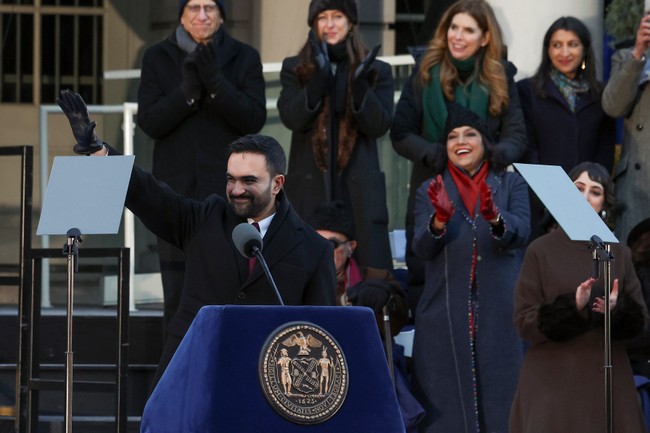
Editor’s Note: Zohran Mamdani is an avowed Democrat Socialist and has just been sworn in as mayor of New York City.



Add comment