
Tina Peters has been jailed for election-related offenses while a Democratic state senator received probation for similar acts, and Colorado’s governor is now reviewing clemency after public outcry over the disparity; this piece lays out the timeline, the sentences, the political actors involved, and the contention over whether justice in Colorado is being applied evenly.
Tina Peters, the former Mesa County clerk, has been serving a nine-year sentence since 2024 for charges connected to election interference and undue influence. Her imprisonment has drawn attention from voters and national figures who argue that her punishment is wildly disproportionate, especially compared with other cases in the state. Peters has already been behind bars for more than a year and a half, and the case has become a flashpoint for debates about prosecutorial discretion and political influence in sentencing.
By contrast, State Senator Sonya Jaquez Lewis was convicted of attempting to influence a public servant and three counts of forgery after submitting letters during an ethics probe that were later found to be forged. Her sentence was two years of supervised probation, 150 hours of community service, and a fine. The disparity between Peters’ nine-year term and Jaquez Lewis’ probation has ignited accusations that the justice system treats people differently depending on politics and connections.
For Peters’ four felonies, she was sentenced to eight years and three months in Colorado prison, and she was immediately taken into custody at the conclusion of the hearing. She was denied bond pending appeal. She was given a few extra months for her misdemeanor counts, and was also given $10,750 in fines from the court.
The Jaquez Lewis prosecution, handled by the Denver District Attorney’s Office, treated the ethics committee as a single official for purposes of charging, resulting in counts tied to forged documents rather than separate influence counts for each member. Prosecutors charged three forgery-related false statements alongside one influence count, and the result was probation rather than prison. That outcome has raised obvious questions when placed side by side with the treatment of Peters.
Jaquez Lewis was prosecuted by the Denver District Attorney’s Office and convicted in Denver District Court of one count of attempting to influence a public servant (C.R.S. 18-8-306) and three counts of forgery. The charges stemmed from her submission of letters of support during a legislative ethics investigation; at least some of the letters were later determined to be forged.
Prosecutors did not charge separate influence counts for each member of the ethics committee. Instead, they charged one felony per forged document (three false statements/deceptive acts) to a single influence count tied to the proceeding — essentially treating the four-person ethics committee as one public official.
The Senator’s crime was three false statements to four public officials — but it was charged as three false statements to one. For these four felonies, Jaquez Lewis was sentenced to two years of supervised probation, 150 hours of community service, and a fine.
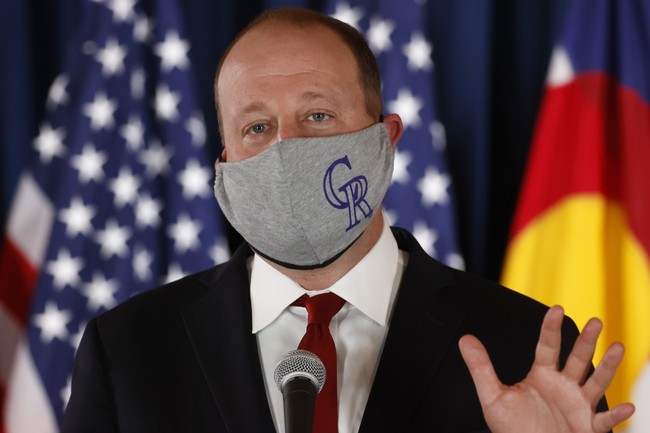
Governor Jared Polis has publicly acknowledged the disparity and said he will consider clemency applications, extending the deadline to allow more petitions for review. Polis noted the contrast between Peters’ harsh sentence and Jaquez Lewis’ probation, and he framed his action as a search for even-handed justice across cases with similar charges. That move has triggered political fireworks inside Colorado’s Democratic establishment, where several officials oppose any leniency for Peters.
Quoted exactly, Polis said in his statement that he was considering sentencing disparities and extended the deadline for clemency applications: “Last week, former State Senator Sonya Jaquez Lewis was sentenced to probation and community service after being convicted of four felonies including Attempt to Influence a Public Official. She made a horrible mistake, and she was wrong. I hope she learns from this and can rebuild her life. As someone who has known Sonya as a friend for many years, on a personal level I was glad to hear she isn’t going to prison which is a hard place for anyone, no less a retired 68-year old pharmacist. But it is not lost on me that she was convicted of the exact same felony charge as Tina Peters — attempting to influence a public official — and yet Tina Peters, as a non-violent first time offender got a nine year sentence. Justice in Colorado and America needs to be applied evenly, you never know when you might need to depend on the rule of law. This is the context I am using as I consider cases like this that have sentencing disparities, which is why I have extended the deadline for clemency applications until April 3rd. I will be making decisions on these cases throughout the remainder of my governorship.”
Not everyone is happy with the governor’s posture. Attorney General Phil Weiser and Secretary of State Jena Griswold, both Democrats with political ambitions, have been vocal in defending the prosecutions and pushing back on claims of unequal treatment. Griswold released a statement insisting Peters’ actions were distinct and more damaging to election integrity, arguing that Peters organized a breach and attacked democratic foundations — a position that keeps the debate intensely personal and political.
“Tina Peters was found guilty of three counts of attempting to influence a public servant along with four additional felony and misdemeanor counts. Beyond one count in common, it is not accurate to suggest that Peters’ and Sonya Jaquez Lewis’ actions or impacts are the same,” Griswold said in a statement on Wednesday. “Peters organized the breach of the election equipment, broke the public trust and attacked the very foundations of our democratic process. Her actions are still being used to try to undermine the 2026 election. She should get no special treatment by the Governor, and his statement is shocking and worrisome.”
Weiser, Griswold, and other officials have built political reputations around election integrity prosecutions, and any move toward clemency for Peters would undercut that narrative. Critics argue these officials resist relief for Peters because of political calculation, not principle, while defenders claim the facts of her case justify a severe sentence. The clash places the governor between competing impulses: political loyalty to party colleagues and pressure to correct what many see as an inconsistent application of justice.
Republican voters and many independent observers see this as a test of whether law applies equally to everyone, regardless of party or connections. The Peters case will continue to be a litmus test for Colorado’s justice system and its political class as the clemency review proceeds. Expect this to remain a central argument in Colorado politics through the coming months as candidates and officials stake out positions.
Those watching the situation closely will note that the fight over Peters is both legal and political, with each branch of the state’s power structure staking out ground. If the governor grants clemency, it will reshape political calculations for officeholders who tied part of their brand to prosecuting election-related offenses. If he does not, the controversy over sentencing disparities will likely escalate into a longer-term campaign issue for conservatives and independents who demand consistent justice.



Add comment