
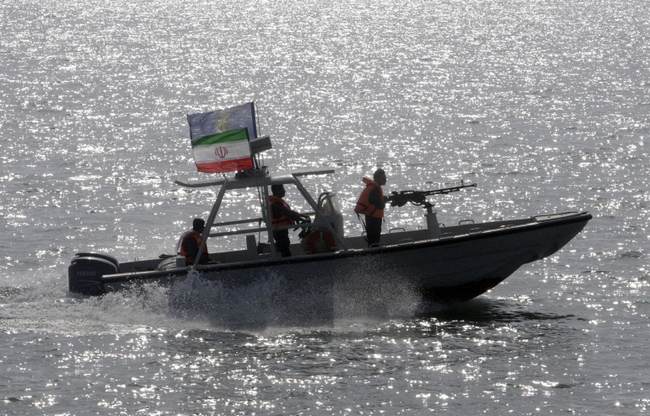
The United States must protect its economic lifelines as forcefully as its people, because disruptions in the Middle East quickly become disruptions in American wallets and national strength. This piece explains why Iran’s pattern of threatening global energy routes puts U.S. economic security at risk and why kinetic responses can be legitimate tools to keep trade flowing. It traces historical episodes, recent attacks on shipping, and the strategic choke points that make the region so dangerous when hostile actors act up. The case is simple: when Tehran menaces global energy routes, the U.S. has to act to preserve the free flow of commerce and the prosperity that depends on it.
Part 2
The Islamic Republic of Iran is not just a military problem; it is an economic one for the American people. The Middle East sits at a crossroads of global trade and supplies a huge share of the world’s oil and natural gas. Countries in the region produce energy that moves to Europe, the U.S., and Asia, making safe passage through regional waters essential to global markets and to American consumers.
Two geographic chokepoints matter more than most: the Strait of Hormuz and the Bab al Mandeb. The Strait of Hormuz lies between Iran and Oman and carries massive volumes of crude; in recent years millions of barrels per day have transited it, forming a substantial share of seaborne oil flows. The Bab al Mandeb links the Red Sea to the Suez Canal and handles a huge slice of container traffic and trade worth roughly a trillion dollars a year.
When those straits are threatened, so is the broader supply chain. Disruptions force ships to reroute around Africa, adding thousands of miles, days of transit time, and extra cost that ripples into higher prices and delays. That is not abstract: calculated diversions have forced carriers to detour and pushed inflationary pressure into economies around the world.
History shows Iran has used maritime threats as leverage. During the Iran-Iraq War in the 1980s, the fighting around the Gulf escalated into what became known as the Tanker War, with both sides targeting merchant shipping to damage the other’s economy. The U.S. stepped in to protect international navigation after neutral ships were attacked and U.S. warships suffered losses from mines and other hostile acts.
The fighting in the gulf became known as the Tanker War, as both sides attacked hundreds of oil tankers in an effort to disrupt the economy of the other side. Iraq, lacking a significant navy, attacked mostly from the air, while Iran used surface vessels and mines in the shipping lanes. Two Iranian frigates, the Sahand and Sabalan, were especially noted for brutal attacks on unarmed neutral shipping.
U.S. naval escorts and operations in the region have a long precedent because free passage of energy is a public good. When the U.S. frigate Samuel B. Roberts struck a mine in 1988 and nearly sank, Washington responded with force to suppress threats to seaborne trade and to deter future attacks. Those responses showed the practical link between military operations and economic stability.
(T)he U.S. Navy destroyed two Iranian oil platforms, sunk one frigate and a missile boat, crippled a second frigate, destroyed at least three armed speedboats, and drove off Iranian F-4 Phantom jets with missile fire. In just a few hours, American forces obliterated nearly half of Iran’s operational fleet.
More recently, Iran has used proxies like the Houthis in Yemen to strike at Red Sea commerce and force rerouting. Those attacks led to major diversions of shipping, delaying cargoes and adding costs across global supply chains. The economic damage from such tactics is immediate and measurable, and it compels any responsible government to safeguard trade corridors.
When hostile actions directly threaten global commerce, the United States has repeatedly taken kinetic measures to stop them. From air and naval strikes against proxy bases to escort operations for civilian tankers, military steps have been used to restore safe passage and punish repeat offenders. Those actions are not reckless; they are a direct defense of economic security.
As reported in the current cycle of confrontations, missile and disruptive activity around the Strait of Hormuz have at times collapsed exports from the region and left hundreds of tankers stranded or unable to transit. Such sudden drops in flows translate into market shocks and strategic vulnerability, which allies and adversaries alike notice and exploit if left unchallenged.
Only three oil vessels from Persian Gulf monarchies crossed the strategic waterway Sunday, according to Kpler. That led to a collapse of exports from 22 million barrels a day to 2.8 million barrels a day, the commodities-data company said. About 706 non-Iranian tankers are now anchored outside the Strait unable to cross, it said.
President Trump has framed the issue plainly and forcefully: “If necessary, the United States Navy will begin escorting tankers through the Strait of Hormuz, as soon as possible. No matter what, the United States will ensure the FREE FLOW of ENERGY to the WORLD. The United States’ ECONOMIC and MILITARY MIGHT is the GREATEST ON EARTH — More actions to come.” That direct stance underscores a core Republican view: economic security is national security, and American strength must be used to keep trade open.
There is a long-standing diplomatic label for the deliberate use of naval and military pressure to protect commerce: “gunboat” diplomacy. When a hostile state repeatedly endangers global markets, proportional kinetic responses can deter further aggression, protect supply lines, and preserve the economic well-being of the American people. In short, defending the flow of energy is not optional; it is essential to national strength.
To be continued…


Add comment