
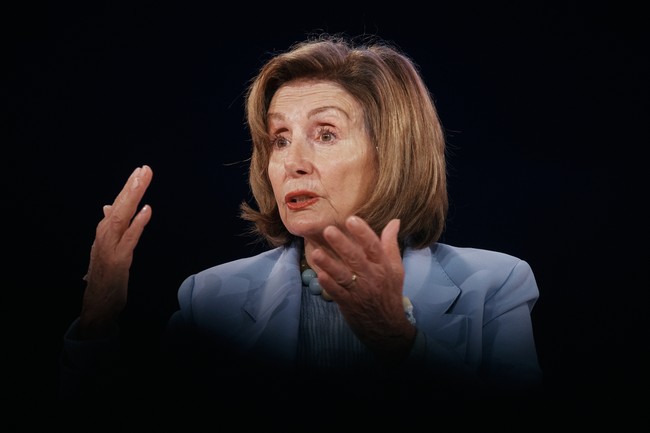
Christine Pelosi has decided not to seek her mother Nancy Pelosi’s U.S. House seat and is instead running for the California State Senate, a move that ends one potential extension of the Pelosi presence in Congress while opening San Francisco’s deep-blue district to a competitive Democratic primary and new far-left contenders.
The United States isn’t supposed to be a place for political dynasties. We’ve seen families like the Roosevelts, Kennedys, and Bushes, but many Americans expect elected office to be open, not inherited. The Pelosi name has long been synonymous with entrenched power in California and Washington, and Nancy Pelosi’s retirement finally creates a vacancy people are watching closely.
Nancy Pelosi, the former Speaker of the House, has stepped away after decades in Congress, and attention immediately turned to who might take her place. Christine Pelosi, who’s 59, announced she will not run to succeed her mother in Congress and has instead launched a campaign for the California State Senate. That choice keeps the Pelosi family active in California politics but removes a direct handoff into the House.
Christine Pelosi won’t run to succeed her mother Nancy in Congress, ending the Pelosi dynasty in the House of Representatives.
The younger Pelosi, 59, announced on Monday that she’d run for California state Senate instead, opening the field for a competitive Democratic primary to rep Nancy Pelosi’s San Francisco district in 2026.
“In courtrooms, campaigns and corridors of power, I’ve fought to build power for the people. And that’s why I’m running for California Senate,” Christine Pelosi said in her Monday announcement.
In her announcement, Christine Pelosi framed her run as a fight for the people, saying she’s “fought to build power for the people.” From a Republican perspective, that reads as language about consolidating influence inside the state’s party machinery. The phrasing is familiar to anyone who watches how San Francisco politics operate: organize, mobilize, and maintain control through party networks.
Christine’s campaign launch was short—about 42 seconds—but full of broad appeals. She declared she’d represent San Francisco in Sacramento and listed priorities that include consumer rights, women’s rights, support for gun violence survivors, immigrants, and vulnerable communities. That platform will appeal to the district’s progressive base even as it signals continuity with the Democratic establishment in San Francisco.
“I’m running to represent San Francisco in Sacramento, fighting for consumer rights, women’s rights, gun violence survivors, immigrants and our most vulnerable communities, against the threat we face,” she declared in her 42-second campaign launch video.
“What do we do when our freedoms are under attack? We speak up, we fight back and we organize power for the people, and that’s what I want to do for you.”
Critics on the right see Christine Pelosi’s phrasing as a classic piece of political language that promises broad protections while signaling allegiance to progressive priorities. To many conservatives, the rhetoric is another example of the woke terminology that dominates Democratic messaging, wrapped in a call to organize power for party agendas rather than for truly independent constituents.
With Christine out of the running for Nancy’s House seat, the San Francisco district will likely produce a new representative who is even further left than Pelosi the Elder. Potential contenders include former staffers and state politicians who have strong progressive credentials and deep ties to activist circles. That makes the upcoming primary a contest not about moderate change but about who can command the most influence among the city’s activist networks.
There are currently two heavyweight contenders to represent the deep-blue district: Multi-millionaire software engineer Saikat Chakrabarti, who previously served as chief of staff to “Squad” Rep. Alexandria Ocasio-Cortez (D-NY); and State Sen. Scott Wiener.
Neither of those potential successors inspires confidence for conservatives hoping for a return to more traditional, fiscally responsible representation. This seat sits in a city that has embraced left-wing policies for years, and any replacement is likely to be a strong progressive with little interest in bipartisan compromise. The practical upside, from a Republican view, is that a freshman from San Francisco will enter Congress with limited clout compared to a long-tenured power broker like Nancy Pelosi.
As Nancy Pelosi’s era ends, San Francisco prepares for a handoff to new progressive leaders who will likely push the party further left. Christine Pelosi’s pivot to the state Senate keeps the family engaged in California politics while assuring the House seat will not be a simple dynastic takeover. The political landscape there will shift as activists, funders, and candidates jockey to define the district’s next chapter.


Hope and prayers the People in California see right through the Charade! I hope a Republican steps up and at least Challenges the little Pelosi where the Apple doesn’t fall far from the tree!