
This article walks through the House Judiciary Committee hearing where Republicans pressed former Special Counsel Jack Smith over his tactics in the Trump investigations, focusing on the seizure of phone toll records, nondisclosure orders, and alleged misuse of investigative power.
The hearing took place under intense partisan scrutiny, and Republicans on the committee made clear they viewed Smith’s conduct as politically driven. Committee Chair Jim Jordan accused the special counsel of treating legal tools like political weapons, and he highlighted specific actions that raised Republican concerns. Those actions centered on the collection of phone toll records and the use of nondisclosure orders that kept targets in the dark.
Jordan raised the example of phone-record seizures that included the then-Speaker of the House, Kevin McCarthy, and he pointed to the timing as troubling. According to the committee’s timeline, Smith obtained McCarthy’s toll records 16 days after McCarthy became Speaker, covering the two-month window between Election Day and January 7, 2021. Republicans present argued that taking such records from the highest-ranking House Republican right after he assumed leadership crossed a line into political targeting.
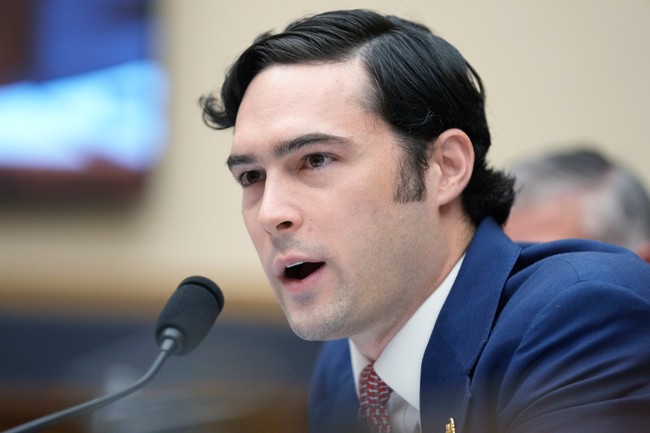
Republican Representative Brandon Gill took the lead in confronting Smith on the specifics, and his approach was direct and relentless. Gill framed the issue as more than investigative overreach; he said it was spying on the opposition’s leader at a politically sensitive moment. That framing kept coming back to whether constitutional protections for legislative activity were ignored when those records were seized.
Gill put the point bluntly to Smith, saying, “You were collecting months’ worth of phone data on the Republican Speaker of the House, leader of the opposition, right after he got sworn in as Speaker, all around the time of a major vote.” That quote stood out because it tied Smith’s actions to a clear political context: an incoming House leader and consequential votes. Republicans used that timing to argue intent, asserting the seizure could not be justified purely on ordinary investigative grounds.
Beyond McCarthy, Gill told the committee that the toll-record seizures reached other lawmakers as well, citing nine Senators and one Representative whose records were obtained in May 2023. He emphasized that nondisclosure orders accompanied those seizures, which prevented the targets from being told their records had been taken. In the Republicans’ view, secret orders combined with selective targeting created troubling consequences for legislative independence and transparency.
Gill hammered the nondisclosure rationale, pressing Smith on the legal basis and the alleged misstatements used to secure secrecy. He questioned the invocation of “flight risk” language in a nondisclosure order tied to the Speaker of the House, calling it absurd given McCarthy’s highly visible role. The line of questioning exposed a constitutional tension: when investigative secrecy collides with the public functions and duties of elected leaders, oversight becomes imperative.
When McCarthy himself spoke, he underscored that his movements and public schedule were visible and constant, reinforcing the committee’s point about the impossible claim of “flight risk.” Republicans argued that the record shows Smith used power to hide the fact that he had obtained those toll records from both McCarthy and the public. That concealment, they said, made the nondisclosure orders feel more like strategic cover than legitimate legal protection.
The hearing highlighted broader concerns about prosecutorial discretion and selective enforcement, and Gill tied those concerns to constitutional protections like the Speech and Debate Clause. He argued that Smith should have been mindful of the clause’s role in safeguarding legislative independence and that the seizure of lawmakers’ toll records without disclosure violated that protection. Republican members framed the episode as an example of federal power expanding into areas that could chill or disrupt legislative functions.
Smith’s responses came under sustained attack for appearing evasive or inconsistent, and Republicans presented his testimony as failing to justify the aggressive investigative steps. Gill repeatedly returned to the point that nondisclosure orders were obtained under misleading or insufficient premises, asserting those orders deprived lawmakers of the ability to challenge or even understand the intrusion. That argument formed the core of the committee’s critique.
The exchange also served a political purpose beyond immediate oversight: it was meant to underline a narrative that federal law enforcement can be used against political opponents. Republicans used the hearing to press this point to a wider audience, showing how investigative tools can intersect with high-stakes politics. For committee members, the episode is a cautionary tale about how legal authority can be exercised without sufficient regard for constitutional boundaries.
Members left the hearing with sharper convictions about the need for clearer limits and stronger safeguards when investigations target lawmakers or other political figures. The focus on nondisclosure orders and the seizure of phone toll records became a touchstone for those calls, illustrating the kinds of hard questions Republicans insist need to be answered. The hearing was unmistakable in tone: an aggressive bid to hold Smith accountable for methods they view as unacceptable.

Add comment