
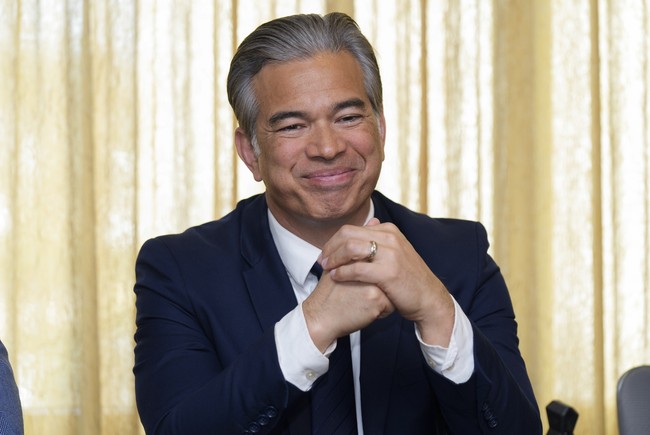
Quick summary: This piece examines California Attorney General Rob Bonta’s recent announcement about a massive Medi-Cal hospice fraud bust, highlights the timing and political spin from his office, records pushback from federal prosecutors, and critiques the broader pattern of mismanaged spending and political posturing in California.
California’s attorney general finally announced action on a long-running problem: hospice and Medi-Cal fraud. The press release praised investigators who uncovered billing schemes that allegedly totaled in the hundreds of millions. For many conservatives, the event is less about the arrests and more about why it took so long and how officials talk about responsibility.
Bonta has built a reputation for high-profile cases that target political opponents and cultural issues, not necessarily for ferocious oversight of state finances. His office’s recent statement framed the operation as proof of the department’s longstanding commitment to healthcare fraud enforcement. Critics say the timing and the rhetoric feel like an effort to get ahead of scrutiny rather than an example of relentless vigilance.
The top state prosecutor says investigators caught 14 fraudulent hospice companies who had billed MediCal and Medicaid for $267 million in non-existent services after they received a tip from the California Department of Healthcare Services.
“This was a brazen, calculated criminal scheme that exploited the medical system, stole from the state of California and Medicaid and prevented services and care from going to sick individuals who actually need it,” Bonta said of the crime.
Bonta’s office filed felony criminal charges against 21 suspects for the healthcare fraud crimes.
That is significant if true, but the bigger story for many is the scale of state dysfunction that allowed it to happen. Voters and watchdogs want to know how oversight failed, why these companies were able to submit bogus claims, and what internal controls were weak or ignored. California’s budget is enormous, and when large sums go unaccounted for, it breeds skepticism about leadership.
The AG’s office also pushed a political point, suggesting national attention on healthcare fraud came late to the party. That line rubbed a lot of people the wrong way because it shifts blame to federal critics instead of explaining local lapses. In practice, the optics matter as much as the enforcement, and sounding defensive when announcing arrests looks like politics first, accountability second.
Note: It’s debatable whether he said, “For decades, Trump is late to the party.” It could be argued that he said the state had been fighting “since 1979. For decades.”
Political debates aside, federal prosecutors in Los Angeles publicly mocked the boast and challenged the narrative that California had been the consistent leader in fighting this sort of crime. That back-and-forth exposed a widening rift between state and federal actors who should be aligned on protecting taxpayer dollars. The public deserves a coordinated, transparent response rather than sound bites and name-calling.
Meanwhile, the context that feeds voter frustration keeps getting worse: massive homelessness budgets with shaky accounting and recurring headlines about mismanagement. When officials brag about delayed enforcement after watchdog reports surface, it deepens the sense that powerful offices prefer headlines to hard reforms. The electorate sees big numbers and asks for straightforward answers about oversight and consequence.
First Assistant U.S. Attorney for the Central District of California Bill Essayli called out state officials and urged them to prioritize prosecutions of clear fraudsters over political litigation. That stinging rebuke landed in public exchanges and underscored a broader impatience among conservatives with the performative elements of state governance. It also suggested federal authorities will keep pushing when state efforts appear insufficient.
There are real victims in these schemes: taxpayers and vulnerable patients who depend on honest hospice care. Exposing fraud matters, and charging suspects can bring some measure of justice. But arrests alone do not close the loop; prevention, improved audits, and firmer institutional controls are required to stop schemes before money is lost and care is compromised.
For those watching California, the case raises predictable questions: How many similar schemes remain undetected? How will oversight change? And will officials who once sounded complacent now back reforms that make it harder for fraud to persist? The answers should be driven by accountability, not partisan lines.
Bonta’s office will point to this roundup as an enforcement success, and political allies will amplify that message. Critics will keep asking why detection lagged and why so many state resources look porous. The debate will continue, but the basic need is simple: stronger controls, clearer audits, and leadership that prioritizes results over spin.
When senior federal prosecutors are publicly challenging state officials, the public loses confidence in those charged with protection. Bold headlines about arrests can help a political resume, but lasting reform requires sustained work behind the scenes—real auditing, transparent reporting, and consequences for failures. Until California shows that kind of backbone, announcements of breakthroughs will ring hollow to many.


Add comment