
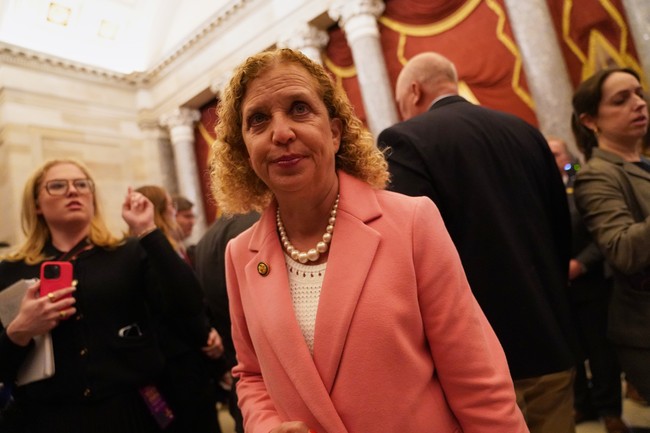
Debbie Wasserman Schultz shocked Florida politics by announcing a bid in the newly drawn CD-20, and the reaction from Black Democrats was swift and brutal. Redistricting has flipped the calculus across the state, and party insiders now face a turf fight that highlights how Democrats’ identity-driven politics can implode on itself. This race is a showdown between establishment maneuvering and grassroots backlash, with multiple Black candidates accusing Wasserman Schultz of forum shopping and trying to take a seat they view as theirs. The dispute exposes tensions about representation, race, and political survival as the 2026 midterms approach.
The redrawing of Florida’s congressional lines has reshaped the battlefield, turning safe blue districts into competitive fights and forcing incumbents to choose whether to stay put or chase more favorable terrain. Republicans, led by Governor DeSantis, engineered maps that threaten to pick up seats, and Democrats are now scrambling to adapt. That scramble produced the most combustible decision of the week: Debbie Wasserman Schultz choosing to run in CD-20 instead of staying in her current district. The move lit up a powder keg of resentment among Black Democratic activists who see it as opportunistic and tone-deaf.
Rumors had swirled for weeks that Wasserman Schultz would hop to the open CD-20, and on the day she announced it she staged the kind of optics that infuriated critics: a framed poster of Barack Obama in the background. The visual read as a reminder of national party ties rather than local accountability, and it offended many who had already staked their claim on the district. Activists and declared candidates interpreted her decision as an encroachment on a majority Black opportunity district, and they did not hold back their outrage.
Elijah Manley, one of the self-described organizers running in CD-20, published a blistering denunciation calling her actions carpetbagging and accusing the Democratic establishment of corruption. Manley leveled a long list of complaints and promised to “retire her from public office permanently.” He wrote the following:
Debbie Wasserman Schultz is carpetbagging to FL-20, a black opportunity district instead of running in her own. DWS is everything that’s wrong with the Democratic establishment. From insider trading to payday lenders. I look forward to retiring her from public office permanently.
Manley’s criticism escalated to invoking historical Jim Crow rhetoric, and that choice of language only sharpened the confrontation. Calls of “forum shopping” and claims that Wasserman Schultz would end Black representation in the seat have become the core of the backlash. Those arguments have put the Florida Democratic caucus in a bind: defend an insider or acknowledge the sense of betrayal felt by local Black leaders.
The Florida Black Legislative Caucus publicly objected as well, adding institutional weight to the grassroots complaints and signaling intra-party fracturing. Their displeasure amplified the sense that this is not just an interpersonal dispute but a larger fight over who gets to represent communities of color. For Democrats trying to keep unity, this is the kind of infighting that plays right into Republican hands, especially as national leaders watch the 2026 map play out. The optics are bad: accusations of outsiders slicing into opportunity districts feed a narrative of a party disconnected from its base.
Demography matters in this debate. Under the new lines, CD-20 will be majority minority with a larger share of Black voting-age residents than Hispanic, while Wasserman Schultz’s current district skews more Hispanic than Black. The shift in demographics explains why several Black candidates believe the seat should remain in community hands and not be treated as a strategic option for a veteran politician. Those voters remember promises about representation, and they are making it clear they will not be passive.
But while no longer a majority Black seat, CD 20 under the new cartography remains a majority minority seat. About 42% of the voting age population is Black, more than 23% is Hispanic and almost 4% is Asian, while 30% of voting age residents are White.
Adding fuel to the flames, Sheila Cherfilus-McCormick — the former congresswoman who lost the seat amid scandal but plans to run again — has made clear she opposes any move that would remove Black representation. Her comments framed Wasserman Schultz’s bid as the wrong move at a critical time for representation. Two weeks earlier, she had said:
A potential Wasserman Schultz bid in District 20 could end years of Black congressional representation in the district, an idea Cherfilus-McCormick said she opposes.
“Absolutely not,” Cherfilus-McCormick said when asked whether she would support Wasserman Schultz running in the district. “This is not the moment for forum shopping. This is not the moment to say this is easier, this is not. What matters in this moment is to make sure all the strides we have made to make sure Black representation is actually present matters.”
From a Republican perspective, watching Democrats tear at one another makes the party look chaotic and untrustworthy, and it hands a clear advantage to GOP candidates in 2026. Voters across the state are seeing a party consumed by internal identity battles rather than offering a coherent alternative. That scene of self-inflicted wounds may be the single best tool Republicans have to remind voters that competence and stability matter in governance—and that political opportunism has consequences.
The CD-20 fight will be a test of whether local voters prioritize continuity of Black representation or accept a seasoned Democratic operator switching districts to preserve power. Either way, the episode illustrates how redistricting has real consequences and how poorly chosen political theater can blow up inside a party. For Republicans watching the calendar, this is not just entertainment; it is a tangible opening to expand influence when Democrats are busy fighting among themselves.


Add comment