
The House vote to pin down a site for the Smithsonian American Women’s History Museum collapsed after a surprising coalition of opposition, and the fallout exposes how culture battles and procedural tinkering can wreck even bipartisan projects. What began as a broadly supported plan ended with all House Democrats plus six Republicans voting no, amid fights over definitions of womanhood, museum control, and who gets to decide what belongs on the Mall. The episode shows how intra-party fights and a few high-profile amendments turned a decade-long effort into a political landmine. This piece walks through the vote, the objections, the key players, and why a simple bill spiraled into a controversy that left the museum’s fate uncertain.
The museum was established by Congress in 2020 and had built momentum toward a permanent site. A bill to specify the location and finalize details had bipartisan sponsorship and appeared close to passage, but the dynamics shifted quickly when conservatives added language about the museum’s mission and content. Once revisions were introduced, many Democratic backers withdrew support and the measure failed on the House floor on a 204-216 vote.
Six Republicans joined the unanimous Democratic opposition: Keith Self, Josh Brecheen, Michael Cloud, Warren Davidson, Andy Harris, and Tim Burchett. They come from the Freedom Caucus wing of the GOP and objected to aspects of the bill for different reasons. Some argued the project was unnecessary, others took issue with language they viewed as divisive or redundant, and a few painted the whole idea of a single-group museum as counterproductive to unity.
Conservative critics made blunt arguments about identity and focus. “We say we need to unite this country, but then we isolate every group,” said Rep. Tim Burchett, R-Tenn., reflecting the view that singling out one demographic for a dedicated museum can create separation rather than cohesion. That line of thinking resonated with members who worry that policy and cultural initiatives should avoid creating exclusive spaces that emphasize differences.
Both sides of the aisle came together Thursday to oppose what had been a decade-long bipartisan effort to build a women’s history museum in Washington.
The legislation, which specified the museum’s site, was nearing the finish line but lost dozens of Democrats who had supported it just a month ago. It failed in the afternoon on a 204-216 vote, in which six Republicans joined all Democrats in voting no. Eight other Republicans did not vote.
On the other side, Democrats protested changes they said injected partisan priorities and restrictions into what should be a nonpolitical institution. Representative Sarah McBride, the first openly transgender member of Congress, objected to language that set biological definitions and prohibited depicting a biological male as female. “Celebrating women is not, and should not be, a zero-sum game,” she said before voting no, arguing that the revisions politicized a necessary cultural project.
The committee amendments changed both mission and content rules. One addition declared the museum “shall be dedicated to preserving, researching, and presenting the history, achievements, and lived experiences of biological women in the United States.” Another clause forbade depicting any biological male as a female, and the bill specified a particular site on the Mall while leaving the President the ability to propose an alternative within 180 days. Those insertions were precisely the kind of limits that prompted Democrats to withdraw support.
“Celebrating women is not, and should not be, a zero-sum game,” Democratic Rep. Sarah McBride of Delaware, the first openly transgender member in Congress, said Thursday before voting against the measure. “Allowing Donald Trump to decide what goes in and where this museum — this necessary museum — is located is not something that members of our caucus are comfortable with.”
Republican lawmakers who worried about identity politics framed the bill’s revisions as a defense of clarity and a rejection of what they see as overreach on cultural questions. Others, including some female Republicans, pushed amendments to bar transgender exhibits, arguing that the museum should focus on biological women. Those moves further split the coalition that had originally supported the project.
Democratic leaders and activist groups hailed the vote as a rebuke to partisan interference. A statement celebrating the rejection characterized the Republican revisions as an attempt to hand control of the museum’s content to the executive and to inject a partisan litmus test into a cultural institution. That message energized caucus opposition and framed the debate as a struggle over whether one administration should shape national memory.
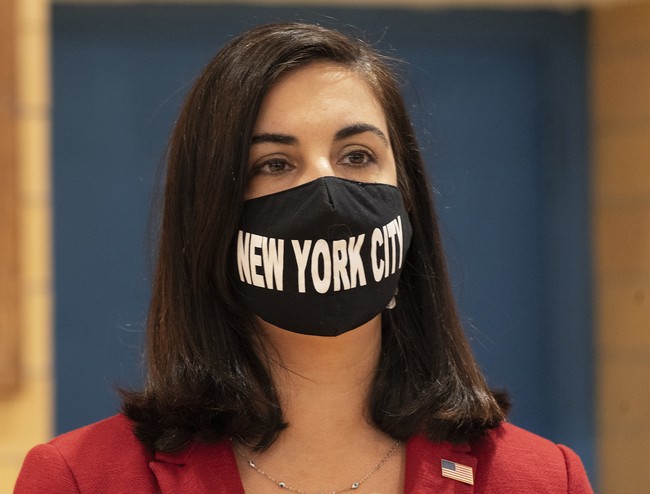
“It’s disappointing that politics got in the way of a women’s history museum getting built but, sadly, it’s a clear indication of just how polarizing Washington has become,” Malliotakis said in a statement after the vote.
With the bill defeated, advocates on both sides are left recalibrating strategies. Republicans will argue the vote exposed the pitfalls of rushed, ideologically driven changes, while Democrats will claim the revisions corrupted a bipartisan effort. Either way, the result leaves the Smithsonian museum’s permanent home unresolved and highlights how cultural flashpoints can derail long-standing, otherwise popular projects.
The failed vote is also a warning about how small shifts in language and control can collapse cross-party deals. What started as a pragmatic effort to secure a location ended up a proxy fight over identity, institutional autonomy, and who gets to define national history. Unless Congress finds a less confrontational path forward, the museum may remain in limbo while the politics around it continue to harden.



Add comment