
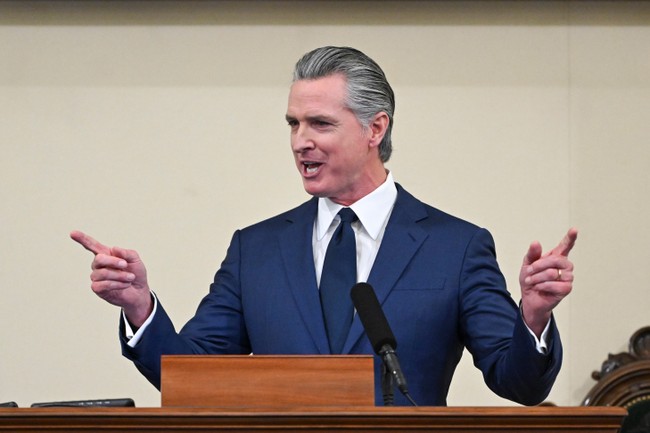
This piece explains how California’s governor’s press office attacked Chevron over gas-price signs, sparking wider attention and criticism that underlines the role of state taxes and regulations in high fuel costs; it traces Chevron’s messaging, the press office’s X post, public reactions, and how the backlash amplified the original message.
California drivers already know their gas is pricier than most of the country, and Chevron made that point plain with signs at its stations blaming state policy for higher prices. The company highlighted the tax and regulatory factors that push pump costs above the national average. That straightforward explanation set up a confrontation between private industry and a political office.
The signs carry messages like: “Sacramento policies did this. Now, you pay more.”
Others saying, “California has the highest gas taxes and fees in America.”
Chevron’s spokesperson Ross Allen spelled out the specifics and linked them to policy choices by state leaders. He noted the significant excise tax and pointed to environmental programs that, in his view, increase refining and retail costs. Those remarks framed the debate around who is accountable for higher prices at the pump.
“They have a 61-cent excise tax on every gallon of gasoline. That’s the highest in the nation,” Allen said.
Allen also pointed to environmental programs like California’s cap-and-trade system and Low Carbon Fuel Standard, which he says increase costs for refiners and consumers.
Instead of letting the message stand on its own, the governor’s press office entered the fray with an official call to action on its X account. That move turned a company critique of policy into an intergovernmental clash, and it made the exchange public in a way that was hard to ignore. The post didn’t just dispute the signs; it urged consumers to steer clear of the brand.
Californians, if you’re hitting the road this holiday weekend, be sure to AVOID Chevron.
Pro tip: unbranded gas comes from the same refineries, storage tanks, and pipelines, and it meets the same state standards to keep your engine running clean, even if it doesn’t have a fancy name like ‘Techron.’
Big Oil is already making billions off Trump’s Iran War; don’t let them rip you off even more by overpaying for the brand name.
An official account advising a boycott makes a political statement into a consumer-focused campaign, and critics rushed in to call out the tactic. Some commentators said the governor’s team overstepped by targeting an employer in the state and by appearing to dismiss structural contributors to price. The exchange energized debate over how the state talks to voters about costs and responsibility.
Actress Justine Bateman reacted sharply and used pointed language to describe the press office action. She called the response “unconscionable” and labeled it “unethical and disqualifying” while framing it as a spiteful reaction to a message that exposed a tax problem. Her public stance underscored how quickly a political move can attract high-profile rebuke and media attention.
Others noted the practical consequences of that public pressure for businesses and their workers, emphasizing that large employers can be damaged by official condemnation. Critics asked why the state would choose to spotlight and shame a company instead of addressing the policies that affect prices. That question shifted attention back to taxes and regulatory programs rather than the corporate messaging it was meant to counter.
Legal and political figures also weighed in, pointing out the optics of attacking a firm that hires Californians. Observers argued the press office miscalculated because the post magnified Chevron’s original message and prompted wider discussion. The move effectively gave the company more visibility rather than suppressing its claims.
The result was textbook Streisand Effect: the attempt to silence or discredit a message made it spread further and attracted more scrutiny. Newsom’s team provided the opposite of damage control by putting a bright spotlight on Chevron’s signs and the policy issues they raised. That increased attention included maps and directions to outlets, turning a criticism into unexpected promotion.
Whatever your view of the companies or the policies, the episode shows how political responses can backfire when they focus on the messenger instead of the message. It demonstrates the risk for officials who choose confrontation over explanation, especially on issues tied to taxes and regulation. The public conversation that followed exposed the very policy drivers that started the whole dispute.
Add comment