
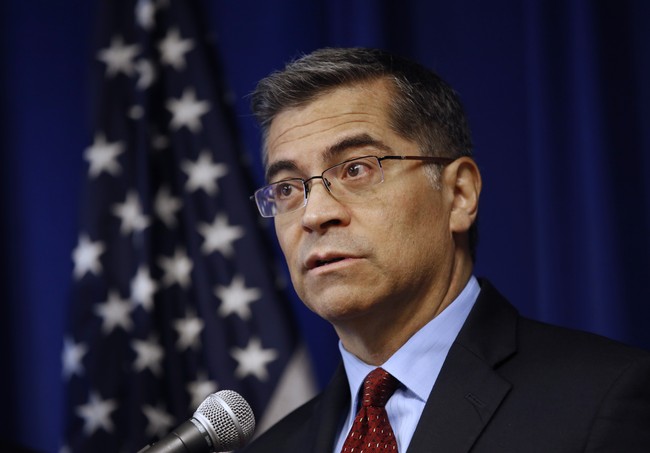
Xavier Becerra is running for California governor and climbing in the polls, but scrutiny of his past associations and his record on religious liberty has intensified. This article lays out the video evidence of his past praise for the Church of Scientology, the controversies about his actions against Christian groups, and how those actions contrast with his rhetoric about powerful institutions. The piece quotes his past statements exactly, details allegations tied to his tenure in public office, and places two original embedded markers where they appeared in the source material: and .
Voters deserve clear answers about what a candidate stood for decades ago and what he will defend as governor. Xavier Becerra, once a rising Democratic figure who served as California attorney general and then as HHS secretary, now leads in some polls for the governor’s race. Yet his record contains several sharp tensions: public praise for controversial groups in the late 1990s and early 2000s, and aggressive use of government power against some Christian organizations. Those contradictions matter to Californians who want consistent respect for religious liberty and fairness from elected officials.
In 1997, then-Representative Becerra spoke up for members of the Church of Scientology and urged his colleagues to offer protection, presenting his stance as a defense of religious minorities. Later, in 2000, he praised an organization affiliated with Scientology at a headquarters opening and attended a high-profile gala in Hollywood in 2003. These public gestures resurfaced after a video was circulated showing his warm remarks, prompting renewed questions about his judgment when it comes to groups with troubling records.
In 1997, Becerra, while serving in the House of Representatives, urged colleagues to vote for a resolution defending Scientologists in Germany, stating, “Many of my constituents,” he noted, “are members of religious minority groups like the Church of Scientology,” and they “deserve this protection.”
In 2000, he spoke at the grand opening of the headquarters for ABLE, a Scientology-affiliated group, praising the organization by saying, “You revive Hollywood… you kindle the spirit and determination of those of us who… have an opportunity to work with ABLE to make life better.”
Becerra also attended a star-studded gala at the Scientology Hollywood Celebrity Centre in 2003 in his official capacity as a U.S. representative.
This renewed scrutiny comes as Becerra continues to surge in the polls.
The Church of Scientology calls itself a religion, but many critics and former members have labeled it abusive and secretive, pointing to decades of allegations. Exposés, documentaries, and high-profile accounts have raised questions about financial practices and alleged mistreatment of members. Those controversies make it politically risky for any candidate to be seen as an enthusiastic supporter, especially in California where such scandals resonate in communities across the state.
Becerra’s campaign has pushed back, framing his past as a different era and accusing the organization of deceptive behavior. His team argues that public figures have since distanced themselves and that he will continue to challenge powerful institutions that harm Californians. That defense matters politically, but it does not erase the optics of an official who once lavished praise on a group now widely criticized for predatory conduct.
At the same time, Becerra’s enforcement decisions drew fire from religious groups that identify as Christian. As California attorney general, he pressed the Little Sisters of the Poor over the contraceptive mandate despite the organization’s claim of exemption. Years later, while serving as HHS secretary, he reportedly threatened a hospital’s accreditation over a chapel practice, actions critics see as heavy-handed and hostile to faith-based providers.
Those moves raised alarms among religious liberty advocates who argue that government officials must apply the law evenly and respect First Amendment protections. The contrast—defending a controversial sect in public statements while confronting traditional Christian institutions with regulatory pressure—feeds a narrative that political expediency, not principle, guided his choices.
The resurfacing of video and reporting will force voters to weigh whether Becerra’s record reflects a consistent commitment to constitutional freedoms or a selective approach to power. Californians who prioritize religious liberty, accountable governance, and even-handed enforcement should scrutinize both his past praise and his enforcement history. The central question for the campaign is whether his explanations satisfy skeptics who see a pattern of privileging certain groups and penalizing others.
As the governor’s race tightens, these issues will likely stay in play and shape debate about who best defends civil rights and constitutional protections in California. Voters will look at the record, listen to the explanations, and decide whether those answers line up with their expectations for fairness from a state’s chief executive.


Add comment