
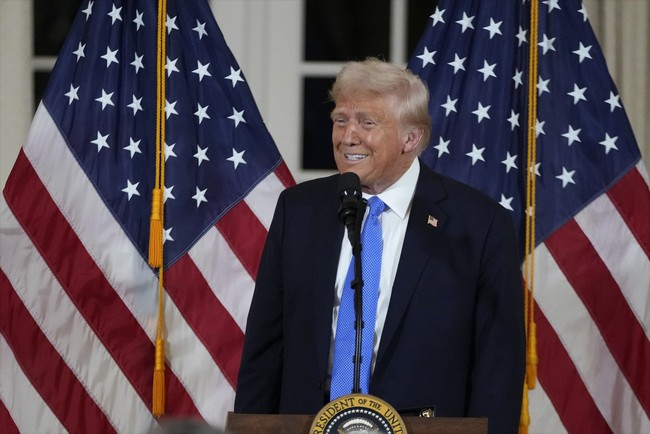
Senate Republicans used the simple-majority confirmation rule to push nearly 50 of President Trump’s civilian nominees through the chamber, installing dozens of U.S. attorneys, marshals, agency heads, and other officials in a single night and further filling out the administration’s leadership ranks.
The vote, 46-43, completed a wave of confirmations after the Senate’s rule change that allows executive-branch nominees to pass with a simple majority instead of the old 60-vote threshold. That shift, backed by Republican senators, has already resulted in roughly 60 percent of the president’s picks being confirmed, dramatically accelerating staffing across federal agencies. Conservatives argued the change was necessary to overcome partisan obstruction and get qualified nominees to work enforcing laws and protecting communities.
Democrats, led by the TDS-riddled Senate Minority Leader Chuck Schumer (D-NY), were determined to block many of these confirmations, which only made the GOP more resolved to act. Republicans used the tactic some are calling the “nuclear option” to prevent minority filibusters from stalling executive appointments. The result is a packed docket of officials who will now begin duties in departments ranging from energy to transportation and public lands.
Sen. Chuck Grassley (R-IA) urged the confirmations as a public safety and rule-of-law measure, arguing that fully staffed U.S. attorney offices and marshals help enforce criminal statutes and support victims. The batch included a dozen U.S. attorneys, several U.S. marshals, ambassadors, and leaders across agencies that directly impact daily life. Filling those posts moves the government from limbo to operation, which conservatives say is long overdue after years of partisan standstills.
This was the fourth mass-confirmation since the rule change, demonstrating a clear pattern: when Democrats obstruct, Republicans will change Senate procedure and govern. The nominees include a broad mix of roles, from career law enforcement leaders to politically experienced agency heads, intended to execute the administration’s priorities. One prominent confirmation was for the Bureau of Land Management, where the pick is expected to shift policy toward balanced land use and development.
Included in the latest batch are 20 different positions, including a dozen U.S. attorneys, several U.S. marshals, ambassadors and members of a variety of agencies, including the departments of War, Transportation, Energy, and others.
Also included in the group is Trump’s pick to lead the Bureau of Land Management and a former member of Congress, Stevan Pearce.
Democratic drama and theatrical complaints are predictable, but confirmation votes have real consequences for enforcement and policy. Leftist Sen. Dick Durbin (D-IL) reacted angrily to the maneuver, which many conservatives interpret as vindication that the confirmations were the right move. Filling leadership gaps in the Justice Department and federal agencies restores accountability and ensures executive priorities set by voters can be implemented.
The confirmation of the Bureau of Land Management nominee underscores a shift away from strict conservation-only approaches toward practical land stewardship that allows responsible mining, drilling, and leasing where appropriate. “Democrats and environmental groups were strongly opposed.” That opposition, coming from partisan and activist corners, signals the nominee is likely to enforce a balanced approach rather than the regulatory status quo favored by the left. Supporters say this will help rural economies and deliver on promises to use America’s resources responsibly.
Wyoming Republican Sen. Cynthia Lummis publicly supported the nominee, noting that experienced leadership at Interior-affiliated agencies matters for local communities and industries that depend on clear, predictable rules. Senate Republicans framed the confirmations as a defense of voters’ choices and an essential step to moving the administration’s agenda forward. The tactic of changing the cloture threshold was controversial, but it addressed gridlock that left important roles unfilled for too long.
Democratic strategy in this term often feels like reflexive obstruction, and when that fails, it falls back on alarmism and theatrical outrage. For conservatives, the practical test is whether nominees carry out the law and protect citizens, and the recent confirmations put more people in place to do exactly that. The broader takeaway for Republicans is procedural leverage matters; when the minority weaponizes procedural delay, the majority must respond to govern effectively.
These confirmations are part of a sustained effort to staff the executive branch with officials who reflect the administration’s priorities on law enforcement, land use, energy, and transportation. Now that many positions are filled, the focus will shift to execution and oversight rather than endless nomination fights. Voters expect results, and Republicans argue that these confirmations are a necessary step to deliver them.



Add comment