
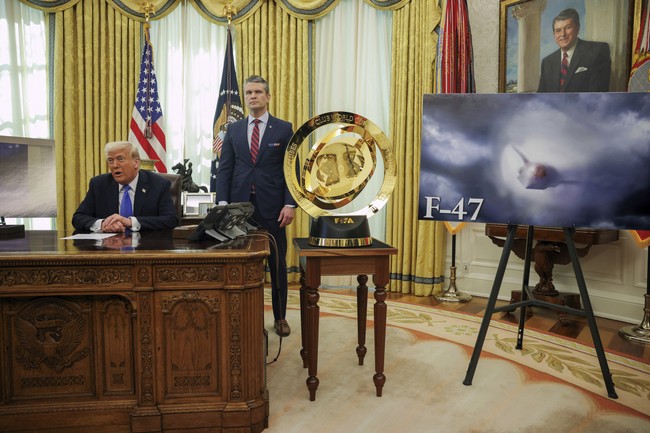
The Air Force says the new F-47 sixth-generation fighter is on track for a 2028 first flight, and this piece looks at the program’s speed, projected performance, industrial partners, and the logistical reality behind deploying a cutting-edge air superiority jet. It highlights statements from senior Air Force officials, Boeing’s role in ramping up work, and what this means compared with past fighter programs. The article also touches on operational concerns like range, speed, and the sustainment chain that keeps jets flying.
The Department of War and industry moving fast on a modern fighter is exactly what conservatives have pushed for: a strong military that deters adversaries and preserves American freedom. The F-47 program is being treated like a national priority, with resources and attention aimed at getting a capable aircraft into the hands of combat units quickly. Fast development is dangerous if sloppy, but deliberate speed backed by accountability is what this program appears to be trying to deliver.
Senior Air Force leaders have been blunt about the timeline and their confidence in meeting it. They point to a compressed contract-to-flight window that would put the F-47 airborne only three years after Boeing won the contract in March 2025. That kind of tempo shows what can happen when political will, defense budgeting, and industry focus line up.
The advanced F-47 sixth-generation fighter remains on track to fly in the next two years, the senior Air Force acquisition officer overseeing the program said Feb. 25, as the service continues on its ambitious schedule to debut the air superiority-focused fighter by 2028—only three years after the contract was awarded to Boeing in March 2025.
“We’re doing exceptionally well,” Air Force Gen. Dale White told reporters at AFA’s Warfare Symposium. White serves as the Direct Reporting Portfolio Manager for Critical Major Weapon Systems, a new role that oversees the F-47 and other major Air Force initiatives.
Comparisons to the F-22 are inevitable given the generational leap the F-47 represents. The F-22 took about two decades from concept to widespread service, a timeline that reflected Cold War urgency and technical hurdles of its own. The goal for the F-47 is to be faster to field while delivering greater stealth, speed, and reach than previous fighters.
Boeing is the prime contractor, and Air Force praise for the company’s personnel ramp-up has been explicit. Program managers point to staffing and supply chain moves that kept the schedule from slipping during early phases, even as Boeing has navigated challenges in its commercial business and tanker programs. That kind of corporate focus on a defense priority is crucial if the 2028 goal is to stick.
Then-Chief of Staff Gen. David W. Allvin first articulated the 2028 goal for the F-47’s first flight in September 2025.
Now, roughly half a year closer to that target, White said that the timeline remains on track. He also praised Boeing’s work to invest in the F-47; despite a rocky period in recent years with its commercial aviation business and KC-46 Pegasus refueler, Boeing so far appeared to stay ahead of problems with the F-47.
“Boeing has done a really good job of ramping up the personnel piece,” White said. “In the early phases of these programs … you typically watch the personnel ramp against the timeline and activities you have to get done. They’ve done very well with that.”
Projected performance numbers are ambitious. The Air Force has announced a combat radius of more than 1,000 nautical miles and speeds in excess of Mach 2, which would substantially exceed the F-22 in reach and top speed. If those figures hold up in testing, the F-47 will offer commanders a striking combination of stealth, persistence, and rapid response over theater-sized distances.
The Air Force has said the F-47 will have a combat radius of more than 1,000 nautical miles and be capable of flying at speeds greater than Mach 2. That would make the aircraft’s combat radius nearly double that of the F-22. Air Force plans to acquire more than 185 F-47s to match its current F-22 fleet, with the possibility of exceeding that figure.
Good projections are one thing; operational reality is another. The true test of any advanced aircraft is not just how well it performs in a first flight or initial demos, but how reliably it operates for years across distributed bases and harsh environments. That requires a sustained industrial base, spare parts, trained maintainers, and supply lines that can keep jets ready when needed.
The logistics tail for a modern fighter is long and complicated, from fuel and ordnance to specialized technicians and repair facilities. Every minute a jet spends waiting for parts or maintenance is time it cannot deter an adversary or support allies. Getting the F-47 into service quickly must be matched with plans for sustainment that preserve readiness and keep costs under control.
There is legitimate optimism among conservative leaders that rebuilding our airpower quickly is both possible and necessary. A capable sixth-generation fighter that arrives on a tight schedule would be a tangible sign that priorities are aligned to rebuild deterrence. Success here will depend on program discipline, honest testing, and a logistics approach that treats sustainment as part of the acquisition, not an afterthought.
I’m eager to see the first flight, and conservative policymakers should keep insisting on accountability as the program moves forward. The F-47 could become a center piece of American air superiority for decades if managed well, and that outcome is worth firm, focused oversight from leaders who believe in a strong defense.
Editor’s Note: Thanks to President Trump and Secretary of War Pete Hegseth’s leadership, the warrior ethos is coming back to America’s military.



Add comment