
Checklist: report the LaGuardia collision, quote eyewitnessed account, outline what is known about casualties and response, note the political context, include official statements and embeds for updates.
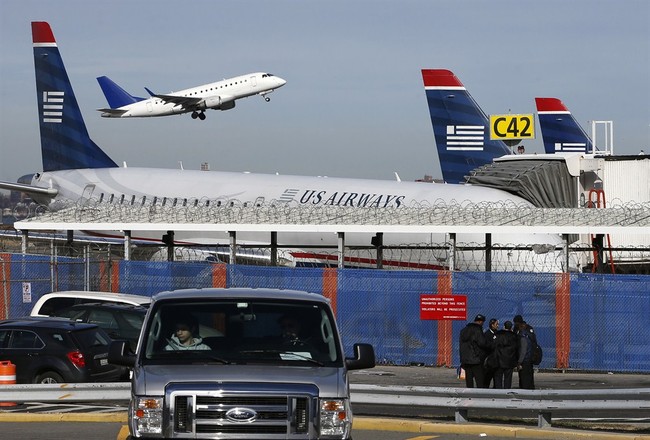
The scene at LaGuardia Airport on Sunday night was chaotic after an Air Canada jet struck a Port Authority vehicle on the runway while landing, leaving multiple people injured and authorities scrambling to sort the facts. Initial reports say the aircraft was arriving from Montreal at roughly 11:40 pm when the collision occurred, and the vehicle involved was responding to a separate incident. Emergency crews converged on the runway and local hospitals reported receiving critically injured patients. As with any fast-moving airport accident, verified details have been slow to emerge and are still being confirmed.
There is an obvious political overlay to how this story is being discussed, since the collision came amid a partial government shutdown led by Senate Democratic leadership. Critics are already pointing fingers about funding and staffing gaps, arguing that operational strain worsens when federal agencies face uncertainty. Supporters of increased scrutiny say accountability for safety at major airports must be nonpartisan and immediate. Regardless of politics, rescuers and controllers on scene focused first on saving lives and clearing the airfield.
An Air Canada flight collided with a vehicle while landing at LaGuardia Airport on Sunday night, leaving at least two people critically injured, reports said.
The flight from Montreal was landing at around 11:40 pm when the aircraft struck a Port Authority vehicle on the runway, a Port Authority spokesperson confirmed to the Daily Mail.
The aircraft struck the rescue vehicle while it was responding to a separate incident, the spokesperson added.
Eyewitness accounts and early briefings suggest the rescue vehicle was already on the runway, answering another situation, when the arriving Air Canada plane made contact with it. Air traffic controllers reportedly saw the unfolding emergency and attempted to manage traffic, but the intersection of a landing aircraft and an active ground vehicle turned catastrophic. Officials have said multiple people were taken to local trauma centers with serious injuries, and investigators from the Port Authority and FAA were dispatched to the scene. Families and travelers nearby described an atmosphere of fear and confusion as crews worked through the night.
Airport operations were disrupted following the crash, with runway closures and flight delays spilling across the region’s three primary airports: LaGuardia, JFK, and Newark. Disruption at one hub typically cascades to the others, especially during peak travel times, and travelers in and out of New York were left making alternate plans. Ground crews worked to clear debris while law enforcement established a perimeter for the ongoing inquiry. Airline spokespeople and the Port Authority have promised updates but urged patience as forensic and operational reviews proceed.
A key question for investigators will be why a Port Authority rescue vehicle was on an active runway during the Air Canada landing, and whether normal communications and safety protocols were followed. In any runway incursion case, investigators examine radio logs, radar tracks, vehicle dispatch records, and cockpit voice and flight data recorders. Simultaneous incidents that demand emergency response can create compressed timelines where split-second decisions have outsized consequences. The FAA’s protocol reviews will aim to determine if procedural changes are necessary to prevent recurrence.
For families with loved ones traveling through the region, the incident hit close to home; a number of readers and travelers reported being anxious and checking flight statuses for relatives. One writer noted personal concern after recently sending a daughter back to the New York area, underscoring how such events ripple beyond the immediate victims to friends and family. Airport safety is a communal issue, and public pressure for transparent, rapid answers is understandable. Officials must balance the need for accurate information with the ongoing integrity of the investigation.
Statements from government and airport officials have been cautious, promising a full accounting while the inquiry continues. Emergency responders praised the speed and professionalism of crews on site, saying rapid intervention likely prevented even greater loss of life. Transportation and oversight bodies will be expected to release a timeline of events and the rationale behind any ground vehicle movements on runways. Meanwhile, airlines and airport operators face scrutiny over training, coordination, and staffing that could affect future policy discussions.
As investigators work to reconstruct the sequence that led to the collision, travelers and residents are looking for firm answers and concrete steps to shore up runway safety. The coming days should yield official reports, witness interviews, and possibly records from the aircraft and vehicle involved. Until those findings are public, officials urge anyone with relevant information to come forward and remind the public that patience is required in technical, high-stakes probes. The priority remains the well-being of the injured and learning lessons to improve aviation safety.


Add comment