
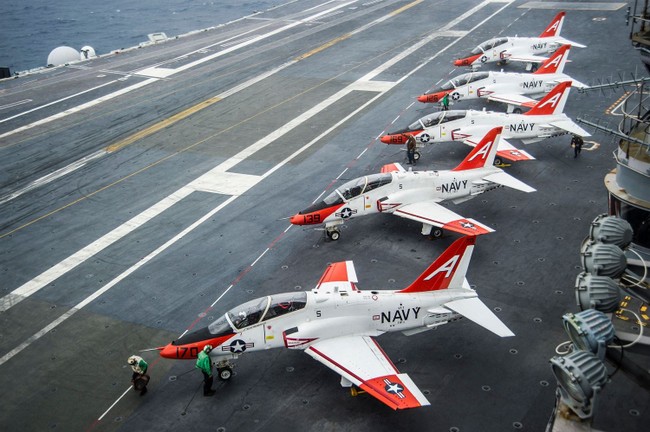
The Navy relief of the USS Abraham Lincoln by the USS George Washington marks a welcome turn after a long, difficult deployment, undercuts sensational media narratives about life aboard the carrier, and highlights the renewed focus on discipline and readiness in the fleet under Republican leadership.
The story that grabbed headlines painted the Lincoln’s crew as victims, obsessed with portraying life on board as an unbearable ordeal. That narrative amplified a handful of complaints, turned family quotes into front-page evidence, and blamed the White House and civilian leaders for what is essentially the hard reality of extended deployments. Reporters chased drama instead of context, and the result was a distorted picture of service members doing a tough job. The arrival of the George Washington changes the facts on the ground and gives sailors a path home after a grueling tour.
https://x.com/CENTCOM/status/2090402254071218315
The Navy confirms the USS George Washington has entered the CENTCOM area of responsibility and is now operating in the Arabian Sea, taking over duties from the Abraham Lincoln. The Lincoln spent more than eight months deployed and endured over 200 consecutive days without a port call, a demanding stretch for roughly 5,000 sailors. Such long deployments are unpleasant by design; they test endurance and resolve, which are essential to deterrence and mission success. The relief means sailors can finish a mission and begin the hard work of reuniting with families and returning to normal life stateside.
Mainstream coverage leaned hard into words like “miserable” to make a political point, and that spin carried clear partisan intent. It turned normal operational strain into a narrative weapon against the administration and Defense leadership. From a Republican perspective, that kind of reporting underestimates the professionalism of sailors and overestimates the political payoff of manufacturing outrage. The service and sacrifice of the crew deserve respect, not exploitation for clicks and cheap shots.
Military leaders and civilian overseers have repeatedly explained the operational realities sailors face, yet those explanations were often sidelined in favor of sensational anecdotes. Complaints should be heard and addressed where valid, but they do not negate the larger reality: thousands of trained professionals carried out a mission in challenging conditions. The goal now should be to manage rotations, improve logistics where possible, and ensure sailors get the support they need when they return. Media theatrics won’t fix real issues, but focused leadership can.
The George Washington crew, aware of the attention on carrier life, produced content showing how they feed and care for their sailors, attempting to defuse the manufactured crisis. That kind of proactive communication matters; it shows the pride and resilience inherent to Navy culture. It also demonstrates how unit cohesion and leadership produce results even in long deployments. Celebrating that competence is more constructive than endlessly retelling the same grievances for political effect.
Turning relief operations into partisan fodder also ignores the broader strategic picture: carrier presence in the region underwrites stability and deters aggression. Extended deployments are a hard but necessary instrument of national power, projecting presence without necessarily firing a shot. Republicans emphasize posture, readiness, and credible deterrence; a relieved carrier group that returns home intact is tangible evidence that those priorities are working. The crew’s successful handoff and continued operations validate those principles.
When the Abraham Lincoln finally pulls into San Diego, there will be cameras and reporters angling for the angriest quote they can find. Leaders should be ready to protect sailors from predatory coverage and to highlight real stories of service and sacrifice without turning return ceremonies into political battlegrounds. Strong messaging paired with genuine support for families and veterans will do far more good than letting media-driven melodrama set the agenda. The focus ought to be on the people who served, not the narratives that exploited them.
Under the current defense leadership, there has been a steady push to restore a warrior ethos and higher standards across the services, something Republicans have championed as central to national security. That revival is evident when units meet their commitments despite long deployments and limited comforts. Praising discipline and competence does not ignore problems; it frames them in a way that encourages solutions and accountability. The Lincoln’s relief by the George Washington is a practical outcome of those priorities and a deserved moment for sailors to get the recognition they earned.



Add comment