
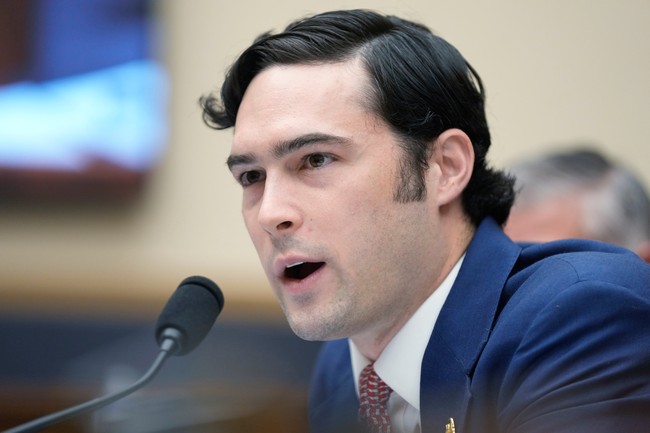
The House Oversight Committee, led in part by Representative Brandon Gill, is pressing McKinsey over its diversity research and the real-world consequences of policies tied to those reports, alleging flawed methods, withheld data, and billions in economic harm from discriminatory hiring practices.
House Oversight Now Targeting McKinsey’s Flawed DEI Reports
Representative Brandon Gill (TX-26) has emerged as a relentless questioner in Oversight hearings, and his latest focus is McKinsey & Company’s influential diversity reports. He argues these studies pushed employers and financial institutions toward race- and sex-based targets that may violate federal law and cost the economy dearly. Gill’s approach is direct: follow the evidence, demand transparency, and hold consultants accountable if their work harms Americans. The inquiry centers on whether McKinsey’s recommendations were backed by replicable data and lawful reasoning.
The committee’s critique begins with McKinsey’s repeated claims linking racial and gender diversity to better corporate performance. Those claims come from a series of reports with names like Why Diversity Matters and Diversity Wins that have been widely cited in boardrooms and by asset managers. The Oversight Task Force says those reports were used to justify hiring, promotion, compensation, and voting policies that embed quotas or targets tied to race and sex. If the research was shaky or the causation reversed, then the downstream policies are built on a bad foundation.
“McKinsey published four reports titled Why Diversity Matters (2015), Delivering Through Diversity (2018), Diversity Wins (2020),and Diversity Matters Even More (2023). These reports allege strong links between companies with increased levels of racial and gender ‘diversity,’ emphasizing that increased diversity in companies causes a greater likelihood of improved financial performance,” wrote Task Force Chairman Gill. “These McKinsey reports have been highly influential, being cited by publicly traded companies, asset managers, proxy advisory firms, and banking institutions, among others, as cause for embedding illegal racial and sex-based targets into hiring, promotion, executive compensation, and asset manager proxy voting policies.”
Independent researchers say they could not replicate McKinsey’s results and suspect the firm inverted cause and effect in its analysis. Oversight claims the broad application of DEI quotas or targets has cost the U.S. economy billions in lost revenues, pinpointing roughly $94 billion in 2023 alone as an example of the scale of potential harm. McKinsey reportedly declined to release the underlying data, which only deepens the concerns about the reports’ reliability. When a consultancy’s work is used to reshape hiring across public and private sectors, the public has a right to see the evidence behind it.
The legal issue is straightforward: the Civil Rights Act bars discrimination based on race and sex, yet policies informed by these reports appear to push employers toward race- or sex-conscious decisions. Republicans on Oversight frame this as both unlawful and unfair, arguing that policy should protect equal treatment rather than institutionalize new forms of bias. Beyond legality, they emphasize the principle that discrimination is wrong in any direction and that professional practices must respect the law. When firms and government funds adopt such measures, there are real consequences for workers and taxpayers.
Corporate and public institutions that relied on McKinsey’s findings now face criticism for following recommendations that may lack solid empirical backing. Examples cited include retirement funds and corporations that reportedly adopted DEI targets or voting policies influenced by those reports. For conservatives, the concern is twofold: that private consultants can steer large-scale policy changes without transparency, and that those changes can undermine merit-based systems and economic performance. The Oversight inquiry seeks to test whether McKinsey’s influence was responsible and whether any corrective action is needed.
Republicans pushing this investigation argue transparency should be non-negotiable when a private firm’s research reshapes hiring and investment rules nationwide. The committee’s letters and hearings aim to force disclosure of the methods and data McKinsey used so lawmakers and the public can properly evaluate the claims. If the data are inadequate or the analysis flawed, then institutions that followed McKinsey must reconsider their policies. The inquiry is also a warning shot: consultants can no longer operate as invisible architects of public policy without scrutiny.
Beyond the technical debate about replication and causality, the fight over DEI touches on deeper cultural and economic questions. Conservatives contend that the push for demographic targets corrodes trust in institutions and diverts attention from performance and competence. They insist any reforms must protect individual rights, uphold the law, and avoid engineered outcomes that favor one group over another. Oversight’s probe into McKinsey is intended to restore accountability and ensure policy rests on sound, transparent evidence rather than persuasive marketing.



Add comment