
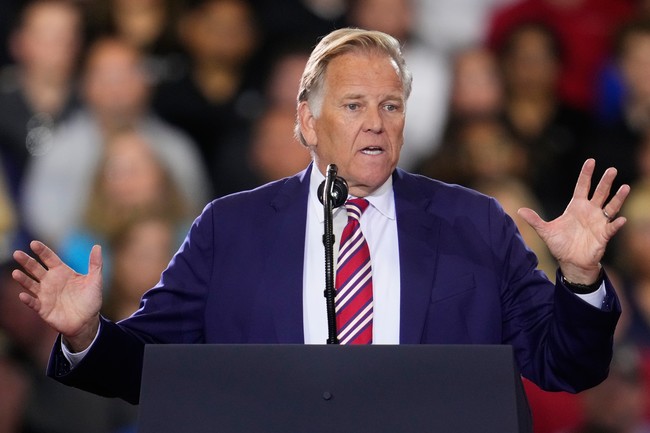
Republican Mike Rogers is drawing attention with cross-party backing in Detroit, highlighted by a former Democrat state representative who switched parties over policy concerns; local voices and on-the-ground signs suggest this could matter in a tight Michigan Senate race as voters weigh health care proposals and party alignment.
The recent news conference in a Detroit neighborhood offered a clear snapshot of why some Democrats and independents are considering a Republican alternative. Attendees voiced frustration with the current direction of Democratic policy, especially around health care, and explained why they could not back Abdul El-Sayed. The event was centered on persuading voters who feel left behind by progressive plans and on showing that support for Mike Rogers extends beyond the usual Republican base.
Karen Whitsett, a Michigan state representative who left the Democratic Party in March, spoke plainly about her change of heart and the issues that drove it. She framed her decision as a matter of values and practical concerns, not party loyalty. Her story resonated with people who had long identified as Democrats but now see a gap between the party’s promises and the effects on everyday life.
Whitsett warned about the consequences of proposals like Medicare for All and why voters should think twice before trading private coverage for a government-run system. She made a stark prediction about access and wait times that aimed to connect policy talk to lived experience: “If you enjoy going to the ER now and sitting for six hours, get ready to enjoy that a whole lot longer, because you may be sitting there for six weeks,” she observed. That kind of concrete image is powerful in persuading people who depend on timely care.
She also stressed the broader reach of government under such plans and how that conflicts with promises of personal choice. “You say you don’t want government in your business,” she asserted. “Well, the government will be controlling your healthcare…They will control everything. So, if for no other reason, common sense prevails that Mike Rogers is the candidate for you,” she added. Those words were a direct appeal to voters wary of expanded government control.
https://x.com/RNCResearch/status/2090449029184303308
Beyond Whitsett’s testimony, local voices picked up on a visible trend in neighborhoods where Rogers campaigned, noting yard signs and online chatter from people who still identify as Democrats but prefer his message. Observers pointed out that these “Democrats for Rogers” signs are not widespread yet, but they are noticeable in certain communities. In a tight contest, even a modest shift among working-class and Black voters can tip the balance, especially when turnout is uneven.
Reports from the event suggested Rogers was explicitly courting Black voters and Democrats on the fence, trying to connect over pocketbook issues and practical concerns like health care access and government overreach. Those conversations often focus less on national slogans and more on how policies affect daily life—doctor visits, insurance choices, and timelines for care. That approach can be persuasive when traditional party loyalty is fraying.
Historically, Democratic leaders have promised sweeping fixes for health care, yet voters have frequently seen outcomes fall short of the rhetoric. Obamacare was sold as a cure-all in many circles and still left people dissatisfied or facing higher costs, a point opponents of Medicare for All emphasize. Skeptical voters ask why they should trust yet another large-scale overhaul when previous reforms didn’t deliver on all the promises.
El-Sayed’s primary performance showed vulnerabilities with working-class and Black voters, and the scenes at the Detroit event help explain why those gaps exist. When policy proposals collide with everyday realities, candidates who promise stability and familiar choices can gain traction. For voters who experienced problems with past reforms, Rogers’ message of preserving choice and criticizing expansive government solutions strikes a chord.
Senate candidate @MikeRogersForMI held a news conference in a Detroit neighborhood this morning. He is courting Black voters and Democrats who are on the fence with who to support in the November race. It’s not clear how big of a movement is it, but it’s notable that there are online communities and lawn signs that tout, “Democrats for Rogers” as you scroll on social or drive through some neighborhoods.
Local media figures on the ground noted that the visual signals matter: signs, small groups of supporters, and neighborhood conversations can amplify a campaign’s reach beyond formal endorsements. Those grassroots indicators are often the early warning signs of a broader trend, even if the movement is still forming. In competitive races, the appearance of cross-party support can reshape narratives and funder calculations.
For Republican strategists, this moment offers a chance to build a broader coalition by emphasizing practical concerns and offering clear contrasts on policy direction. For undecided voters, the message is straightforward: think about the trade-offs of big government plans and who will protect current choices. The coming weeks will test whether these early signs of support translate into votes when turnout matters most.

Add comment