
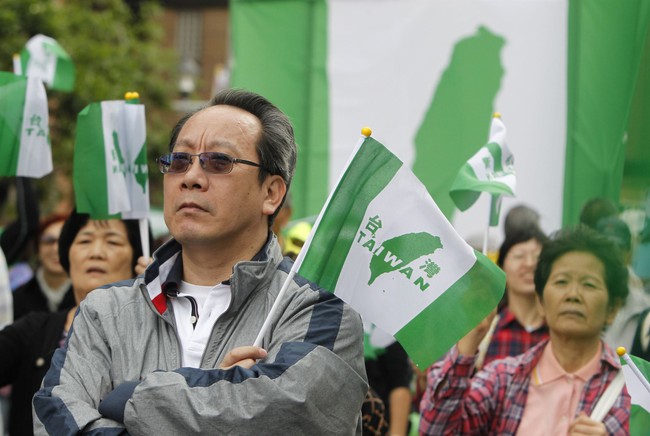
Checklist: reaffirm U.S. support for Taiwan; explain the new Taiwan Assurance Implementation Act and the National Security Strategy’s stance; outline KMT actions that block Taiwan’s defense spending; describe the risks posed by Beijing’s military activity; argue why Washington should pressure Taiwan’s opposition to secure funding.
The United States has made a clear move to reaffirm support for Taiwan. President Trump signed the Taiwan Assurance Implementation Act, which forces a periodic five-year review of how the State Department handles relations with Taiwan and ties into the 2020 Taiwan Assurance Act. That step landed amid heightened tensions between Tokyo and Beijing and marks a public, strategic line the U.S. is drawing in the region.
Taiwan’s leadership publicly welcomed the law, and Beijing pushed back strongly. The new National Security Strategy keeps America’s long-standing declaratory policy on Taiwan and emphasizes deterrence to avoid conflict over the self-governed island. The document highlights Taiwan’s outsized strategic value because of semiconductors and its position relative to the First and Second Island Chains.
This reaffirms the rock-solid #Taiwan–#US partnership. We will continue working with our American friends to advance our shared security & prosperity.
The NSS text explicitly links conventional military balance to strategic competition and warns that maintaining overmatch is a priority. It argues that allies must spend more, provide greater access to facilities, and invest in capabilities geared to deterring aggression. The paper makes clear that the U.S. cannot shoulder defense in the Western Pacific alone and that a collective push is necessary to deny any attempt to seize Taiwan.
President Lai Ching-te praised the inclusion of Taiwan in the NSS, recognizing the policy importance. The Trump administration, contrary to some mainstream claims, has signaled that Taiwan is not on the bargaining table. That clarity matters because Taipei is both a technological hub and a linchpin for maritime routes that underpin global trade.
Despite Washington’s stance, Taiwan’s domestic politics are complicating defense preparations. The opposition Kuomintang, allied with the Taiwan People’s Party in the legislature, recently blocked consideration of President Lai’s proposed eight-year, $40 billion special defense budget. That budget was meant to build asymmetric capabilities, improve civil defense, and foster U.S.-Taiwan industrial cooperation.
The special defense fund is separate from Taiwan’s regular annual defense appropriation and is focused on prioritized investments like the T-Dome air defense system, long-range strike assets, and enhanced training. These are practical measures to increase Taipei’s ability to deny aggression and to integrate production with American partners. The State Department publicly welcomed the proposal, seeing it as a constructive step for regional deterrence.
Kuomintang figures argue they support Taiwan’s security, even as their actions suggest otherwise. KMT caucus whip Fu Kun-chi has called for President Lai to explain the budget to the legislature and claimed his party backs protective measures. Yet Fu’s history of delegations to China, a reported failure to act on an incident involving a detained delegation member, and recent legislation to ease political access for Chinese spouses raise legitimate doubts about his party’s priorities.
The KMT has floated policies that would open the outlying islands to free-trade zones and relax rules in ways that could invite economic manipulation, relabeling, and espionage. Such measures risk undercutting Taipei’s economic defenses while straining ties with Washington. Those bills reveal an inclination toward accommodation with Beijing rather than hardening Taiwan’s posture against coercion.
At the same time, Beijing has dramatically ramped up maritime deployments around Taiwan, with naval and coast guard vessels operating from the Yellow Sea down into the South China Sea. Reports showed over 100 vessels active at one point, demonstrating a significant spike in pressure. It is striking that Taiwan’s opposition appears relatively unmoved by the unprecedented scale of that activity.
The fate of both the supplemental $40 billion plan and the next year’s defense budget now hang in the balance. The KMT’s rejection, its chair’s resistance to raising spending to the levels Lai proposes, and earlier legislative freezes and cuts all suggest that defense funding could be squeezed in 2026. Polling commissioned by the KMT paradoxically shows majority public support for higher military spending, which deepens the question of why legislators refuse to act.
Some KMT and TPP lawmakers concerned about reelection might eventually follow public opinion and back stronger defense funding, but party discipline and leadership pressure remain real constraints. From a U.S. perspective, the administration should press Taiwan’s opposition parties to avoid derailing the budget. If they continue to obstruct, Washington will need to make clear there are consequences for undermining collective deterrence.
The broader picture is simple: the U.S. and Taiwan are aligned strategically, but Taiwan’s internal politics and Beijing’s growing maritime coercion create vulnerabilities. Securing the funds to build asymmetric defenses and deepen industrial ties with the United States is essential if deterrence is to hold. The political fight over Taiwan’s defense budget is shaping up to be a central test of whether allies will actually do what the NSS demands.


Add comment