

The European Commission fined X under the Digital Services Act, accusing the platform of deceptive design and transparency failures, and X’s team responded sharply — including terminating the EU’s ad account for exploiting a deceptive link — creating a public spat that Republicans view as an overreach against American tech and free speech.
The EU announced a major fine on X and Elon Musk via its X account, which set off a fast chain of rebuttals from American conservatives and X leadership. Republicans see this as a political move targeting a U.S. platform and its users, not a straightforward regulatory enforcement. That interpretation matters because it frames the fine as part of a broader clash over speech and sovereignty. The Digital Services Act is at the center of the dispute, but the reaction shows how seriously Americans take foreign interference with our tech companies.
The EU’s public message included specific accusations and listed the compliance failures it claims to have found. The posted text singled out the blue checkmark, advertising transparency, and researcher access as the main issues. Because the EU chose to announce this on X itself, their post became part of the story and opened them up to scrutiny for how they presented the facts. Republicans argue that using a public platform to stage enforcement announcements invites scrutiny of the messenger as much as the message.
Today, we fined X for non-compliance with transparency obligations under the DSA.
We’re holding X accountable for:
Deceptive design of its ‘blue checkmark
’Lack of transparency of its advertising repository
Failure to provide access to public data for researchers
The post itself contained a link that looked like a video but routed readers to the EU’s article, a detail that didn’t go unnoticed. X staff warned readers up front that the item was not really a video, calling the setup deceptive and designed to inflate clicks. That tactic, if deliberate, would be ironic given the EU’s accusations about deceptive design. From a Republican perspective, the optics make the EU’s enforcement appear performative rather than purely administrative.
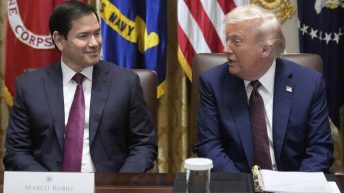
Prominent Republicans reacted quickly and loudly. Secretary of State Marco Rubio framed the move as an attack on American platforms and free expression, saying the days of overseas censorship targeting Americans had to stop. Vice President JD Vance also criticized the fine, joining a chorus that views the EU action as politicized. These responses underscore how enforcement actions by foreign regulators can quickly become foreign policy flashpoints.
The exchange escalated when X’s product chief, Nikita Bier, publicly pointed out that the EU had used its dormant ad account to post the misleading link. Bier’s response called attention to a claimed exploit in the EU’s use of X’s ad tools and highlighted an inconsistency: the EU accusing X of deception while exploiting a deceptive ad format. That tweet quickly became a focal point in the narrative, flipping the accusation back onto the regulator.
Then, Bier drove the point home by noting that the EU’s ad account was terminated for the very behavior it criticized the platform for. The termination was a clear, immediate consequence that undercut the commission’s moral high ground. Republicans framed that result as validation of X’s position that the EU overreached and engaged in the same behavior it condemned.
The irony of your announcement:
You logged into your dormant ad account to take advantage of an exploit in our Ad Composer — to post a link that deceives users into thinking it’s a video and to artificially increase its reach.
As you may be aware, X believes everyone should have an equal voice on our platform. However, it seems you believe that the rules should not apply to your account.
Your ad account has been terminated.
That public rebuke resonated with conservatives who want to defend domestic platforms against what they see as hostile or hypocritical foreign regulators. The Biden administration’s allies and some media outlets framed the situation differently, but the Republican narrative focuses on sovereignty, fairness, and the right of Americans to determine the rules that govern their speech. The debate is now as much political as it is legal or technical.
Beyond the legalities of compliance with the DSA, this dust-up raises practical questions about enforcement, transparency, and who gets to set the rules online. X has adopted features intended to increase transparency, like location indicators, and its defenders argue those measures help protect domestic discourse from foreign manipulation. The clash with the EU shows how quickly tech policy disputes can become partisan fights over control of the digital public square.
The EU’s decision to go public with its fine and the platform’s immediate, public counterpunch show a new model of enforcement drama: regulators and companies sparring in full view of users. For Republicans, that visibility exposes motives and mistakes and gives the public a chance to judge both the regulator and the regulated. Expect this conflict to keep drawing attention as both sides defend their version of transparency and fairness in the digital age.

Add comment