
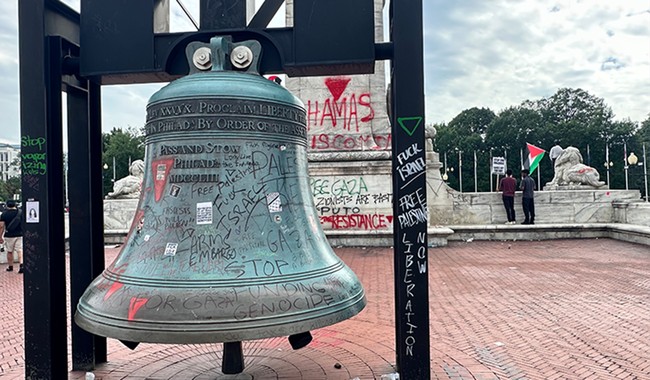
The restored fountain at Columbus Circle and a broader renovation at Union Station show how quickly things can change under a new administration, with officials announcing major funding and celebrating the end of years of neglect.
<pThe historic plaza at Union Station had become a byword for decay, vandalism, and a nonworking fountain that had been dry since 2007. Over recent years, graffiti, tents, and trash turned a once-proud public gateway into a symbol of neglect and disorder. The contrast between that past and the newly reopened fountain is sharp and unmistakable.
On December 10, 2025, the National Mall and Memorial Parks fenced off the area to begin a renovation effort, and the recent unveiling offered the first real look at the results of that work. Photographs from the site show water running again, clean surfaces, and officials standing in front of a fountain that no longer resembles an urban wreck.
The plaza had been the scene of repeated vandalism, with demonstrators defacing the site and causing damage that went unaddressed for years. The fountain’s silence since 2007 became a headline symbol of municipal and federal inattention. Restoring functioning water and cleaned stonework was always more than cosmetic; it was a statement about public order and civic pride.
All we needed was a new administration: The recent ribbon cutting was positioned as a turning point, and leaders made clear they view the work as the start of a larger push to repair federal properties. Officials framed the effort as reversing the era of neglect and putting federal assets back into shape for citizens and visitors alike.
Transportation Secretary Sean Duffy attended the ceremony, and the flowing fountain provided a visual cue that tangible change is underway. He announced a large federal grant earmarked for major repairs and modernization across the station. The funding is intended to address structural issues, passenger experience, and revenue-generating features that can sustain the site long term.
https://x.com/TheBirdWords/status/2059999582734496114
Duffy:
In our effort to follow the president’s call to make DC beautiful and great again, we are announcing that we were given a grant from DOT to Union Station for $465 million.
This is going fast track critical, structural repairs to this building, things like a roof. We can’t have leaks in our Union Station’s roof, so we’re going to fix the roof, enhance the passenger concourses, the Amtrak lounge, and the ticketing experience.
We’re going to maximize the station’s revenue potential with retail, with parking, with office spaces, with digital signage, and a lot more. We’re gonna improve security, and we’re going to invest in family friendly infrastructure.
The announced $465 million grant targets immediate structural fixes such as the roof and upgrades to passenger areas that have long been overdue. Planned improvements include better concourses, an improved Amtrak lounge, modern ticketing, and revenue elements like retail and digital signage. Security and family-friendly amenities were also named as priorities, so the station can serve a broader mix of daily commuters and visitors.
Interior Secretary Doug Burgum also appeared at the ribbon-cutting and framed the renovation as a restoration of the capital’s front door. He used strong language to contrast the current work with the prior state of neglect, and international delegates attended the ceremony in recognition of the site’s symbolic importance.
“Today is a day of gratitude and a day of celebration,” Interior Secretary Doug Burgum said at the ribbon-cutting ceremony for the fountain, as ambassadors for Italy and Spain were also in attendance.
“We have changed the front door of America,” the secretary said, adding that it was a “symbol of neglect” before the restoration was done.
Beyond the fountain and Union Station, officials pointed to other ongoing projects that aim to beautify and repair national mall assets, including work to restore the Reflecting Pool. Those efforts are part of a wider federal push to restore high-profile public spaces that had fallen into disrepair. The combination of substantial funding and visible progress is meant to send a clear message that public spaces will be maintained and protected.
The visible change at Columbus Circle matters in practical ways for commuters and tourists and in symbolic ways for the city’s image. Turning a vandalized, dry fountain into a functioning centerpiece helps reset expectations about maintenance, safety, and federal responsibility. These are the kinds of projects that shape daily experience and influence how the capital is perceived by Americans and visitors alike.



Add comment