
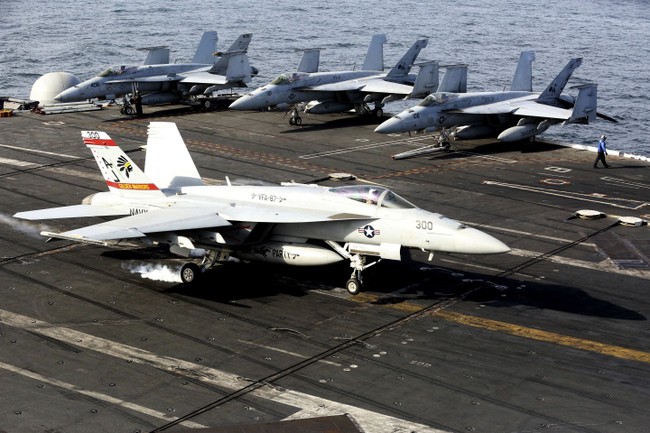
The U.S. military struck an Iranian drone-control site at Bandar Abbas after Iranian forces launched multiple one-way attack drones and a ballistic missile toward the region, and CENTCOM called Iran’s later missile launch at Kuwait an “egregious ceasefire violation.” U.S. forces intercepted the drones near the Strait of Hormuz and engaged a ground control site, while Kuwait shot down the ballistic missile. These actions unfolded amid tense diplomacy over Iran’s nuclear ambitions and ongoing negotiations that the U.S. says are being used as cover for hostile acts.
Late on May 27, Iran launched several one-way attack drones that threatened vessels in the Strait of Hormuz, and U.S. forces intercepted them. Officials say a sixth drone launch was prevented by striking the ground control site at Bandar Abbas, a key staging area along the strait. From a Republican perspective, this was a clear-cut act of aggression that required decisive defensive action to protect American forces and commercial shipping lanes.
https://x.com/CENTCOM/status/2059950035916218595?ref_src=twsrc%5Etfw
At 10:17 p.m. ET on May 27, Iran launched a ballistic missile toward Kuwait that was successfully intercepted by Kuwaiti forces. This egregious ceasefire violation by the Iranian regime occurred hours after Iranian forces launched five one-way attack drones that posed a clear threat in and near the Strait of Hormuz. All drones were successfully intercepted by U.S. forces which also prevented a sixth drone launch from an Iranian ground control site in Bandar Abbas.
U.S. Central Command and regional partners remain vigilant and measured as we continue to defend our forces and interests from unjustified Iranian aggression,” the statement added.
The U.S. strike targeted the drone launch infrastructure at Bandar Abbas, a strategic Iranian port on the Strait of Hormuz, to deny further launches. Hitting the ground control site was a self-defense move aimed at stopping additional attacks before they could materialize. Republicans will argue this was the kind of firm, immediate response necessary to deter Tehran from further escalation.
🚨JUST NOW: Iran is reporting EXPLOSIONS in Bandar Abbas again after the US previously carried out self defense strikes in that exact location, along the Strait of Hormuz
“A series of 3 explosions” 👀
Iran peace talks have been continuing even after the US’ defense strikes in the last few days
Reports indicate Iran may have been aiming one of its attacks at a commercial vessel transiting the Strait, which would have threatened international shipping and regional stability. The Strait of Hormuz is a choke point for global energy shipments, and any attack there risks wider economic and military consequences. Stopping the drones protected not only U.S. interests but global trade that depends on unhindered passage through the strait.
U.S. forces shot down four Iranian one-way attack drones that posed a threat to vessels in the Strait of Hormuz, according to two U.S. officials who spoke to Fox News. American forces also struck an Iranian ground control station in Bandar Abbas that officials say was preparing to launch a fifth drone.
Following the drone engagements, Iran launched a ballistic missile that Kuwait intercepted, and CENTCOM described that missile launch as an egregious breach of a ceasefire. From a Republican viewpoint, Tehran is testing both military and diplomatic boundaries, hoping to intimidate regional partners and slow coordinated responses. Instead, the strike and interceptions show that firm action can blunt Iranian adventurism and reassure allies in the region.
These military developments came amid reports of ongoing negotiations and competing narratives about what might be in any deal with Iran. The White House has publicly rejected false claims about a finalized agreement, and senior U.S. leaders warned that Iran cannot be allowed to obtain a nuclear weapon. The optics of strikes timed around talks make one thing plain: diplomacy without deterrence invites exploitation by rogue regimes.
Republican commentators stress that deterrence requires clarity and strength: name hostile acts, respond swiftly, and deny adversaries safe havens for attacks. That approach guided the decision to eliminate the drone-control capability at Bandar Abbas, and it guided cooperation with Kuwaiti forces to intercept the missile. In Washington, the question now is whether diplomatic pressure and military readiness will be sufficient to force Iran back from the brink of more aggressive behavior.
Looking ahead, U.S. and regional forces will remain on heightened alert to prevent further attacks on vessels, bases, or allies in the Gulf. The recent strikes and interceptions were portrayed by U.S. officials as measured defensive steps, but they also carry an unmistakable message: aggression will be met with force. For Republicans advocating robust national defense, this episode reinforces the need for continued vigilance and readiness to act.



Add comment