
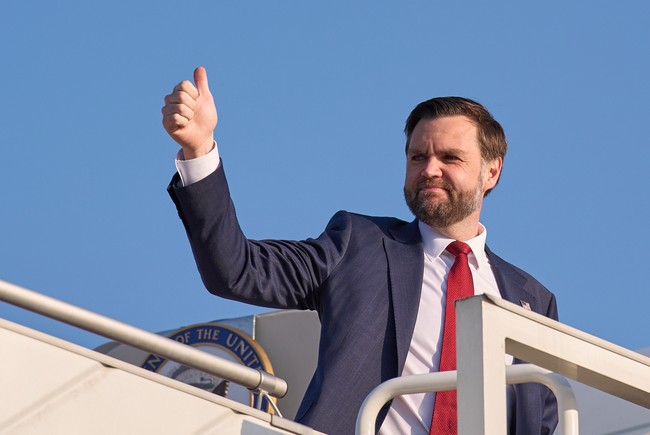
The General Services Administration, long the quiet landlord and purchasing arm of the federal government, has stepped into the spotlight by joining Vice President JD Vance’s anti-fraud task force, bringing its procurement muscle and access to massive contracting data into a White House effort to root out waste and fraud.
The GSA is the federal government’s centralized procurement and real estate manager, the place that handles buying, leasing, and maintaining the buildings and services that let agencies function. It touches a lot of government business quietly—contracts, property, travel policies—and that quiet influence now becomes more visible as it joins a high-profile crackdown on fraud. When an agency that controls access to procurement data signs on, the task force gains real leverage to inspect how taxpayer dollars flow through the system.
We provide centralized procurement for the federal government, offering billions of dollars worth of products, services, and facilities that federal agencies need to serve the public.
Our acquisition solutions supply federal purchasers with cost-effective, high-quality products and services from commercial vendors. We help federal agencies build and acquire office space, products, and other workspace services, and we oversee the preservation of historic federal properties. Our policies covering travel, property, and management practices promote efficient government operations.
We help keep the nation safe by providing tools, equipment, and non-tactical vehicles to the U.S. military. We also provide state and local governments with law enforcement, firefighting, and rescue equipment, as well as disaster recovery products and services.
We serve the public and make conducting business with the government easier by offering free access to and information about government programs with these websites:
The timing matters. The task force has already reported big numbers on fraud and improper payments in other programs, and bringing the GSA into the mix directs scrutiny at procurement itself—the place where agencies buy everything from office supplies to major services. Procurement is a known risk area for fraud and abuse because so much money changes hands across so many contracts, vendors, and middlemen. Republicans who want accountability see a clear benefit in giving this task force direct access to procurement records and acquisition know-how.
The federal agency that oversees more than $126 billion in federal contracts is joining Vice President JD Vance’s anti-fraud task force, expanding the White House crackdown into the federal government’s contracting system.
The General Services Administration (GSA) calls itself the “engine of government” and serves as the federal government’s central contracting and real estate agency, overseeing the buildings, services and goods agencies rely on to operate. By joining the task force, GSA gives one of the Trump administration’s highest-profile accountability efforts access to its procurement data, acquisition expertise and cross-agency reach as the White House seeks to root out fraud in public programs.
“GSA sits at the center of the federal acquisition and contracting ecosystem, making us a critical force in the fight against fraud,” GSA Administrator Edward C. Forst said in a press release obtained by Fox News Digital.
That $126 billion figure isn’t small change; it represents a complex web of contracts spread across agencies and regions, and it’s the kind of pool where bad actors can hide if oversight is weak. The GSA’s systems and records could expose patterns—repeat vendors, unusual markups, or repeated awardees with thin performance records—that a targeted fraud task force can turn into enforcement action. For voters who demand fiscal responsibility, this looks like a practical step toward accountability.
Beyond contracts, GSA manages a staggering physical footprint for the federal government: hundreds of thousands of buildings and millions of acres of land. The scale means there are countless leases, maintenance contracts, and property transactions where mismanagement or corruption can occur. With the task force digging into procurement and property management, many of those transactions will get a closer look than they’ve had in years.
Local governments and state agencies also rely on GSA-supplied equipment and services, so better oversight at the central level can ripple outward and improve how taxpayers in every state are protected from fraud. The GSA’s role includes supplying law enforcement and firefighting gear, and ensuring those purchases are honest and effective matters for public safety as well as fiscal prudence. Republicans arguing for leaner, cleaner government will point to this move as a commonsense use of federal resources to police federal spending itself.
Operationally, the partnership gives the task force technical resources it might otherwise lack: procurement specialists, contract reviews, and cross-agency authorities to trace money flows. That kind of institutional muscle is necessary if investigations are to move from headline-grabbing seizures to systematic reform. It’s one thing to point at isolated failures and another to use internal data to change contracting practices across the entire federal system.
As the White House expands this initiative, expect the GSA’s involvement to lead to more audits, contract cancellations, and referrals for criminal or civil enforcement in cases where fraud is found. For Republicans who see fraud as both a moral and fiscal issue, bringing the government’s own landlord into the fight against waste makes sense and sends a clear message: federal spending will be examined, and those who misuse it will face consequences.

Add comment