
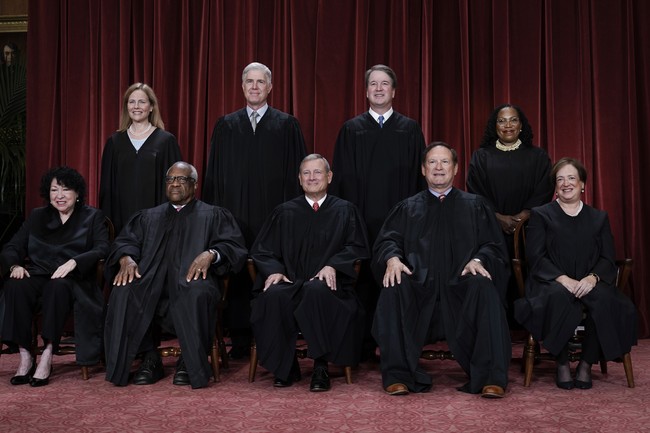
The Metropolitan Police rushed to Supreme Court Justice Amy Coney Barrett’s home after a reported gunfire call that turned out to be a swatting hoax, prompting renewed concerns about targeted attacks on conservative public figures and how law enforcement handles threats to VIPs and their families.
Late Wednesday night, police responded to reports of gunshots at a residence later identified as Justice Barrett’s home, according to local reporting. The initial call triggered a robust law enforcement response because the address was treated as a location of interest and known to have 24-hour security. Officers met with the security detail and, after assessment, concluded the incident was a hoax. That determination meant the family avoided harm, but the scare itself underscores a growing danger for public servants.
DC-based independent journalist Andrew Leyden first noted the incident shortly before 10 p.m. ET and characterized the episode as a swatting attempt, a malicious tactic long used to provoke dangerous law-enforcement reactions. Swatting deliberately wastes resources and can put both targets and responders at risk when armed teams are deployed to what turns out to be a false scene. The fact that the MPD treated the call with heightened caution likely prevented a tragic escalation in this case.
https://x.com/PenguinSix/status/2059814055154426029?ref_src=twsrc%5Etfw
Police audio obtained by the journalist revealed the sequence of events: initial reports of gunfire, confirmation the location was of interest, and notes that armed security guarded the property. Those dispatch recordings show law enforcement taking the call seriously while coordinating with the on-site security team. After confirming the false nature of the call, officers cleared the scene. The transparency of that recording helps explain how first responders evaluate potential threats in real time.
The term swatting describes the practice of calling in fake emergencies to lure large, armed law-enforcement responses to an address. Federal agencies have warned that such hoaxes can lead to confusion, unnecessary use of force, and potential injury or death. These incidents disproportionately target public figures and institutions, and they exploit the system’s obligation to protect citizens quickly. As the tools and tactics of attackers evolve, so must the protocols to keep families and officers safe.
Police responded to a call for the sound of gunshots at the home of Supreme Court Justice Amy Coney Barrett last night, but quickly realized it was a swatting call and cleared after meeting with her security detail. This is partial police audio, redacted pursuant to media reporting guidelines on coverage of swatting incidents.
This episode follows other alarming threats aimed at Justice Barrett and her family. A year ago, her sister received a bomb threat at her home, prompting a serious investigation and significant law-enforcement response. These are not isolated coincidences; they form a pattern of harassment that targets conservative judges and their loved ones. Every such event raises questions about motive, prevention, and accountability for those who engineer these hoaxes.
Swatting is making malicious hoax calls to emergency services to falsely report an ongoing emergency such as a violent crime or explosive device at a certain location. The intent is to cause large-scale deployment of Special Weapons and Tactics (SWAT) teams, bomb squads, and other police resources. Individuals and institutions are often unaware of the emergency response, causing confusion, frustration, and potential use of force that may result in harm for the target and responding officials.
Lawmakers and law enforcement need to be frank about where threats are coming from and who is being targeted. Conservatives, judges, and other public servants are operating under an increasingly hostile environment where bad actors weaponize emergency systems to intimidate and provoke. That reality demands practical safeguards: better screening of emergency dispatches, enhanced coordination with protective details, and stronger penalties for those who place lives at risk with false reports. The goal should be to deter swatting through both prevention and consequence.
The family at the center of this night’s scare was reportedly unharmed, and officials quickly determined no ongoing danger remained. Still, the trauma of such an event is real for any household suddenly surrounded by armed responders. Parents and children who face the terror of a raid on their home, even if brief, deserve reassurance that authorities are working to prevent repeat occurrences. Public trust depends on visible steps that reduce the risk of these hoaxes becoming deadly encounters.
We should also consider how public discourse and rhetoric influence behavior toward public officials and institutions. When attacks on judges and other officials are normalized or celebrated, it lowers the bar for those willing to take violent or dangerous actions. Respectful disagreement and lawful protest are part of civic life, but orchestrating false emergencies that endanger lives is criminal, cowardly, and must be treated as such. Holding perpetrators accountable will help protect officials and ordinary citizens alike.
In the meantime, law enforcement agencies must continue to refine best practices for distinguishing credible threats from malicious hoaxes without compromising the safety of those they are sworn to protect. Clearer lines of communication between dispatchers, responding officers, and on-site security can minimize unnecessary risk. The episode at Justice Barrett’s home is a stark reminder that threats to public servants are real, evolving, and demand a firm response from both the justice system and policymakers.



Add comment