
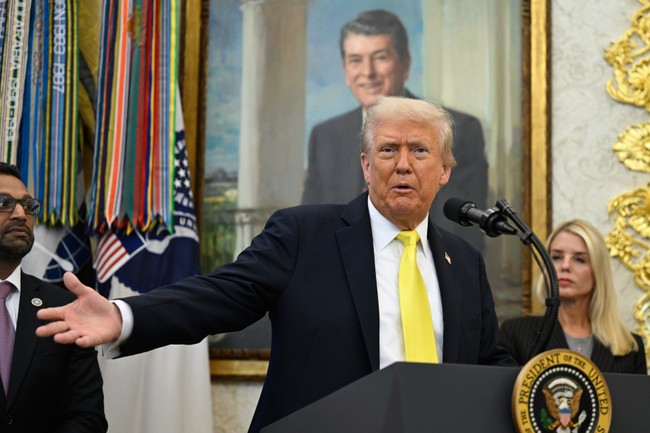
I’ll walk through the notable moments from Donald Trump’s recent 60 Minutes interview that never aired, highlighting the edits, the exchanges that were cut, and what those snippets reveal about media bias, crypto policy, the Kamala Harris settlement, and Trump’s persistent claims about the 2020 election.
CBS has a history now of editing interviews in ways that became costly and controversial, and that context makes viewers skeptical when parts of an interview are withheld. The network paid a large settlement over a previous deceptive edit, and that background shapes how people interpret what was left on the cutting-room floor this time.
Not every edit is sinister; sometimes there is simply more tape than a broadcast can include. Still, when a candidate like Trump sits down for a long interview, producers choose what to air, and those choices matter because they shape the public narrative. In this case, several pointed exchanges never made the televised segment, and those missing moments are telling.
One notable thread in the unaired footage centers on crypto and Trump’s pardon of Binance founder Changpeng Zhao, also known as CZ. The anchor pressed the president about the appearance of impropriety, noting ties between crypto purchases and his sons’ business activities. Trump shot back that his sons run private businesses and are not in government, framing the issue as business activity rather than corruption.
O’Donnell repeatedly prodded Trump over his decision to pardon cryptocurrency billionaire Changpeng Zhao, the founder of Binance also known as CZ. The CBS anchor grilled the president about the appearance of impropriety as the pardon coincided with Binance’s involvement in a $2 billion purchase of stablecoins from World Liberty Financial, a crypto platform run by Trump’s sons Don Jr. and Eric.
‘Norah, I can only tell you this. My sons are into it,’ Trump replied. ‘I’m glad they are, because it’s probably a great industry, crypto. I think it’s good. You know, they’re running a business, they’re not in government.’
Trump made clear his primary concern is American leadership in technology and finance, arguing we should not cede ground to China in crypto. That perspective ties into broader Republican themes about competitiveness and hostile foreign actors exploiting gaps in American policy. He also mentioned personal experience with financial deplatforming, saying his family turned to crypto after major banks cut them off.
There was a tense moment the anchor tried to press into a gotcha, and Trump responded with a warning about the line between tough questioning and bad-faith traps. He said he could have refused to continue the interview but chose to answer, emphasizing that at times a tough reporter can be allowed to ask questions even if they feel unfair. The exchange never made the broadcast, but it underscores a recurring clash over interview tone and editorial choices.
O’Donnell responded, ‘So not concerned about the appearance of corruption?’
Trump then gave the CBS anchor a stern warning which appeared neither in the 28-minute episode that aired on TV, nor an hour-long extended version uploaded to YouTube.
‘I’d rather not have you ask the question,’ Trump fired back. ‘But I let you ask it. You just came to me and you said, “Can I ask another question?” And I said, yeah. This is the question … I don’t mind. Did I let you do it? I coulda walked away. I didn’t have to answer this question. I’m proud to answer the question. You know why? We’ve taken crypto.’
Another cut moment revisited CBS’ own scandal over a prior Kamala Harris edit and the settlement Trump won against the network. He congratulated the new leadership at CBS and stressed the value of genuine journalism over manipulated segments. Trump was blunt about the settlement, saying the network paid heavily because an answer had been swapped in a way that changed the election narrative.
“And actually 60 Minutes paid me a lotta money. And you don’t have to put this on, because I don’t wanna embarrass you… I think you have a great, new leader, frankly, who’s the young woman that’s leading your whole enterprise is a great– from what I know,” Trump said, per Mediaite, referring to CBS News’ new editor-in-chief Bari Weiss.
He continued talking about the settlement, adding, “60 Minutes was forced to pay me a lot of money because they took [Kamala Harris’] answer out that was so bad, it was election-changing, two nights before the election. And they put a new answer in. And they paid me a lot of money for that. You can’t have fake news. You’ve gotta have legit news.”
Trump also reiterated his long-held view that the 2020 election was problematic, an assertion that remains central to his narrative and resonates with his base. In the unaired footage he refused to dive into future campaign plans and instead returned to the claim that 2020 was “rigged,” saying evidence is continuing to emerge. That line reinforces his argument about systemic issues and why he and his supporters remain distrustful of the process.
Another unaired moment saw Trump continuing to claim the 2020 election was rigged. When answering a question about possibly running for office again in 2028, the President said, “I don’t wanna start talking about elections. It’s too early. One thing I can tell you, the 2020 election was rigged.”
He added, “And a lotta people say when it’s rigged you’re allowed to do it again. It was rigged. And it’s been caught. And they — and you see the same information that everybody else does. And it’s coming out now in spades. But with all of that, we have a great bench.”
There are clearly more exchanges than a single broadcast can hold, and viewers will judge for themselves from the extended clips. Whether you think the edits were reasonable or partisan, the unaired moments highlight how much power rests with producers to shape what the public ultimately sees. With a president who talks a lot, networks either risk leaving out context or filling airtime with selective slices that push a narrative.


Add comment