
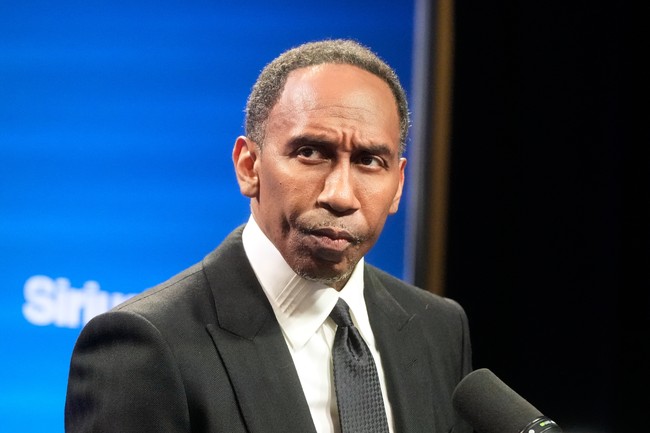
Stephen A. Smith says a near-death brush with COVID changed his view of the pandemic leadership, and his on-air criticism of Dr. Anthony Fauci reflects a wider Republican call for accountability over the decisions and messaging that guided policy and public behavior.
Stephen A. is known for big personality and louder-than-life takes, but his recent account of nearly dying in 2022 after following expert guidance struck a humbling chord. He described arriving at the hospital with double pneumonia and hearing a doctor warn that family might be called if treatment failed. Those three hours between despair and recovery reshaped his perspective on the people who steered the public narrative during the crisis.
He insisted he had done “exactly what Dr. Anthony Fauci was imploring us all to do,” and that reality made his disillusionment personal. That sense of betrayal is a common theme among conservatives who say the public suffered when guidance turned out to be flawed or overstated. For many on the right, Stephen A.’s story is emblematic of a broader failure of leadership and transparency.
On air, Stephen A. did not hold back in his rebuke of Fauci, laying out anger about what he sees as performative science and ego-driven decisions. He recited passages and reactions that cast mask mandates, distancing, and business closures not as purely technical judgments but as policies shaped by personality and image. That core claim fuels the Republican argument that policy ought to be grounded in verifiable data and open debate, not centralized by a single figure.
https://x.com/VigilantFox/status/2085191902467440977
“We were told, ‘Hey, you ain’t gonna get Covid if you do that.’ And I GOT COVID!” he exclaimed.
“And damn it, it almost killed me!” he continued. “Going into 2022, I’m in the hospital 90 minutes before the ball is about to drop, and the doctor says, ‘We’ve been at this for three plus weeks. You got double pneumonia. You look really bad. If this antibiotic and this steroid do not work, Mr. Smith, I’m sorry, we’re gonna have to call your family. Looks that bad…’”
“And through the grace of God, three hours later, I felt better after they gave me that steroid and that antibiotic,” he added. “But those were the longest three hours of my life because I thought it was over.”
“And I remember I had done exactly what Dr. Anthony Fauci was imploring us all to do.”
He expanded that lament into a broader critique, calling out what he labeled self-aggrandizement and poor judgment. Stephen A. argued that people trusted Fauci as the face of science and followed guidance “hook, line, and sinker,” only to feel misled when outcomes and later disclosures did not match the certainty that was presented. That feeling of having been misled feeds into calls for accountability and fuller disclosure about how decisions were made.
“Ladies and gentlemen, as I said, the man pleaded the Fifth 111 times, but they got a hold of his diary. And when you talk about self-aggrandizement being taken to a new level, definitely he was guilty of at least that.
“We learned that mask [mandates], six feet distancing… These were not scientific decisions being made. This was made by a man whose ego was just larger than life — talking about people calling him the sexiest man alive, fawning over celebrities and them fawning over him, caught up in the celebration and everything else in between. It was embarrassing.
“And it was embarrassing not only to him, but it was embarrassing to us who took his word as gospel and ignored all the cynicism and the criticism that was coming his way. We sat back and we bought his stuff, hook, line, and sinker. He was the face of science.
“I cover sports for a living. And over the national airwaves, I had to go on the air. I felt compelled to go on the airwaves and apologize to the likes of NBA star Kyrie Irving or an NFL star like Aaron Rodgers because of the scrutiny they received, the assist that I provided in aiming that scrutiny or assisting in that scrutiny coming in their direction — because the face of science was telling us this is not wise, this is not what’s supposed to be happening.
“And the level of dominion and control that he was having over the lives of American citizens… I’m just going to say it over the airwaves of SiriusXM: It was almost like it gave him a damn hard-on. That’s right. I said it. That’s how bad it was.
“When you read his diaries or what the Senate revealed, led by Senator Rand Paul, who was on the air with me just a few days ago explaining in detail some of those things that transpired — this is shameful. It’s shameful.
“And if you think people are going to forget that Dr. Anthony Fauci did what he did on Capitol Hill last week during the hearing… particularly when tomorrow that same committee is expected to announce they are indicting Anthony Fauci for essentially misleading the public because they got a lot of questions about some of the decisions he’s made…
“I’m not saying you need to go that far. I’m not saying they’re completely right about that. I don’t believe this man at 85 years of age who’s done tremendous work spanning decades should be thrown in jail. But do I think that he should be embarrassed for the self-aggrandizement that he engaged in? You damn right I do.
“Because some of the things that he was telling us to do was inconsistent with science. But he was telling us it was science that led to him making the decisions that he made.
“Masking. Six feet distancing. The closing of businesses. Forcing businesses to push those mandates upon people like me and others.”
Beyond the rhetoric, Republicans point to procedural moves like contempt votes and state criminal probes as steps toward answering unanswered questions. The party argues these measures are not partisan vendettas but necessary oversight for a public official who influenced massive policy choices. For conservatives, oversight is about restoring trust and ensuring future emergency responses are rooted in transparent science and clear limits on authority.
Stephen A.’s tale and his subsequent critique have value because they come from someone who felt personally harmed by the crisis response while also wrestling with fairness. He stopped short of demanding jail time, saying he did not believe the octogenarian scientist should be incarcerated, but he insisted on public embarrassment and accountability for misleading the nation. That mix of personal pain, skepticism of concentrated power, and call for due process tracks with the broader Republican stance on pandemic-era decision-making.
As investigations proceed in several states and at the congressional level, the debate will continue about where responsibility lies and how to prevent similar breakdowns of public trust. For many on the right, Stephen A.’s near-death experience crystallizes the argument: the public deserves leaders who answer straightforwardly, admit limits, and face consequences when their guidance costs lives and livelihoods.

Add comment