
This article examines Michigan’s $291.9 million Rx Kids cash program, highlights conflicting official descriptions of the payments, follows spending and appropriation details, outlines program controls and gaps, and notes political and oversight disputes about advisory ties and future funding.
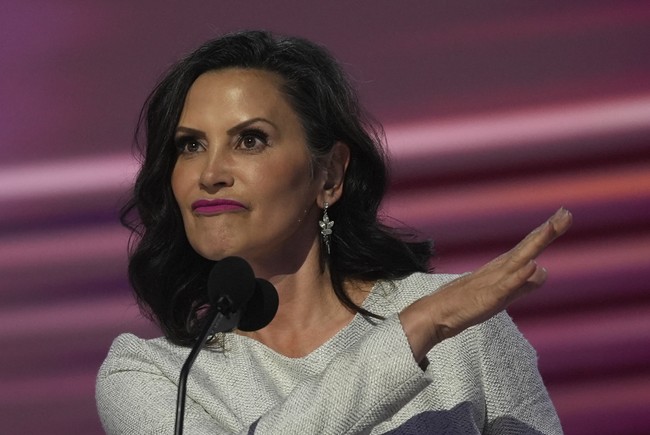
Michigan’s Rx Kids initiative offers pregnant women $1,500 up front and $500 per month for six or 12 months after birth, making it universal in participating communities with no income test or spending restrictions. The program is backed by Gov. Gretchen Whitmer and administered in partnership with Michigan State University and GiveDirectly, and it has been presented publicly as health-focused and temporary. Those structural features—predictable, unconditional payments to every eligible family in participating areas—are at the heart of the debate over how Rx Kids should be classified. Lawmakers and state officials are now arguing over whether those payments are guaranteed-income under Michigan’s own welfare rules.
The Michigan Department of Health and Human Services’ TANF State Plan, effective January 1, defines guaranteed-income payments as regular cash payments carrying no work requirements or other conditions. The plan explicitly names Rx Kids and states: “GIP payments do not count as income for the Family Independence Program. RX Kids Payments is an example of a GIP payment.” That plain language contrasts with how Rx Kids describes itself on its public materials, where the program’s FAQ stresses a temporary, health-oriented child allowance. The push and pull between bureaucratic classification and the program’s marketing language has tangible consequences.
Originally, Michigan lawmakers appropriated $306.5 million to get Rx Kids going, split across fiscal years and including a major transfer from the Healthy Michigan Fund. After canceling some unspent amounts, roughly $291.9 million remains tied to the program from public coffers. Yet actual outlays have been tiny so far: as of June 2, only about $10.8 million of that public money had been spent, a fraction of the total appropriation. The program reports that 85 percent of state funding is directed to families, with 5 percent for partner operations and 10 percent for indirect costs such as facilities and compliance.
Republican lawmakers pushed to strip a dedicated $20 million Rx Kids appropriation from the fiscal year 2027 budget and redirect those dollars into other maternal and child health priorities. The adjustment moved funds into prenatal-care outreach, maternal and child health administration, and supplemental payments under the Family Independence Program. Michigan House Speaker Matt Hall has argued that Rx Kids cannot legally tap those reallocated buckets, which he says would cut off the program’s state funding unless MDHHS rules otherwise.
Program founder Dr. Mona Hanna contends that eligible participants may still receive reimbursements under TANF, creating uncertainty pending a formal MDHHS determination. That uncertainty leaves the program’s path to the remaining public dollars unclear and creates a political flashpoint about accountability and legal authority. For conservatives who prioritize clear rules and proper budget execution, the ambiguity is significant and raises questions about oversight.
Rx Kids enforces identity, residence, and pregnancy verification and cross-references birth records before starting monthly payments, and suspicious applications receive extra review. Those measures handle enrollment integrity, but they stop short of monitoring how recipients actually spend the money. Once the cash is delivered, Rx Kids does not collect transaction-level receipts, impose purchase limits, or require independent verification of spending choices.
“This is a program built on trust: trusting women, trusting mothers, trusting families to best meet their needs. … No, we do not do monitoring.”
The quoted defense of non-monitoring came from Dr. Hanna, who told lawmakers that spending data are derived from participant surveys. She cited survey results claiming that 94 percent of families reported purchasing baby supplies, but that figure rests entirely on self-reporting. Critics point out that relying solely on voluntary surveys offers no independent confirmation of outcomes or of the long-term effects the program claims to produce.
The House Oversight Committee also raised questions about an advisory circle that included figures with ties to national guaranteed-income organizations. An archived listing once showed names associated with groups active in guaranteed-income advocacy, but the page disappeared after a June 2 hearing and returns an error now. House Oversight Committee Chairman Jay DeBoyer accused Rx Kids of attempting to conceal relationships, saying, “Given all this, it’s telling that Dr. Mona would attempt to conceal these relationships following the hearing with the removal of information.”
Rx Kids maintains it is expanding: the program is rolling out to more than 60 Michigan communities and expects to cover roughly 23,000 births each year once fully in place. Gov. Whitmer has promoted the expansion as a model for improving maternal outcomes and easing family financial pressure. But the program’s expansion, combined with ongoing classification disputes and the opaque advisory changes, leaves taxpayers and elected officials asking which description we should trust—the program’s PR or the state’s formal welfare definition.
After nearly $292 million in public appropriations, Michiganders deserve clarity on whether these payments are temporary, health-focused supplements or guaranteed-income disbursements under state rules. The next steps hinge on MDHHS rulings, budget decisions by lawmakers, and whether Rx Kids will offer more transparent documentation of its advisory ties and independent outcome measurements. Until then, the program will remain a contested example of how cash-assistance experiments intersect with established welfare law and public accountability.
Add comment