
The Washington Post pushed a claim that President Trump exploded at Camp David over supposed munitions shortages and demanded answers from Defense Secretary Pete Hegseth, but the White House and Pentagon pushed back hard, calling the story false and politically motivated. Karoline Leavitt, who says she was present, flatly denied the episode ever occurred, and other officials echoed that the report was fabricated or misleading. The dispute centers on credibility, national security risks from leaked or invented narratives, and the media’s role in shaping a political fight. This piece walks through the claims, the denials, and the broader consequences for trust in reporting about national defense.
The story started with media accounts claiming the U.S. faced critical munitions shortages that could limit options against Iran. That narrative spread quickly and raised alarm among readers and policymakers, because questions about military readiness have real political and strategic consequences. But the White House and Pentagon responded swiftly to calm the picture, saying the reports did not match reality. When national security is at stake, sloppy sourcing or agendas in reporting can make problems worse.
The Washington Post then ran a piece suggesting President Trump’s frustration boiled over at Camp David and that he demanded answers from Secretary Hegseth about being misled. Those are serious allegations, depicting a public breakdown within the administration at a secure presidential retreat. According to the claim, the President confronted the secretary directly over supposed misinformation about ammunition supplies. That framing escalated the story from a logistics debate to a personal clash at the highest level.
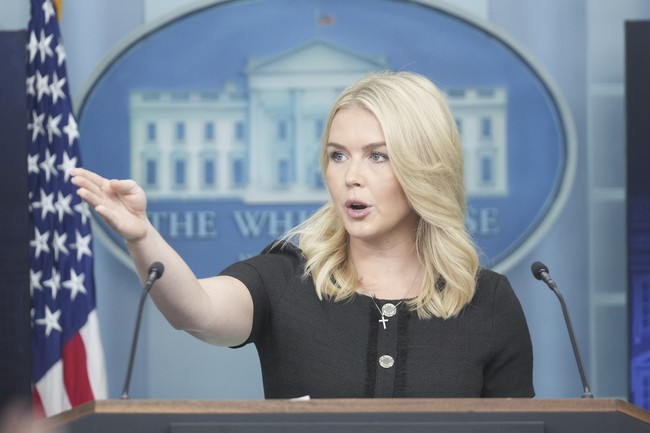
But White House Press Secretary Karoline Leavitt responded decisively, saying the confrontation “never happened” and that she was there. Her words were direct and categorical, dismissing the account as “B.S.” and asserting the President supports the secretary. The message from the podium was clear: the narrative was a manufactured attack intended to damage a senior official. In a heated media environment, such pushback matters because it sets the public record straight from those who were present.
White House Deputy Communications Director Kaelan Dorr amplified the denial and criticized the reporting, arguing the Post’s version was a planted story meant to disparage Hegseth. Other spokespeople joined in, painting the article as part of a pattern where anonymous sources push sensational claims. The pushback wasn’t just defensive; it framed the piece as an intentional political hit. When officials say a story was shopped to multiple outlets, they’re suggesting an organized campaign of misinformation rather than a journalistic stumble.
https://x.com/TaraCopp/status/2085151894360506629?ref_src=twsrc%5Etfw
I was at Camp David with President Trump and Secretary Hegseth. This literally never happened, and we told the Washington Post that repeatedly. This B.S. story was shopped to many outlets by someone clearly out to disparage the Secretary, for whatever reason. Unfortunately for them, the President loves the Secretary and thinks he’s doing a tremendous job. FAKE NEWS!
The Pentagon spokesperson Sean Parnell likewise pushed back, calling the story inaccurate and unsupportable. Military officials have their own incentives to correct the record when national readiness is misrepresented, because false claims can affect diplomatic calculations and morale. When defense sources disparage a published account, it raises questions about the veracity of the piece and the motives of its sources. Officials warned that such stories, true or false, can have real consequences on the ground.
Beyond the immediate denials, there’s a broader problem: anonymous sourcing and sensational framing erode trust. If insiders want to raise legitimate concerns about military preparedness, there are channels to do it without anonymously feeding narratives to reporters. Running to the press with explosive claims, especially during sensitive operations, risks harming the national interest. Responsible reporting should weigh those risks and verify claims before publishing provocative headlines.
Republicans watching this saw a familiar pattern: media outlets amplifying potentially damaging stories with weak sourcing, while the targeted officials and the President push back with direct denials. That dynamic deepens partisan divides and undermines confidence in both institutions and reporting. The takeaway for many conservatives is that skepticism toward these kinds of media accounts is warranted until reporting includes clear attribution and corroboration. Trust has to be rebuilt through rigorous journalism, not rumor amplification.
At its core this episode is about accountability and checks on power, but it also flips that script: when media act as a megaphone for unverified sources, they become actors in the political fight. Officials calling out false narratives is part of the accountability mix, especially when the story in question touches on national security. The public deserves clear facts and less drama, and officials who were present expect their denials to carry weight. How outlets respond to being called out will say a lot about their standards.

Add comment