
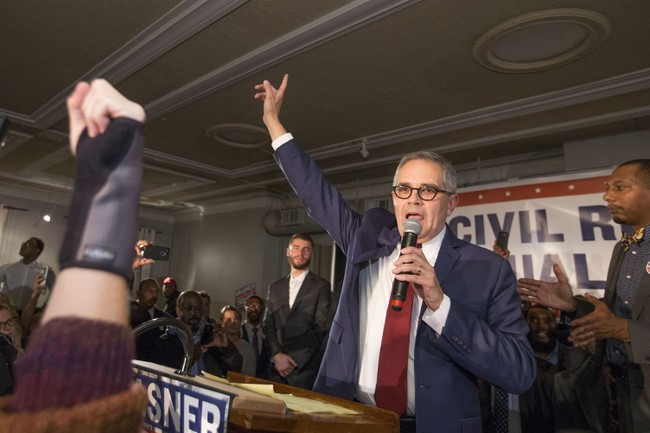
Philadelphia District Attorney Larry Krasner’s public remarks about Immigration and Customs Enforcement officers sparked a fierce reaction, with Krasner calling ICE a “small bunch of wannabe Nazis” and vowing to “hunt” agents; this piece examines the context of those comments, the legislation at the center of the protest, and the broader consequences for law enforcement and public safety.
Krasner made his comments at a City Hall event tied to proposed “ICE OUT” legislation that would expand sanctuary protections in Philadelphia. The measure seeks to restrict federal immigration enforcement on city property and limit cooperation between local agencies and federal authorities. Supporters present framed the effort as protecting civil liberties, while opponents warn it undermines the rule of law.
During the same event Krasner sharply criticized ICE officers in language that many viewed as inflammatory and threatening to federal employees. He said, “This is a small bunch of wannabe Nazis. That’s what they are,” and added, “In a country of 350 million, we outnumber them. If we have to hunt you down the way they hunted down Nazis for decades, we will find your identities. We will find you. We will achieve justice.” Those exact words were delivered on the steps of City Hall and recorded for the public record.
The rhetoric raises real concerns about the safety of federal personnel operating in hostile jurisdictions and the legal exposure of local officials who encourage noncooperation. Law enforcement cooperation often depends on mutual trust and clear legal frameworks, and public officials who vilify federal agents risk eroding both. Critics worry such language could embolden harassment of officers and complicate investigations that rely on information sharing.
Philadelphia has seen repeated clashes between local elected officials who favor sanctuary policies and federal immigration authorities charged with enforcing national law. The proposed ordinance would bar ICE from using city-owned property, curtail data sharing, and require judicial warrants for access to public facilities like libraries and shelters. Defenders of the measure argue it protects vulnerable immigrants, while opponents say it shields criminal aliens and creates public safety gaps.
The political backdrop matters. Krasner has received backing from national donors who favor progressive prosecutors and sanctuary policies, and his stance reflects a broader debate about prosecutorial priorities and immigration enforcement. For many residents and law enforcement officials, the debate is not abstract; it touches on crime rates, victim protection, and the reach of federal authority inside city limits. Those practical consequences are often lost amid charged rhetoric.
When elected officials use extreme language to describe opponents, they risk normalizing escalation and marginalizing reasonable dialogue. Descriptions that equate law enforcement officers with historical villains do not reduce tension—they intensify it. Communities need leaders who can defend constitutional principles without stoking retaliation or encouraging vigilante behavior.
There have been prior incidents in which local leaders threatened or pledged to obstruct ICE operations, and federal authorities sometimes respond with legal threats or countermeasures. These clashes can end up in court, where constitutional questions about jurisdiction, federal supremacy, and civil rights are tested. The outcome matters beyond a single city; it sets precedents for how federal and local agencies interact across the country.
Citizens and policymakers alike should consider the human side of these conflicts: federal agents, local officers, residents, and undocumented immigrants all face risks when cooperation breaks down. Public safety requires mechanisms for reporting, investigation, and prosecution that transcend political posturing. Constructive policy debates should focus on lawful reforms that improve both security and fairness.
Vocal support for sanctuary policies and progressive prosecution reflects genuine concerns about due process and overreach, but tactics and tone matter as much as intent. Calls that suggest hunting federal agents cross a line from protest to intimidation and deserve scrutiny from legal authorities and the public. Maintaining respect for law, order, and the safety of all involved remains essential as the policy fight continues.
WATCH:


Add comment